2.28.2014

REZENSION: DIE HERRLICHKEIT DES LEBENS VON MICHAEL KAMPFMÜLLER


                                                                      Die Herrlichkeit des Lebens
                                                                      Michael Kumpfmüller
                                                                      Fischer Taschenbuch Verlag
                                                                      Frankfurt, 4. Auflage, Juli 2013
                                                                      258 Seiten

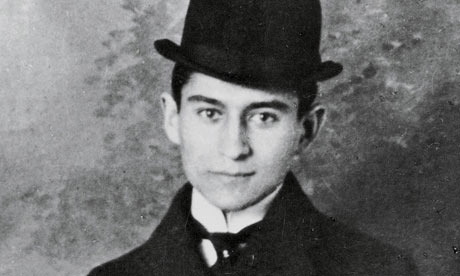
Ein sehr lesenswerter Roman, den ich allen empfehle, die sich nicht nur für Kafka interessieren, sondern auch denjenigen, die eine intensive aber auch unsentimentalische Liebesgeschichte lesen möchten.

Es ist sein letztes Jahr; endlich ist Kafka glücklich, besser gesagt: glücklicher als voher.  Er hat sich in eine Frau, 25 Jahre alt, d.h. fünfzehn Jahre jünger als er, verliebt.  Dora Diamant liebt ihn von ganzer Seele; diese Liebe wird in immer zunehmender Masse von Kafkas Krankheit geprüft, eine Probe, die sie glänzend übersteht. Vom ersten Gruss bis zu seinem Tode ist eine Strecke nur von knapp neun Monaten, aber vieles geschieht inszwischen.

Kampfmüller ist ein Meister der Untertreibung.  Er wusste dass der Roman hätte ein Schmachtfetzen sein können, so etwa wie eine deutsche telenovela.  Das hat er gut vermieden, indem er die Herrlichkeit der Liebe sowie die Schrecklichkeit des Todes, ohne Kommentar, wie auf einer Bühne abspielen lässt.  Seine Objektivität, seine Sachlichkeit selbst vor Kafkas schrecklichem Tod, ist meisterhaft--da sie keine Sentimentalität enthält, vertieft sie um so mehr den Eindruck auf die Leser.

Kampmüller hat mit verschiedenen Problemen des Stoffes gerungen--und sie vor allem mit seiner Untertreibungskraft überwunden.  Untersuchen wir jetzt jene Kraft mit ein paar Beispielen.

1. Die Physische Beziehung

Kafka hatte von Jugend an ein Auge für Frauen.  Zweimal verlobt, er hatte auch viele Liebesverhältnisse hinter sich und ging sogar als Junger ins Bordell.  Er war Vegetarianer--ein Aesthet in Bezug auf Tierfleisch--aber  ein Schlemmer in Bezug auf weibliches Fleisch.  Kampfmüller wusste, dass es wohl lächerlich sein würde, wenn er versucht hätte, den Leser gleichsam unter die Laken zu bringen.  Kafka ist zu sehr ein Ikon für solche Behandlung--sie würde genau so abstossend wirken wie eine genaue Beschreibung einer erfundenen Liebesaffäre von Jesus von Nazareth.

Kampfmüller bechreibt das erste Mal dass Dora und Kafka sich "biblisch kennen" indirekt, auf einer untertriebenen Weise, wie folgt--Kafka muss weg vom Strand, wo sie sich "unbiblisch" kennengelernt haben.  Am Abend vor seiner Abfahrt kommt Dora in sein Zimmer:

Als es klopft, nimmt er es anfangs kaum wahr, als würde er ein Klopfen nicht glauben, und dann ist es Dora.  Offenbar ist sie diesmal nicht gerannt, sie wirkt im Gegenteil sehr ruhig, etwas blass.  Geweint hat sie nicht, abe sie hat nachgedacht, sagt sie, den halben Abend drüben in der Kolonie.  Worun sie ihn von Herzen bittet, ist, die Reise zu verschieben, für einege Tage, denn morgen früh kann und darf er nicht fahren.  Ich bitte dich, sagt sie und noch einmal: Bitte.  Wieder sitzt sie auf dem Sofa, seltsam jung und ernst, als würde sie sich selbst am meisten wundern, dass sie gekommen ist.  Sie schüttelt den Kopf, sagt eine Weile nichts, dann: Sie habe nicht gewusst, dass es so schwer wird.  Aber dehalb ist sie nicht hier.  Ich habe nur immer gedacht, so kannst du night gehen.  Kannst du das?  Nein sagt er.  Vielleicht hätte er es gekonnt, aber jetzt nicht mehr.

Die ganze Zugfahrt hat er ihren Duft...
                                                                                               (S. 43)


2. Liebe auf den ersten Blick

Als Kafka, schon längst krank, am baltischen Strand ankommt, guckt er die Mädchen an.  Exakter: er guckt verschiedene Koerperteile der Mädchen an.  Er sieht mit Freude eine junge Frau, die in einer Buchhandlung in Berlin arbeitet; sie hat schon ein Buch von Kafka ins Schaufenster gestellt--sie kennt ihn also als Autor.  Sie lädt ihn zum Abendessen in einem jüdischen Ferienheim für Kinder, wo sie und Dora arbeiten.  Da sieht er Dora zum ersten Mal und starrt und starrt sie an.  Sie hat ihn voher am Strand gesehen, und fang schon damals an, ihn liebzuhaben--sie war sogar neidisch auf Elli, bis sie herausfand, dass sie die Schwester, und nicht seine Frau, war.  Seitdem sehen Kafka und Dora sich fast täglich--er lernt, dass nicht das  Äussere an ihr am schönsten ist, sondern ihre Persönlichkeit.   Dora hat nicht zuerst gewusst dass er ein (ziemlich) bekannter Schriftsteller ist; er hat nicht zuerst gewusst dass sie "nur" wohl ein einfaches jüdisches Mädchen aus dem Osten ist.  Hier, ohne Kommentar, lernt der Leser dass sie sich ohne Vorbilder kennengelernt haben. Es ist ein Fall der Liebe auf den ersten Blick. Der Autor erzählt  es nicht, sondern zeigt es uns, ohne Betonung.


3. Kafka's Gedankrngänge

Kafka war sicher ein sehr innerlicher Mensch, desser Denkart hintergründig und hoechst originell war.  Wie kann man einen Menschen wie ihn im täglichen Umgang präsentieren?  Kampfmüller ist auch nicht imstande, in Kafkas Gehirn einzudringen.  Aus diesem Grunde findet man im Buch keine direkte Rede von Kafka.
Dora koennte auch nicht dem Gedankengang von Kafka folgen.  Also ist es verständlich, dass er nicht philosophisch mit ihr wächst.  Philosophische Gespräche mit seinen Freunden, etwa mit Max Brod, würden als Abschweifungen wirken, weil diese Geschichte nichts anderes als eine Liebesgeschichte ist.  Dem Verfasser ist es aber doch gelungen, Kafkas Persönlichkeit, wenn auch in einem beschränkten Sinn, aus seiner Handlungen hervorsteigen zu lassen, eine Leistung nicht nur seiner Untertreibungskunst, sondern auch seiner bildhaften Erzählungsweise.

4. Politik

Kafka leidet an Tuberkulose and stirbt gleichsam vor unseren Augen.  Gerechtigkeit in Deutschland zu jener Zeit lit auch gleichsam an einer schrecklichen Krankheit, und wird ungefähr zehn Jahre nach Kafkas Tod zugrundegehen, um zu auferstehen, wie Kafkas Ruf, von den Aschen des zweiten Weltkriegs. Kumpfmüller predigt nicht; er deutet die soziale Krankheit nebenbei an, und nur wenn sie integral mit der Handlung verbunden ist.  Diese Unterbetonung wirkt noch erschreckender als mehr Detaile der Gefahr darstellen  könnten--das Ungeheuerliche kommt, aber niemand ahnt es. Ein Beispiel folgt.

Obwohl Kafka und Dora vollkommen glücklich in Berlin sind, hat er immer noch Augen für die Schönen.  Auf der Strasse bemerkt  er eine Gruppe vorbeipassender Mädchen.  Eins lächelt ihn an

Im Botanischen Garten auf einer Bank bei herrlichstem Sonnenschein geht eine Gruppe Mädchen an ihm vorbei; wie ein Liebesabenteur fängt es an.  Eine hübsche lange Blonde, Jungenhafte, die ihn kokett anlächelt, das Mäulchen aufstülpt und ihm etwas zurut.  Das ist, so scheint es, der Vorfall.  Er lächelt überfreundlich zurück, noch als sie sich später mit ihren Fruendinnen oefter nach ihm umdreht, lächelt er, bis ihm allmählich aufgeht, was sie gesagt hat.  Jud hat sie gesagt.

                                                                                                                   (S. 89)

An einer anderen Stelle diskutieren Max und Franz den Putsch von 1923; Dora hört an der Schwelle der Tür zu; sie ist neidisch dass sie, weniger gebildet, dem Gespräch nicht anschliessen darf. Hitler wird nur dieses einmal, ohne Namen, und nur im Vorübergehen erwähnt.  Ein Meister der Untertreibung ist Kampfmüller, ohne Zweifel!


5. Der Tod

Der sterbende Kafka--er kann nicht mehr sprechen--sieht endlich völlig ein, wie gut Dora ist:

Müsste er sagen, wie ihm ist, würde er zugeben, dass es ihm nie schlechter gegangen ist.  Aber er kann klar denken, schreibt schoen brav die Zettel, bewundert die Geduld. die Robert und Dora mit ihm haben und die er im umgekehrten Fall womoeglich nicht hätte.
                                                                                                             (S. 225)

Vielleicht zum ersten Mal in seinem Leben denkt er an andere, und nicht nur an sich.  Mit diesen paar Worten sieht der Leser ein, dass die Liebe angefangen hat, Kafka aus seiner Selbstbessenheit zu befreien.  Die Tragödie steht vor uns entlarvt--Gerade als Kafka das Wichtigste--die Liebe--erfährt, muss er auch dabei das Schrecklichste--den Tod--miterfahren.

Obgleich wir ahnen, wie sein Tod sie bedrücken muss, heult Dora nicht, sondern gleich nach seinem Tode  seinen Körper wäscht, eine Geste die uns zeigt, wie sehr sie ihn liebte.

Im ganzen Roman kommen die Worte, ich liebe dich, nicht vor.  Der Verfasser bringt diese Liebe vor unsere Augen durch die Handlung; die Auswirkung wirkt viel besser als wenn der Verfasser versucht hätte, sie durch Liebeserklärungen zu erreichen.  Wir brauchen sie nicht.

Was wir aber brauchen sind mehr Romane wie dieser.


                                                                                         Thomas Dorsett


Anmerkungen

Mein besonderer Dank gilt Mary Upman vom Deutschen Literaturkreis in Baltimore.  Sie hat diese Rezension vorsichtig korrigiert and verbessert  Vielen Dank, Mary!

Unser nachstes Treffen findet am 27. April 2014 statt, wann wir den Roman "Ruhm" von Daniel Kehlmann diskutieren werden.  Kurz danach werde ich eine Rezension auf diesen Blog stellen.  Ich lade Sie an, das Buch und die Rezension zu lesen, und danach Ihre Meinungen im Kommentarfach abzugeben.


Weitere Artikel auf deutsch von Thomas Dorsett (Googeln Sie den Titel und dem Namen, Thomas Dorsett)

1. Jakob der Lügner
2. Die Weisheit und das Alter


2.18.2014

FURIOUS AND AFRAID


I am furious, I am afraid.

I had played the piano in the morning, written a long poem--about "toddlers (i.e. immature adults) with guns," and was about to finish a blog essay about Goethe (!), when my son sent me a news release that another Stand Your Ground death occurred in Florida.

If the news report proves true, it is another horror--and whether there will be more horrors depend on us.  The Stand Your Ground Law in is a public menace.  It has got to go.


This is what allegedly happened.  A twenty-one year old black man named Ricardo Sanes was running.  He ran through a white man's yard.  There was never any evidence that the runner intended anything criminal; he was just running.  The owner of the house thought he was a burglar.  He thought the black kid had a gun because his pants were  falling down, allegedly due the weight of a weapon--and more likely due to urban style.  (Yes, he was also wearing a hoodie.)  The owner of the house got his gun, tracked the man down and shot him in the courtyard of an apartment complex completely separated from the owner's property.

Is it now all right to kill somebody because he might be a burglar?  Is it all right to track somebody down and murder him in cold blood because he might have had intention of stealing something from one's back yard?  Not even a "Freeze!  What were you doing on my property?"  Are we  justified  to Stand Our Ground away from our ground while not being any way in danger?

I cannot help recalling a story in which a burly monk returns to his hut and discovers a robber stealing his belongings.  He shouts and chases the robber.  When he catches up to him, the slightly built thief begs for his life.  "What?" says the monk.  "I just wanted to give you my tea cup--you forgot to take the tea cup!"

Florida is a long way from Nirvana.

I remember, years ago, that I had become somewhat annoyed with a teen in the neighborhood who on several occasions unlatched the back gate, then walked through my yard into the front street--a shortcut.  I was taken aback a few times when I looked outside my window--especially at night--and saw a tall figure walking in the garden.  I told him about it; he apologized and did not walk through my yard unannounced again.  If I had been a racist and prone to violence--and had been transported to present-day Florida; and if my neighbor hadn't been blond....

I am furious.  I am afraid --for my country. 


This comes just days after a white man was acquitted for killing a black kid because the youth had assaulted his...tympanic membranes.  The white man had just returned from a wedding and pulled into a lot next to a vehicle in which three black teens were playing--possibly blasting--music.  (I must admit here that I'm very sensitive to loud noises and have on occasion found booming music to be annoying.  I also find that the sound of a power drill is even more annoying.  I suppose the murderer would feel justified in blasting away the worker blasting away on the street?  In both cases, I would simply have covered my ears and walked away.)

All right, maybe I'm too passive.  Maybe it would have been O.K. to tell the kids to turn down the volume--but to tell you the truth, this is such a violent country I would be wary.  I would rather petition to have a noise-pollution law passed!

Do you think the murderer calmly walked over the the young men in the car and said, "I'm sorry, I think you're playing the music too loud.  Would you mind turning it down a bit?"

Whatever he said probably provoked the teen to be rude in turn.  This enrages the white man; he grabs his weapon, fires several shots, killing the teen and just missing the other kids--Is this what it means to stand your ground?

He says the murdered young man, Jason Davis, had a weapon.  None was found.  The other teens denied ever having one.  The man left the scene and never reported anything to the police.  Until the police caught up with him the next day, he never mentioned anything  about a weapon to his girlfriend, who was a passenger in his car when the murder took place. He saw a weapon indeed.

It is a case of racial road rage.  It is a case of prejudiced parking-lot insanity.  It resulted in an acquittal on the basis of an unjust law.

(The murderer, however,  was found guilty of attempting to kill the other teens.  If the verdict, a sentence of sixty years in prison is carried out, I am satisfied.  If he had been found guilty of first degree murder, he might have received the death penalty.  I find the death penalty to be completely unjust.)

Three cases, Jordan Davis, Trayvon Martin and now, Ricardo Sanes.  All guilty of breathing while black.

I might have gotten some of the details wrong--I wasn't present, of course--but one thing I'm absolutely sure of: The Stand Your Ground Law is culpable in every case.

As I wrote before in a blog, I did find the Trayvon Martin case to somewhat ambiguous--nevertheless Trayvon wound up dead, something that never should have happened. The law should have not permitted the untrained Zimmermn to carry a weapon and patrol a neighborhood as if he had been a policeman. That is obvious!  Obviously not to those who support that heinous law.

In all three cases, however, the Stand Your Ground Law is guilty, abominably guilty, of murder.  For the sake of humanity, it should receive the death penalty--now.

2.15.2014

IS ATHEISM IRRATIONAL?


This is the title of a New York Times interview of an emeritus professor of philosophy at the University of Notre Dame, which appeared in the February 9th 2014 edition of  that newspaper.  His name is Alvin Plantinga; he was also a former president of both the Society of Christian Philosophers and of the American Philosophical Association.  He is also the author of several books, most recently, of "Where the Conflict Really Lies; Science, Religion, and Naturalism."  The interview was conducted by Gary Gutting, a professor of philosophy at the University of Notre Dame.

The subject of the interview, the first of a series, is religion. Mr. Plantinga is a theist and a scholar.  I was quite curious to learn what he has to say about what is for me an important subject.  (Why do I have such an interest, when so many educated people I know do not?  I readily confess that a sense of transcendence is very much  part of my experience; I have difficulty, however, giving it content, specifically theistic content.  I welcomed the article; perhaps this learned man would give me some new insights. I am sorry to say that, for the most part, he didn't.)

This article discusses Mr. Plantinga's arguments for theism, or at least against atheism, and contains my responses to each one of them.

He presents four reasons why a theistic view might be more valid than an atheistic one: 1) The fine-tuning of the universe; 2) the problem of suffering and evil as a possible argument for theism, specifically the Christian version of it; 3) the intuition of peoples of all cultures that some form of theism is valid, and finally, 4) his assertion that materialism and evolution are incompatible.  Let us discuss each point in turn.


Theistic Argument 1: The fine-tuning of the universe.  Mr. Plantinga states, quite correctly, that our universe is extraordinarily fine-tuned, without which life would not be possible.  If several elemental  properties of the universe--such as the strength of gravity--were slightly different, life would not have evolved on our planet.  He states, "If the force of the Big Bang had been different by one part in 10 to the 60th, life of our sort would not have been possible."  This does seem to indicate that such precision could not have occurred by chance.  His conclusion: "This fine-tuning is vastly more likely given theism than given atheism."

Commentary: Not so fast!
Let us discuss the fine-tuning first, then indicate possible natural causes that gave rise to it.  Mr. Plantinga is not entirely correct when he refers to the "force of the Big Bang"--he is referring to the force of inflation, the vacuum energy, which caused an incredibly rapid expansion of the universe very, very shortly after the universe came into existence.  (This is the inflation model developed by Alan Guth in the 1960s; it is widely accepted today.)  The energy of the early universe existed in what is called a false vacuum, which is exceedingly unstable, resulting in a rapid expansion of the universe before the vacuum entered its stable, resting state.  During the exceedingly short period of 10 to the minus 35 seconds--that is, almost a billionth of a billionth of a billionth of a billionth of a second, the universe doubled 100 times.  (When I was a child, I used to imagine how incredibly rich I would be at the end of a month, if I received a penny on day one, and subsequently received a doubling of the amount on each consecutive day.  There would, of course, not be enough money in the world to continue this doubling for a hundred days.)  The inflationary period caused the universe to expand from a speck  to the astounding size of 10 to the 400th light years!  The reason that our observable universe has a diameter of "only" twenty-seven billion light years is due to the fact that  light from the vast hidden areas of the universe has not had enough time to reach us.)  The cause of the inflation is the cosmological constant, the same force behind the expansion of the universe observed today.  (This "dark energy" no longer exists in the false vacuum state; after the inflationary period, the big bang expansion, as is the case ever since, no longer has an exponential quality.) Mr. Plantinga is wrong, however, about the fine-tuning of the cosmological constant to "one part in 10 to the 60th."  Here is what a contemporary physicist has to say about the fine-tuning of the cosmological constant: (Carlos I. Calle, in his book, The Universe, page 156):


The experimental discovery of the speeding up of the expansion of the universe 9 billion years after the big bang requires that all the vacuum energy contributions cancel out to 120 decimal places.  Cancellation to that accuracy is impossible to comprehend..What if we take the total number of atoms in the world or, better yet, the total number of elementary particles and performed a similar cancellation?  That would be 51 decimal places.  Even if we consider the estimated total number of elementary particles in the observable universe, we would get only 80 decimal places.  (My note: The total number of elementary particles in the entire universe would bring us to a cancellation well beyond 120 decimal places!) A cancellation to 120 decimal paces requires extremely delicate fine-tuning!

The universe is even more, incredibly more, fine-tuned than the 60 decimal places of cancellation that Mr. Plantinga cited!

His conclusion, however, that this  provides strong evidence for theism does not follow.  He quotes a recent development in physics and leaps to the belief that it is an indication of God's existence, a belief which he, being a Catholic philosopher,  presumably already had.  What do physicists have to say?  After all, this is their realm of expertise.  I have read many books on cosmology and have yet to discover a physicist who entertains the belief that the fine-tuning of the universe indicates a creator. Most of the books have chapters that assert that the universe has not been consciously designed by an external source.  There are many scientific theories that explain the fine-tuning of the universe. (Most entail a multiplicity of universes referred to as the multiverse.)  For instance, if string theory, which entails the existence of hidden, extra dimensions, proves to be correct, the many Calabri-Yau configurations of these dimensions would produce an astounding 10 to the 500th power number of universes!  If such a large number of universes exist, it is not surprising that some of them are extraordinarily fine-tuned.  It is  also not surprising that we live in one of them, since if our universe had been incompatible for the development of life,we wouldn't be here to observe it.  (This is called the anthropic principle.)  If another theory, the eternal inflation model, is correct, universes are constantly being created, without beginning, without end.  This would lead to a virtually infinite number of universes.  In a multiverse with an infinite number of universes, there would also exist an infinite subset of universes that possess  extraordinary fine-tuning.  Another promising theory is the cyclic model, an eternal cycle of creation and destruction, which would also solve the problem. Perhaps the most extraordinary theory has been recently advanced by Stephen Hawking, one of the foremost physicists of today.  According to him, the beginning of the universe was a quantum event; there was no single outcome, but a quantum superposition of possible outcomes.  Our observations today determine which of the many possible outcome occurred in the past.  This need not be the most likely outcome, but merely a possible outcome.  If this proves to be true, the problem of fine-tuning is solved!


Granted, none of these theories have been proven, but they are quite elegant and provide natural explanations of the fine-tuning.  Scientists are overwhelmingly convinced that there is a natural explanation for the extraordinary value of the cosmological constant and other examples of fine-tuning in the universe.

You might  have recognized Plantinga's argument: it is a variation of the assertion that since a watch correctly indicates its origin at the hands of a watchmaker,  a frog, something much more complex than a watch, similarly indicates its origin at the hands of a creator.  This was used as proof that Darwin's theory of evolution is invalid. Darwin's theories, however, are now overwhelmingly supported by evidence; the impersonal source of creation, using Dawkins's apt phrase,  is a blind watchmaker; natural laws and fossil discoveries  provide thoroughly convincing evidence that evolution, without the intervention of a god, has occurred.

Mr. Plantinga appears to be an adherent of the Catholic notion of natural philosophy, that is, observation of natural phenomena logically leads to a belief in God.  This is an example of  medieval philosophy, unsupported by evidence.   Very few modern scientists would agree with him.

Theistic Argument 2: Suffering and the problem of evil as indications for theism. To be fair, Mr. Plantinga asserts at the beginning that the problem of evil--how can an all-powerful and all-loving God allow suffering-does "have some strength" and provides "presumably" the greatest challenge to theism.  But he also asserts there are many plausible counter-arguments.  He gives the one he presumably believes to be most cogent:

Think about it: The first being of the universe, perfect in goodness, power and knowledge, creates free creatures.  These free creatures turn their backs on him, rebel against him and get involved in sin and evil.  Rather than treat them as some ancient potentate might--e.g,. having them boiled in oil--God responds by sending his son into the world to suffer and die so that human beings might once more be in a right relationship to God.  God himself undergoes the enormous suffering involved in seeing his son mocked, ridiculed, beaten and crucified.  And all this for the sake of these sinful creatures.

I'd say a world in which this story is true would be a truly magnificent possible world.  It would be so good that no world could be appreciably better.  But then the best worlds (would) contain sin and suffering.

Commentary: These arguments can be very easily dismissed.  First of all, we assume that we have free will, but the actuality of it is very ambiguous.  Our conscious mind (our awareness) is only a fraction of our entire mind, the unconscious portion of which is largely responsible for many of our actions.  (It is the mass of the iceberg underneath the surface that is moved by currents, not the relatively small portion above the surface.)  Since actions result from an inscrutable relationship between how an individual brain is wired and its environment, it is, in my opinion, very problematic to judge the person who performs a bad deed.  (It is much easier, of course, to judge the deed.)  So how free are humans really?  Possibly an unanswerable question, it is that complex.  Perhaps a more realistic assessment would be, "Tout savoir, c'est tout pardonner"--to understand everything is to forgive everything.  In addition, if God gave us free will and we mess things up, certainly he could prevent the worst aberrations of that free will, such as the Holocaust.  A little fine-tuning of God's design would have been most welcome here!  It is, moreover, incorrect to reduce the entire gamut of evil and suffering to free will.  What about babies born with horrible congenital defects?  I remember a case during my training at the children's ward of a cancer hospital.  One little boy, aged about eight, had been born with slowly growing tumors throughout his body, so many that surgical intervention was at best only palliative. By the time I saw him he was nothing more than a little bag of pain waiting for death.  Did free will cause that evil?  What about appendicitis?  The appendix is a vestigial structure that was important in our distant ancestors for the digestion of cellulose.  It serves no function in human beings.  But it can get infected, burst, and cause death.  I ask again, did free will cause that evil?  Is God responsible or can such evils be attributed to the indifference of nature?  The answer, to me at least, is obvious.

His assertion that the Christian story redeems suffering, literally redeems suffering, is also untenable.  He obviously believes that Jesus of Nazareth is "the only-begotten Son of God," as traditionalist Christians assert.  There is not a shred of evidence for this.  It may indeed have great symbolic meaning, and may indeed be an excellent myth to help Christians lead better lives, but as a literal account of God's intervention into history, it is no more plausible, say, than the lovely Greek myth of Philemon and Baucis.  Just because, in Mr. Plantinga's mind, the Gospels reveal the best of all possible worlds, doesn't mean that they are true.  The assertion that Christian beliefs are based on facts is very problematic.  If they are facts, Jews, for instance, are in need of getting their facts straight.  I find this view to be highly offensive.  Judaism, in my opinion, is an equally valid faith; its mythology might be different, but all mythologies, I believe, point in the same direction.  What is essential is how close one comes to living according to the Golden Rule, a form of which is the essence of all religion. (Most atheists accept some form of the Golden Rule as well.)

Mr. Platinga's arguments here are medieval and parochial.  I don't see how an objective, twenty-first century mind could ever come to such conclusions.

3. Theistic Argument 3:  Mr. Plantinga asserts that the intuition that God exists, evident in all cultures since time immemorial and still very much present today, is a good indication that God is real.

Commentary:  He states, "Many people of very many different cultures have thought themselves in experiential touch with a being worthy of worship."  For this he uses Calvin's winsome phrase, sensus divinitatis, an intimation present in us all.  This is undoubtedly true.  I really think what he is referring to here is a sense of transcendence.  This sense, however, doesn't inevitably lead to theism.  Buddhists deny that there is a supreme being, but  are certainly filled with a sense of transcendence that gives their lives meaning.  If Plantinga's view here is slightly modified to refer to a sense of transcendence rather than to theistic beliefs, I do believe he is on to something here.  Simone Weil once said that it is easy to be an atheist except for two things; the existence of beauty and the existence of suffering.  I understand this very well.  When I play Bach on the piano, even as imperfectly as I am able to,  I am overwhelmed with the sense that there is more than meets the eye and that it, whatever it is, is meeting my ear as I play.  There must be something that transcends our everyday lives, I tell myself, for I have experienced it.  Similarly, suffering takes us beyond complacence also, albeit in a much less pleasant way. That human beings, the highest form of creation known, can suffer so abjectly, is difficult to accept.  This is too horrible, there must be something else, we tell ourselves when we become acutely aware of intolerable suffering in others.

The experience of transcendence, however, does not prove that it refers to something beyond us.   (I would have a difficult time, however, convincing myself that Bach's music is merely a bunch of notes.)   Unlike Mr. Platinga, I believe that transcendence exits in the human mind and does not come from "out there" even though things "out there," such as the glories of physics, can trigger it.  Ir is also possible that a sense of transcendent  is a "trick' of our genes, causing us to become better adapted to our environment; if this is the case, it would have become a trait favored by natural selection.  I am not convinced that this is entirely explanatory, however; the sense of transcendence remains, for me at least, a profound mystery.  I have no doubt, however, that such experiences don't automatically lead to theistic beliefs.

Theistic Argument 4: Materialism and evolution are incompatible.

Commentary: I really don't follow his arcane reasoning here; the assertion that materialism and evolution are incompatible is not, to put it mildly, universally accepted.  Here is a summary of his argument: say you have a belief that there is a beer in the fridge.  He states "It's the virtue of...electrical signals sent via efferent nerves to the relevant muscles, that the belief about the beer in the fridge causes me to go to the fridge.  It is not by virtue of the content, since if I went to the fridge without believing a beer was in it would have the identical neurophysiolgic properties."  This means, according to him, that the content of a belief causing an action doesn't matter.    This is a highly dubious proposition.  Brain cells reveal a very complex pattern of interconnection.  Various desires can elicit the same physiologic response--in this case walking to the fridge.  A belief does not consist from the outset of a path from the brain to the muscles--it must trigger a neurophysiolgic response.  It doesn't follow from the fact that different thoughts can trigger the same neuromuscular response that the belief has an immaterial origin

Although I think his reasoning is wrong, I do believe he is on to something here: the mystery of mysteries of the universe, consciousness.  Scientists are finding more and more correlations between areas of the brain and specific thoughts; an explanation of consciousness, however, remains elusive.  How those tiny Betz cells are able to convince us that we are individuals, that is, more than tiny Betz cells, is for me the true mysterium tremendum et fascinans.  Many scientists believe that the problem of consciousness will one day be solved; others, like Niels Bohr, have asserted that we never will understand it.  (The  complexity of quantum physics, he believed, is child's play compared to the complexity of consciousness.  It is a little like water trying to explain water; we are consciousness and cannot separate ourselves from it in order to give it a complete explanation.)

Consciousness is so basic, that we tend to take it for granted, which is true even among scientists.  Where would science be without consciousness, which makes science possible?  Some scientists, some philosophers, some religious leaders--notably of the Hindu kind--believe that consciousness is everything, and nothing really exists beyond it.  I don't really fully comprehend their arguments, but I do believe they are at least partially correct.  If they right, the fine-tuning of the universe would be intrinsic to consciousness, and would no longer be a problem. (See Hawking's argument, discussed above in the commentary section of the first theistic argument.)

Consciousness is the mystery, Mr. Plantinga, not whether God exists or not.  I hold that a belief in a deity external to our minds is no longer tenable for an objective person living in the twenty-first century.   I read somewhere that an important physicist--I forget which one--believes that philosophy is no longer "where it's at" and cannot compete with physics, the theories of which fascinate and the discoveries of which continue to transform our lives and ways of thinking.  If Mr. Plantinga is typical of philosophers today, I would definitely be on the side of that physicist. (I am convinced that if Augustine were alive today, he would be a scientist and not a theologian.)

Mr. Platinga has gone to bat four times in the interview.  The first two times were strikes.  The second two were fouls.  Perhaps Mr. Platinga, an eminent representative of Catholic philosophy, will hit a home run yet.  As preparation for the possibility of  hitting the ball out of the park, however, I would recommend that he take a sabbatical and bone up on physics and cosmology.

2.09.2014

IS WOODY ALLEN GUILTY?


It is a warm, spring day in 1973.  I was at the time a resident in pediatrics at Roosevelt Hospital, on 59th and 9th Avenue in New York City.  They worked interns and residents very hard back then; I rarely had time to venture out during a work day.  On this particular day, however, a clinic had been canceled, so I walked over to The Museum of Modern Art on 53rd near Fifth Avenue.   I had about fifteen minutes before I had to get back to the hospital.  I decided to spend it in the Sculpture Garden, since the day in question was one of the first warm days in spring.  While sitting at a garden table, staring at a sculpture by Rodin, I noticed that someone had just sat down at the table next to mine, only about three feet or so from me.  That person, as I looked closer, turned out to be Woody Allen.  He was casually dressed, and sat leaning a bit forward; he was looking down, lost in thought.  I respected Mr Allen's privacy and did not say a word to him.
I then noticed a woman at the back of the garden.  She had a big smile on her face and was shooing her reluctant son to go and speak to Mr. Allen.  The little boy, about eight, was hesitant and at one point decided to go back to his mother.  His mother gestured with her hands that her son proceed.  The dutiful son did as he was told.  I could hear everything.  "Are you Woody Allen?" he sheepishly asked.  Woody answered "Yes"--and did not say another word.  He did not even smile.  The child said, "Oh!" and returned to his triumphant mother.


Paris, about twenty years later.  My wife, son and I had just finished a busy day of touring.  I put on the TV.  There he was, Woody Allen with an indifferent expression on his face.  I understand French pretty well but couldn't believe what I had just heard.  A major scandal!  Woody Allen had run off with Mia Farrow's adopted daughter and was being accused of molesting a seven-year-old girl which they had adopted together!  This was French news, they have their standards, don't they?  Had they become as crazy as American grocery store tabloids?

Well, I heard correctly.  I later learned that, although it was true that Allen had had an affair with Soon Yi, the charges of child abuse had been dropped. There was no evidence.  That was that, for me.  I admired some of Allen's films, but I'm hardly a celebrity groupie and lost what little interest I had in this sordid tale.

Baltimore, twenty years later from that day in Paris, forty years later from that day in New York.  Woody Allen, a few weeks before, had received The Golden Globe Award for lifetime achievement.  In response, Dylan Farrow, who was allegedly abused by Allen, wrote an Open Letter to Woody Allen, printed in full on Nicholas Kristof's NY Times blog dated February 1, 2014.  (The respected journalist is a friend of the Farrow family and had been contacted by Dylan.) .  The letter portrays Allen as guilty of vicious, criminal behavior.  According to the letter, she remembers the abuse well.  Allen took her to the attic, made her lie on her stomach; she watched a toy train circle around and around, while he assaulted her.  He told her that this would be their secret, and, in return, he would let her act in his movies when she got older.  When she heard that her alleged abuser received an award twenty-one years later, "she curled up in a ball on her bed and cried hysterically."

Kristof weighed in in his column also dated February 1, 2104.   He objected to Hollywood's award to Allen--shouldn't someone who receives such an honor have an unimpeachable reputation, he opined.  He accused Allen of implying that Dylan is either lying or that she doesn't matter. Kristof writes, "When evidence is ambiguous, do we really need to leap to our feet and lionize an alleged monster?"  Mr. Kristof, a journalist whom I admire, who has done a lot to combat the abuse of women around the world, was clearly on the side of Dylan Farrow.

If this Dylan Farrow's allegations are  true, Allen is indeed a monster. But are they true? I decided to investigate.


2.

I have come to the conclusion that it highly unlikely that Woody Allen ever abused Dylan Farrow..  I will briefly give the reasons for this conclusion.

First, I assure you, I am not a Woody Allen supporter; he has made some great films, true, but that has nothing to do with my reasoning.  I certainly entertained the possibility of his guilt.  (If Woody Allen was guilty as charged, he should go to prison, no doubt about that.)

Even though I think he's innocent, I do not judge either Mia Farrow or her daughter.  (I think a quote from the winsome new pope applies here: Who am I to judge?)  Allen had an ongoing relationship with Mia Farrow.  Mia Farrow discovers nude pictures of her daughter, Soon Yi, that Allen had taken.  She learns that he has been having an affair with her.  Who could not understand her fury?  I can also understand that she might interpret the affair not only as a betrayal, but as child abuse.  If he abused one daughter, she might have thought, it is likely that he abused another.  That's how her suspicion about Dylan might have begun.  Allen sees it as pure malevolence, but Farrow certainly had reasons to be furious. Attraction to a seven year old and to a twenty year old, however, are not the same.

Some of the facts that indicate Allen's innocence are as follows:  (I assume them to be facts, they have not been challenged as far as I know.)

--Allen took a like detector test and passed.  Mia Farrow refused to take one

--Dr. Leventhal of the Yale-New Haven abuse unit thoroughly investigated the case and came to the conclusion that no abuse occurred.  He believed it was possibly the impressions of a disturbed child, or that the child had been coaxed.  He concluded that it was probably a combination of the two.

--Dylan Farrow indicated that she was assaulted while she lay on her stomach.  Examinations revealed that there was no injury to the genitalia or to the anal area.

--Mia Farrow had a motive; she apparently wanted to get even.  "He took my daughter, now I'll take his," she allegedly said.

--She taped Dylan's initial confession.  There was evidence that the recording was paused and then continued several times. "What did Daddy do" Mia asked.  This seems to indicate that Dylan was being directed to state what her mother wanted to hear.

--An adopted son, Moses, who was 15 at the time of the alleged abuse, has since come to the realization that nothing happened and accuses his mother of using him and several other of the children as  pawns in her battle with Allen.

--Woody Allen had never been accused of pedophilia before or after.  How many abusive priests have abused only one boy?  How many boys did Sandusky, the notorious Penn State coach,  abuse?  Usually, if one is a pedophile, there will be more than one incidence of depravity.

Dylan accuses Allen of taking her to the cramped attic of the house for the abuse.  Allen is a known claustrophobe.

--Allen and Soon Yi  have adopted two daughters.  They were vetted during the adoption process and no objections were found.

--Woody Allen has been in a stable marriage with Soon Yi for sixteen years.


What about Dylan Farrow's letter?   I am convinced she believes she's telling the truth.  Kristof's allegation that the alternatives are either she is either lying or that she doesn't matter is not valid, since the third possibility, that Dylan is convinced that something happened which didn't, is not included. .  He is implying that a powerful man has drowned out the confession of a vulnerable woman, suggesting that Allen is like the many abusers of women he has written about.  This is irresponsible journalism.  It is well known that some memories, while passionately believed, are not accurate.  This does not make the person in question a liar.  Let me give an example.

I remember being bathed in the sink.  I can see the side of the sink where I was sitting up.  I was sitting on a tin plate over which a dish rack is usually kept; in this case, I replaced the rack.  I was about eight months old.  I could sit, but could not walk.  I remember being picked up, placed under the tap and washed.  Then the image disappears.  It is a very vivid recollection.

It is also patently false.  You don't remember things that happened at such an early age.  I interpret this as a dream I had a few years later,  a dream so vivid that I became convinced that it actually occurred.  Although I believed this for a long time, I certainly wasn't lying.

Could this not have happened with Dylan?  The alleged abuse was accepted as fact, and insisted upon, by her mother and other family members.  The abuse became a central part of her existence; it is quite possible that she had had a vivid dream  and is now absolutely convinced that dream actually occurred . It would have been different if she had said these things when she was seven.  Remember, in her initial report to the authorities, she said that her dad touched her on the shoulder--it was a very inconsistent confession.

Remember the McMartin case ?  Mother and son owners of a day care were sent to jail for a long period for abuse that never occurred.

Abuse is heinous; all such reports should be taken seriously and thoroughly investigated..  Most, I would guess, are based on facts.  But some are not.

I don't judge Mia Farrow.  I don't judge Dylan Farrow.  I don't judge Woody Allen.  But I do judge Nicholas Kristof's column..  His suggestion that persons should not be honored solely on the basis of unfounded accusations of a crime, however heinous, is ludicrous.  (He cites "ambiguous evidence" for the reason Allen should not be "lionized" with an award--the evidence, however, is far from ambiguous.)  He well knows, or should know, that if there had been any real evidence of abuse, Allen's reputation would not have protected him.

Moral of the story: things aren't always what they seem.  Conclusions, especially regarding serious accusations,  should be made in accordance with the facts.

Enough is enough!  Like Mr. Allen, I will never write on this subject again. If I become aware of another episode of this American telenovela twenty years hence, making it a full sixty years since I sat next to Woody Allen in the MOMA sculpture garden, I assure you that I will not write a word, even in the unlikely event that I will still be breathing.


2.02.2014

BALTIMORE ONLINE BOOK CLUB: EXIT GHOST BY PHILIP ROTH

                                                                                       Exit Ghost
                                                                                       Philip Roth
                                                                                       292 pages
                                                                                       Houghton Miffin, 2007

This is the fourth edition of the Baltimore Online Book Club.  We, a group of six, meet every six weeks or so to discuss a major work of fiction.  On January 30th, the book we discussed was Exit Ghost by Philip Roth.  Our next meeting will be on March 6th, when we will discuss Disgrace by J.M.Coetzee.  Online readers are invited to read Coetzee's book by that date, I will post a brief review of the book, and invite your comments.  You, of course, can join at any time.  My previous reviews were of Pamuk's The New Life and Tolstoy's Anna Karenina. (If you would like to read them, google my name, Thomas Dorsett, along with the title of the book in question.)  When we read a new book, I give an extensive review; when reviewing a classic I try to focus, from a fresh angle, on a few aspects of the book.  So far the book club has received about 500 hits, but has few members--If you are interested please join!

Exit Ghost

The title comes from a stage direction in Macbeth, when the ghost of Banquo exits after the banquet scene.  (The same stage direction occurs in Hamlet, when the ghost of Hamlet's father exits the stage.)  In this case, it is the living ghost, Nathan Zuckerman, who withdraws at the end to his house in New England, presumably till death.  His life is over.

Zuckerman is a great writer and has dedicated his life to his craft.  For others, art may be mere entertainment, but not for him.  He gives a very profound  assessment of what the creation of fiction means to a first-rate writer such as himself:

But isn't one's pain quotient shocking enough without fictional amplification, without giving things an intensity that is ephemeral in life and sometimes even unseen?  Not for some.  For some very, very few that amplification, evolving uncertaintly out of nothing, constitutes their only assurance, and the unlived, the surmise, fully drawn in print on paper, is the life whose meaning comes to matter most.

Well said!  The only God possible for this man who strives to face life as it is and not as he would like it to be, is the God of aesthetics, the God of expression, the God of fiction.  He has dedicated his life to this God with spectacular results.  But he is not happy, far from it.  The book, like Hamlet and Macbeth, is a tragedy.

Zuckerman has dedicated himself to his art.  In addition to his love of fiction and of music, he has and additional passion: the love of women.  He, however, is a man of affairs.  He has never had a long commitment to any woman.  He has no children.

His virility always played a central role in his life.   His love-life ended with a devastating diagnosis of prostate cancer; the surgery has left him incontinent and impotent.  The very worst thing that could happen to a man like Zuckerman!

He has his surgery when he was about sixty.  This, combined with menacing anti-Semitic threats, led him to return to New England.  After 11 years of self-imposed isolation, he returns, presumably restless--inwardly he is young man--to New York to undergo minor surgery that might resolve his incontinence.  It doesn't work.

As in most tragedies, life closes in on the protagonist from all sides; there is no hope of escape.  Zuckerman has created great works of art, but they are increasingly being ignored,  Returning to New York after eleven years of rural isolation, Zuckerman like Rip van Winkle, is amazed at the changes.  They are all negative.  The decline of literary standards is symbolized by the fact that everyone is now on cell phones.  A literary idol and mentor of Zuckerman's from the 1950s is now unread.  He meets his idol's lover, Amy Bellette, who now lives in complete poverty and is dying of a brain tumor.  In a stoke of genius, Roth has Bellette deliver favorite themes.  She is incensed by the fact that politics trumps art.  She literally throws a fit at an exhibition where women artists are extolled and first-rate male artists aren't even mentioned.  Tony Morrison and no Faulkner?  As a result of her fit, test are done after which she is diagnosed with brain cancer.  Further on in the novel, she complains to the editors of the New York Times Book Review in a letter that begins as follows, "There was a time when intelligent people used to use literature to think."  Reviewers, like university professors, according to Bellette, practice "cultural journalism."  They are primarily interested in writing about the cultural context in which a work was written, with an especial interest in digging up scandals that presumably reveal the author and thus illuminate the work.  The literary scene has degenerated badly.  It is represented by a smart, ambitious yet aesthetically deaf person named Kliman, a twenty-eight year old graduate from Harvard, who believes he has discovered a scandal about Zuckerman's old mentor and solicits Zuckerman's help.  He flatly refuses.  At the height of their argument, Kliman, in a rage, tells Zuckerman "You stink!"  The incontinent Zuckerman does indeed stink; he is a corpse already, as it were, and the young ones don't know what they're doing.

I am not in academic life, but I think Zuckerman and Bellette might be right.  When I was working at a clinic, a colleague's son, who had just graduated from high school, got his first literary assignment at college.  He was a young man more interested in cars than in Camus--to instill a love of literature in him would be hard, but with the right teacher it could be done.  Instead he got an African-American woman who assigned him the following essay topic on the first day of class: "The Role of the Black Female Body in Literature."  No comments.  Another example: I know of someone who just got tenure at a university.  Her area of interest is how the Victorians treated their maids.  You guessed it, her area of interest is Dickens.  Why Dickens is an important writer--regarding this question her research doesn't devote a single word.
Nothing in this great short novel is gratuitous.  There is a long section of praise for George Plimpton.  It is beautifully written and informative.  Its purpose for the novel, however, is that Plimpton, the quintessential Gentile of privilege, gets involved with life, and not just literature.  For instance, he gets in the ring with the champion Archie Moore and writes about it.  He has a life.  Zuckerman can't image that someone like Plimpton could ever die; he was always at the center of life.  Zuckerman, however, is already dead.  It reminds me of what a writer in a German movie tells the Italian maid who attempts to seduce him: "Scrivo, non vivo."  Zuckerman is dead on both counts.

Zuckerman's tragedy is also a warning.  If he had been more active in other aspects of life beyond seduction, he might have had some of Plimpton's happiness.  The book includes several references to the composer Richard Strauss, none of them gratuitous.  Strauss loved women, specifically the female voice, as the book attests.  He also had a full family life and a career that included not only the isolation of composition, but working with people on all levels.  At the end of his life, Strauss wrote his Four Last Songs, recalling his life with the woman he loved, in ravishing music.  Zuckerman writes about it as follows:


Strauss's Four Last Songs.  For the profundity that is achieved not by complexity but by clarity and simplicity.  For the purity of the sentiment about death and parting and loss.  For the long melodic line spinning out and the female voice soaring and soaring.  For the repose and composure and gracefulness and the intense beauty of the soaring.  For the ways one is drawn into the tremendous arc of heartbreak.  The composer drops all masks at the age of eight-two, stands before you naked.  And you dissolve.

The wonderful flute solo at the end of one of the songs began playing in my mind the moment I read this.  This is a beautiful depiction of this great work--Roth knows his music.  It is functional to the plot, too.

He meets the most self-possessed person of the book, the young and very beautiful Jamie.  He is the only one on her level; her husband is sweet, but not much more than that.  Previously--presumably without any thought for her husband--Zuckerman would have successfully seduced her.  Now he can only write about it. His spirit is every bit as young and subtle as hers, ah, but the body...

In the dialogue that he writes in the hotel, he gets her to agree to come to his apartment.  He realizes that it is merely a fantasy.  The novel ends as the "ghost" exists. returning to a rural, lonely existence,  presumably for the rest of his life..

It is an unremitting tragedy but told so well that one feels uplifted and deeply moved.  It is a great book. Roth claims that this novel will be his last; he is now 79.  If it is, it is a fitting end to a brilliant career.


Reminder:  You are invited to read Coetzee's novel and join us for the next edition of our online book club, a day or so after our next meeting, March 6, 2014.  You are also invited to give comments in the comment section below.  I wish you happy reading!

                                                                                     Thomas Dorsett


1.31.2014

LA COMEDIE INHUMAINE


As you all know, the great French writer Balzac's magnum opus is a compendium of short stories and novels entitled, "La Comédie Humaine.'.Although the French comédie refers here more to a play then to a comedy, that is, Balzac's writings are like a stage on which French society is realistically depicted.  The English word, comedy, also seems to apply, since realistically depicted people with their vanities and weaknesses are not without comic qualities, often tragi-comic ones.  It is in both senses of the word that I am writing this little essay entitled La Comédie Inhumaine.  I will discuss a minor episode that has to do with political correctness and the relentless jockeying for power that characterizes current American politics.  Although it is a minor episode, I do believe it gives insight into our current sorry state of affairs.  I call it "The Inhuman Comedy" for two reasons: it is not without its comic aspects, and, sadly, the jokes are all on us.

The Super Bowl, which will take place in two days as of this writing, has became famous not only for its spectacle of athletes but also for its spectacle of commercials.  Companies pay a fortune for their ads and really do their best to be creative, and sometimes, like Flacco in last year's Super Bowl--yes I'm from Baltimore--splendidly succeed.  Apparently, General Mills will broadcast on Sunday their biracial version of the famous Cheerios ad in which a cute, very young kid lectures her waking father of the need to take care of his heart. The cute kid is carrying a large box of Cheerios, and the father, overwhelmed by the sincere concern of his child, will be eating Cheerios for the rest of his life.

In response to the ad--it is not new-- a minor employee of MSNBC, a cable station known for its progressive views, tweeted the following:

Maybe the right wing will hate it,  but everyone else will go awww: the adorable new #Cheerios ad w/biracial family.

The Republican leaders of the RNC (Republican National Committee) were outraged--really outraged.  The co-chair of the organization, Reince Priebus, insisted that the president of MSNBC, Phil Griffin, apologize both publicly and to him or he would do .his best to assure that no one from the RNC would have any further direct contact with MSNBC.  Such a boycott would be detrimental to MSNBC, a station which definitely has progressive views, but, like any other news organization, attempts to cover all sides of the political spectrum.  It was a very aggressive reaction on Mr. Priebus's part, and he undoubtedly meant it.

Mr. Grffiin, as one expects today when power is at stake, gave a treacly apology:

The tweet last night was outrageous and unacceptable.
We immediately acknowledged that it was offensive and wrong, apologized, and deleted it.  I personally apologized to Mr. Priebus and to everyone offended.  At MSNBC, we believe in passionate, strong debate about the issues and invite  voices from all sides to participate.  That will never change.

There is a famous line from Conrad's Heart of Darkness, "Oh, the horror, the horror!"  I will paraphrase it here with, "Oh, the cant, the cant!"

I really doubt whether Mr. Griffin "immediately acknowledged" the offense.  I am almost certain, being a life-long student of La Comédie Humaine, that this tweet wouldn't have resulted in any action on his part if Mr. Priebus hadn't made such a fuss.

The cant was, as one might guess, not limited to progressives.  Here is how Mr. Priebus accepted Mr. Griffin's apology:

With increasing frequency many of your hosts have personally denigrated and demeaned Americans...

Hmm. It's all right to question the patriotism of progressives, but apparently not right to assert that there 'might"--the tweeter used the conditional-- be more racism on the right than on the left.

Do you really need proof of that?  The Cheerios ad is not new--the biracial version first appeared in May of 2013.  The YouTube site was  bombarded with horrible racist comments.  So many of them that General Mills disabled the comment option.  (There were many "lkes" too.)  Do you really believe that the political affiliation of those racists were evenly distributed among Republicans and Democrats?

The wording of the tweet, "Maybe the right wing will hate it..." was of course too broad.  But if the tweeter had written, "More than a few on the right will not like it, but everyone else, etc.," the tweet would have been an all-too-accurate depiction of current political reality.  Yes, the tweet was exaggerated.  The tweet was arguably improper.  The tweet was poorly worded and made a cheap attempt to put an entire group down.  But was it really outrageous to insinuate that the Republican Party might have a problem with minorities?  I think not.  (I do think, however, that the far too cutsy tweet with its somewhat gratuitous dig at Republicans borders on the idiotic.)

Here is an excerpt from a statement by another RNC official:

We appreciate Mr. Griffith's admission that the comment was demeaning and disgusting...

I think he does protest too much.

Disgusting?  If that is applied here, isn't that demeaning that word? There are many issues to which I think the word much better applies: the abuse of boys by priests, the rape of a 51 year old Danish woman in India, the lack of gun control in the United States, the attempts to sabotage universal health insurance in the United States, etc. All those things disgust me.  I do not think the MSNBC tweet comes even close to merit that strong word.

Something else I find offensive, if not disgusting:  Mr. Griffin, to cover his rear end, fired the hapless MSNBC employee who sent the tweet.  If someone in a position of real power does something "disgusting" he or she often gets away with it.  Not so for those at the bottom of the hierarchy.  Mr. Griffith can boast that he is so impartial that he got rid of an offending employee.  The issue of the immorality of firing someone at a time of high unemployment doesn't even come up.   I don't know the full situation, so I won't call his behavior disgusting, but it might come close.


Why do those in power act so stupidly?  The answer is simple: to maintain their power over others and, if possible, to increase it.  Let's first examine a purely financial aspect of power that pertains to our subject.

General Mills placed that biracial ad because they believe they could sell more Cheerios as a result.  Their analysts realize that the animus towards interracial marriage has decreased greatly.  They would not risk their money if they weren't convinced of this. Companies follow trends, they do not set them when their finances might be threatened by doing so.  If this isn't obvious to you, I will give a brief example

I was raised in the 40s and 50s in an exclusively white community.  Nearly everyone assumed members of other races were not quite as human as the white race.  This was a near universal belief among whites at that time.  Whites, who still compose the majority of consumers, did so to a far greater degree then.  We needed to be taught that racism existed in the mind and is not justified by reality.  Now, I ask you, do you think the makers of Cheerios would have released such an ad then, when it was most needed?  I'm sure there were General Mills executives at the time who realized how destructive racism is.  I'm also sure they wouldn't let decency trump the love of cash.  Yes, it is a good thing that General Mills has devised such an ad for modern audiences; in 2014, however,  it is as "heroic" as the tweet is "disgusting."

Regarding political power,  the situation is obvious.  Mr. Priebus realizes that his overwhelmingly white party has to reach out to others to survive.  Otherwise the hope to increase the power of the Republican Party will be in vain.  I think that this is the key to his outrage.  On Mr. Griffith's part is the realization that the ratings for MSNBC are much lower than  for the conservative rival, Fox News; he realizes that he must appear impartial and open to attract more viewers.  This is the key to his willingness to eat a supersized portion of humble pie.

As an old man without power, I am definitely more free to say the things I want to say.  But I am still cautious.  My blog is fairly widely read; I do not want to give false impressions to readers, say,  in China or Poland, about issues and topics I think are important.  I am thus amazed--perhaps the old word, flabbergasted applies--about all the incautious and inappropriate tweets, Facebook comments etc on the internet--What is the matter with these people?  Do they really think a tweet is private?  Why don't they examine what they write before making it public?  Don't they know words have consequences?  Especially these days when people are ready to jump at each other's throats?

La Comédie Inhumaine, the constant jockeying for power.  A good image for our current political  dysfunction is that of two moose banging heads together in Sarah Palin's Alaska.  True, ultimately everything, including human behavior, is part of nature.  But human behavior is supposed to be better than that of belligerent moose.  Ha! Ha! Ha!

1.25.2014

UNCLE SUGAR FROM ARKANSAS


1.


I am a white man with gray hair.  That puts me into a unique demographic group, the most conservative voting block in the United States.  If whites were the only ones who voted in the past election, Romney would have carried every state except--irony of ironies--the state where he served as governor, Massachusetts.  If only old white men voted, the margin of victory would have been greater.


I admit it! Some of the  forces that socially constructed American white males in the mid-twentieth century undoubtedly did their best to shape me, too.  It might not therefore be surprising, that, as I age, I do feel somewhat more conservative than I did in the past.  Examples: I believe in personal responsibility.  (OK, I also believe that personal responsibility especially applies to those who are rich.)  I support the legalization of marijuana and the continuance of legal abortion, but I am not a fan of either. And yes, I support capitalism--yet realize, human beings being what they are, that it must be regulated. I also believe that Justin Bieber should be deported to Tanzania.


I am hoping that I might even in good conscience be able to vote for a conservative candidate before I die.  That candidate, however,  must give me reason to believe that his/her policies would benefit the American people more than the opposition's.  By the way things are going now, I'd better not die soon.


2.


Reince Priebus, the co-chair of The Republican National Committee, realizes that the Party, if it is to survive, must become more broad-based.  It must reach out to blacks, Latinos, and especially to women--as the other co-chair of the RNC, Sharon Day, pointed out, women are not a minority but constitute 53% of American voters.   (Good, said the would-be conservative in me.  Not so fast, said the more dominant inner progressive--If you would obtain more votes from these groups you will have to propose policies that address their concerns.  A PR campaign is not enough!  Women, blacks and Latinos aren't stupid--they know where their interests lie. )


During a recent RNC meeting, several people spoke. Then it was Mike Huckabee's turn.  The former governor of Arkansas comes over as a very likeable man.  Yet this is what the apparent Southern gentleman said in regard to the Obamacare requirement that insurances must provide contraception (with limited exceptions.)


“If the Democrats want to insult the women of America by making them believe that they are helpless without Uncle Sugar coming in and providing for them a prescription each month for birth control because they cannot control their libido or their reproductive system without the help of the government, then so be it. Let us take that discussion all across America.”


When I read this, the conservative in me was silenced.  The inner progressive was silenced, too.  All I heard for a while was the Jew in me saying over and over, "Oy Oy Oy Oy Oy!"


The statement is misogynous, mean-spirited and just plain crazy.  


First of all, Obamacare does not provide anyone with a prescription.  In this case, it requires that when a doctor prescribes contraception for a woman, insurance companies must comply with the doctor's orders. 


Second of all, coming from someone who states that he is advocating for women, Huckabee viciously insults the entire gender.  He refers to his country in this case as "Uncle Sugar" an urban term for a pimp.  And you know what that turns women into --Women who can't be denied contraception when their doctors order it are whores?  Oy, Oy, Oy, Oy, Oy.


Third, the ignorance of the statement is astounding.  I as a physician have prescribed contraceptives for women who were not sexually active. in order to regulate their periods; I have also prescribed birth control in severe cases of acne.  In short, there is quite a list of conditions when contraceptives are indicated other than to prevent pregnancy.


Four, further insults and ignorance.  He believes that women who wish to fill a prescription for contraception "can't control their libidos or their reproductive system without the help of the government.  (Sorry, I'm all Oyed out on this one.) We've already mentioned that it's not the government, but doctors who prescribe contraception.  Now let's discuss the libido part.


(Before I do that, I would like to make a fifth point, the anticlimax: as governor of Arkansas, Huckabee passed legislation that requires employers  to provide contraceptives to Arkansas women whenever medical providers prescribe them.  The Uncle Sugar of Arkansas!  How many times should one Oy! Oy! for that?)


Mr. Huckabee, you're a grown man, you must know that sex more than occasionally occurs. Human beings, obviously, have lacked contraception until recently.  And, until recently, many women died in childbrith, and even more children did not survive childhood.  Nature assured that women would have multiple pregnancies so that a few offspring would survive to propagate the species.  Times have changed, Mr. Huckabee.  Do you think it's responsible for men and women to produce ten or so children in an age where nearly all who are born survive not only childhood, but live to experience old age?  How could women have careers if they were pregnant all the time?  And why is limiting the number of offspring an issue of women controlling their libidos and not men doing the same? And is it merely a question of controlling libidos?  Do you deny, Mr. Huckabee, that people can have sex as an expression of mutual love? Do you not believe that responsible love includes deciding when to have a child?


If this is the strategy of a self-proclaimed soldier in the war for women, I would hate to imagine the enemy.


Huckabee's speech was, in short, malevolent and crazy.  And many Republicans knew it, so there is hope.  (I would like to believe that some of the many Gentile equivalents of Oy! were going through the minds of many conservatives as they heard Huckabee's speech.) The next day, this is what Priebus told the Washington Post: "I don't know what he was talking about. Sort of a goofy way of using some phrases. Not the way I would have phrased it."


So, if I live to a hundred or so, I just might be able to vote for a conservative candidate after all.  (Only, of course, if Obama's Death Panels allow me to survive.)