11.11.2013

BOOK REVIEW: A UNIVERSE FROM NOTHING BY LAWRENCE M. KRAUSS

A Universe From Nothing
Lawrence M. Krauss
Free Press, New York, 2012

Whenever I mention the extraordinary developments in modern cosmology, a friend of mine likes to try to stump me with the age-old question, "How could something come from nothing?"  Why are quarks quarks, how can things pop out of nowhere?  No one knows of course; that's just the way it is.  Yet believing that quantum indeterminacy leaves room for a "God of the gaps"-explanation of nature is becoming increasingly untenable.  The belief that nature inevitably leads to God--which Catholics call "natural theology,"--along with the assertion that God created the world out of nothing--"Ex nihilo creavit deus mundum--are not substantiated by science. Lawrence M. Krauss's fascinating book, "A Universe from Nothing," helps to fill in that gap where God still allegedly dwells; he of course does not completely remove it--nothing can, pun intended.  It is becoming increasingly likely that the only ingredient needed to create a universe is so-called empty space, or even more radically, nothing at all.  And to ask where nothing at all came from is meaningless indeed.

I continue to be fascinated by a cosmology that envisions the universe as the ultimate "free lunch"--something, quite a lot in fact, from nothing.  I knew about virtual particles popping in and out of so-called empty space; this is allowed by the laws of quantum physics as long as the existence of these particles is extremely short and that the net charge of particles remain zero. Many of the theories discussed in the book, however, were new to me.

One of the things I've inferred, although I've never seen it in print, is that there is no such thing as nothing in our universe.  Space without matter and radiation is not empty at all.  It is seething with activity at the Plank length--10 to the minus 35 meters, that is, approximately a billionth of a billionth of a billionth of a billionth of a meter--This is the border beyond which our "regular" world governed by Einstein's laws breaks down.  The laws of cause and effect no longer apply; in this "area" particles pop in and out of existence all the time.  Pure nothing does not exist in the cosmos; it is a concept that exists in our heads.  We know of nothing in nature, that is, well, nothing.

I've learned a lot from Krauss, a renowned cosmologist and first-class theorist, who directs the Origins Project at the University of Arizona.  His book is well written and well worth reading by anyone interested in physics.  He wrote the book for an educated lay audience, members of which will have no difficulty with his explanations.  Here are some of the things that a member of this group, namely myself, learned from the book:

1. I used to believe that creation occurs when a virtual particle, very occasionally, bursts into existence by having enough energy to become "real."   This would take an extraordinary amount of energy.  Krauss informs us that this is unnecessary; if the gravitational energy and mass energy of the particle were zero, as it is in our universe, the particle could remain in existence without abrogating the law of conservation of energy, as the first example would. After this, a phase change would cause a phenomenal inflation resulting in a flat universe like ours.

2. I used to believe that the only plausible basis for the birth of a universe was empty space, the home of virtual particles, as indicated above.  Krauss speculates that there might have been truly nothing before our universe came into being.  The creator here would again be quantum fluctuations, which, by chance, would enable something to arise.

3.  A new concept for me is the theory that something arises from nothing because nothing is unstable.  Nothing, (either the nothing that might have "predated" our universe or the "empty space" nothing of our universe,) inevitably results in something!  Krauss quotes  the physicist Frank Wilczek who was one of the first to develop this concept:

One can speculate that the universe began in the most symmetrical state possible and that in such a state no matter existed; the universe was a vacuum.  A second state existed, and in it matter existed.  The second state had slightly less symmetry, but was also lower in energy.  Eventually a patch of less symmetrical phase appeared and grew rapidly.  The energy released by the transition found form in the creation of particles.  This event might be identified with the big bang...The answer to the ancient question "Why is there something rather than nothing" would be that "nothing" is unstable. (Page 159.)

It is important to note that while the creation of universes from nothing is inevitable, this doesn't make ours or any other universe special in any way. The Copernican principle, namely that, cosmically speaking, there is nothing special about our position in the universe, is thus almost infinitely extended--There is nothing special about our entire universe either, being merely one of countless other quantum fluctuations that have come into existence in the multiverse.

Does God play dice?  You betcha.

As far as I can tell, we have no idea of the cause of quantum fluctuations, which may indeed be a meaningless question.  They are the basis of everything, galaxies, suns, planets, knickknacks and you and me.  If a precocious child should ask, "Daddy, why are there quantum variations?,"  Daddy has no recourse but to reply, "That's the way it is."  And that apparently is the way it is.  Few modern physicists believe, as Einstein did, that there is something more fundamental.  Certainly not a creator God!

We thus can counter the Catholic "Ex nihilo creavit deus mundum," with the more accurate,' "Nihil et deum creavit homo"--Human beings created nothing and God!

Wallace Steven wrote in a poem of the need to distinguish the "nothing that isn't (from) the nothing that is."    Most physicists and poets would agree--if you're not sure, read this fascinating book.  If you do, I am sure you will never view nothing as nothing again.

10.09.2013

UNDERSTANDING WHITE RAGE

As I write this, the federal government of the United States has been shut down due to unreasonable demands from a relatively small group of Republicans, the so-called Tea Party Republicans.  They are holding the rest of the lawmakers hostage by demanding that a law they don't like, a much needed law that is going to provide healthcare to millions of currently uninsured Americans, be decimated before they agree to keeping the government open.  For the same reason, they are apparently prepared to threaten the nation with default, which would be catastrophic for America and the world.

I think I understand what's motivating Tea Party activists.  It is easy to call them racists, yahoos, and reactionaries, but this misses the point.  True 79% of them are white and over 60% are male; if there is racism involved in the movement--and I do think there is some of that--it is not the driving force.  Much more important is the fact that Tea Party activists are older, more educated and much more wealthy than average Americans.  What is motivating the Tea Party is the desire to keep more of the money that they've earned for themselves.  They think that government is increasingly in the business of redistributing wealth, which, Ayn-Rand-like, they view as a moral outrage.  They are fighting to preserve all the privileges of their class, and view the rest of Americans with disdain.  I understand that.  They're rich and they want things to stay that way. This is the way most of the wealthy have behaved throughout history.  Normal immoral, perhaps, but normal nevertheless.

What is truly counter-intuitive is the overwhelming support they get from working class whites.  How can the latter support the former?  That is the subject of this essay.

A good example of the problem is the demographics of Owsley County, Kentucky.  It is just about the poorest county in the nation.  It is 98% white; over 50% are below the poverty level.  The majority receives food stamps.  They are also 81% Republican.  Their Republican representative does everything in his power to make things worse for them--voting against raising the minimum wage, voting to significantly reduce money for food stamps while increasing subsidies for agro-businesses, etc.  The representative, Hal Rogers, has received abysmal evaluations from civil rights groups--7% on civil rights, 0% on gay rights, and 0% on senior issues.  He is adamantly against the Affordable Care Act, even though many of his constituents are uninsured.

How is it that the residents of this county can elect someone who is doing all he can to increase their distress?

It is not only Owsley County.  Of the 254 counties where food stamp usage has doubled, 213 voted for Mitt Romney. Why do poor whites have such poor judgment?

Two-thirds of the those living in poverty live in red states, where working-class and impoverished whites continue to elect those who disdain them.  A glaring example: most of the Republican governors of these states are refusing to receive federal money to expand medical assistance to the abject poor, that is, those who are "too rich: to qualify for medical assistance under current state laws  and too poor to qualify for subsidized insurance under Obamacare., This would be at no cost to the states for three years, then only ten percent of the cost after that.  This refusal of Republican governors to aid those in their states who are in dire need reveals how extreme and callous they are.  Yet the white downtrodden continue to support those who tread them down.  I ask again: why do poor whites have such poor judgement? Regarding Democrats, they are biting the hands that help feed them; regarding Republicans, they are feeding the hands that punch them where it really hurts.  How can this be?

Although race is not the main motivational force of tea party activists, it is primary here.  There is not a single impoverished county in the United States that has an African-American majority which has elected a Republican.  They, and working-class Hispanics, know who is representing their interests.  Why are working class whites so willing to vote for those who treat them with contempt?  The reason, I think, white rage.  Rage is illogical, emotional and often devastating.  How else can we account for the recent ludicrous statement of a Tea Party Republican which asserts that the Affordable Care Act is a worse assault on freedom than the Fugitive Slave Act--the heinous law which required that slaves that escaped to the North be returned to their "owners"?  It is one of many examples of politicians pandering to white anger and discontent.

I do not advocate characterizing the white working class as racist, stupid, or a bunch of hillbillies.  They are mostly decent people like everyone else.  I want to help explain the rage which is making them act irrationally, and what can be done about it.  Needless to say, understanding their rage does not mean that their anger is justified.  I see three reasons for white rage, which I will now briefly discuss.

1. The Decline of the White Working Class

In the late 1940s, over 80% of white workers lacked a college degree; now it is about 30%.  After the war, manufacturing jobs were readily available for all whites who were willing to work.  Those jobs are now mostly gone. The many whites who obtained higher education over the past decades became professionals and left working-class neighborhoods--many of these now compose the Tea Party!  Income increased rapidly for the white working class after the war, but now it is stagnant.  The rich are getting ridiculously richer, the poor and the working class are getting poorer. Current inequality in the U.S.borders on the obscene. Unemployment abounds.  The white working class is now the most pessimistic of all.  A full 75% believe it's much harder to succeed these days; only 60% of African-Americans share this view.  The white working class had been successful participants of the American dream; the dream has burst.  The difficulty many have in obtaining a living wage is the principal fuel for white rage,

2. The Decline of the White Working Class Male

They saw themselves as breadwinners.  They have become increasingly marginalized.  Many women are financially independent or at least work to help support their families.  This is of course a good thing, but can indeed be stressful to all family members. Increasing numbers of white children, especially in the lower classes, are born out of wedlock.  Fathers are becoming, especially in the lower classes, much less essential.  A leading group of single mothers, for instance, believes that having a father in a family is good, but by no means essential.  It used to be essential.  What do you do when you feel humiliated by not being able to find work, or adequate work?  What do you do when you feel increasingly useless and marginalized?  You get angry, sometimes very angry.

3. White Racism

There is no doubt that racism is behind a good deal of animus against our president and against the Democratic Party.  White workers saw themselves as frontiersman needing no help from anyone.  Despite previous government assistance--in the obtaining of mortgages, for instance--white workers tended to believe they achieved success all on their own.  Government assistance was believed to be for the lazy and shiftless--and you know what these terms are code words for.  White workers saw themselves as the most successful working class in history, and indeed it was. Other groups were deemed inferior; it wasn't oppression, according to them, that made blacks poor, but blackness itself. When a white worker was doing poorly, at least he could look in the mirror and say, "At least I'm not black!" The world order has changed.  Blacks are now proving themselves to be every bit as capable as whites in all things,   Believing yourself to be the king of creation and finding yourself working at Dairy Queen can make you very irate.

In sum, many whites, working class and non-, feel that the culture has turned against them.  Waves of immigration are changing the demographics of the United States, and not in their favor.  They feel that the government favors minorities and has repudiated what they believe to be the white values of hard work, self-reliance and independence.  Their God-fearing culture is being repudiated, they believe, by a liberal government's march toward godlessness, exemplified by such abominations as abortion, gay marriage, globilization,  etc.  If society were a building, they think they deserve the top floor, which they have, as it were, occupied for generations.  Now they feel they are being pushed toward an open window on that top floor by forces beyond their control.  They look out the window and see an abyss.  The forces of evil, represented by--horror of horrors! a black president, are out to destroy them.  They are ready to fight for their lives.

If you were a member of the white working class and believed such things, you would probably be very angry.  Your rage would prevent you from acting rationally.  You would fall into the hands of white politicians who seem every bit as angry as you.  You wouldn't vote your interests, you would vote your skin.

THE SOLUTION

The solution for the crisis is easy to state and difficult to realize: the white working class must change its identity from color to class.  Its members have much more in common with black and Hispanic workers than they do with white oligarchs.  Things will change only when they realize that the baracks and bidens of this world, whatever their color, are on their side, while they mits and mitches of this world, whatever their color, are working against them..  This necessary transformation will not be easy, since racism in our still very segregated society remains entrenched.  It is, however, the only solution.  In the meantime, justice will be thwarted by white rage.


9.03.2013

RELAX, DONALD, HE'S ONE OF OURS


Well, there they go again.  Right-wingers are apparently appalled by our President's "disgraceful behavior."  He put his feet up on the desk!  A famous desk at that, one presented by Queen Victoria!  Doesn't this make your blood boil?, a Tea Party site asked.  No respect.  Brought up badly, another one opined.  Disgraceful, disgraceful, disgraceful

Never mind that Bush and Ford did the same thing:


I am not writing this to point out another example of right-wing hypocrisy.  That's too easy, that's too obvious. They hate him; they find everything he does to be disgusting and disgraceful. My point is this: by putting his feet up on the desk, Obama innocently revealed that he is American as The Second Amendment.

Fact is, the rest of the world does think putting feet on one's desk while doing business is quite rude.  Dickens was shocked by such behavior and caricatured it in the American episode of his novel, Martin Chuzzlewit.  Exhibiting what Dickens thought to be a total lack of proper upbringing, a rude man in the book--according to Dickens he is so American that he doesn't even know he's being rude--puts his feet up on a desk.  Miss Grundy back home was undoubtedly shocked.

Here is an excerpt from a biography of an actress, a contemporary of Dickens:

A sofa had carelessly been left in one of the passages. Some tired carpenter was stretched upon it in an attitude which Dickens would have described as peculiarly American. His feet protruded over one arm of the sofa in a somewhat more elevated position than his head. My flight brought me suddenly in contact with a pair of heavy boots.

Poor thing!

Several years prior to the most recent desk episode, Obama was having a phone interview with Netanyahu. The press photo revealed that he had his feet propped up on the desk while talking with the Israeli prime minister.  This is how the paper Haaretz, a liberal newspaper, mind you, assessed the situation:

A photo released by the White House, which shows Obama talking on the phone with Netanyahu on Monday, speaks volumes: The president is seen with his legs up on the table, his face stern and his fist clenched, as though he were dictating to Netanyahu: "Listen up and write 'Palestinian state' a hundred times. That's right, Palestine, with a P." As an enthusiast of Muslim culture, Obama surely knows there is no greater insult in the Middle East than pointing the soles of one's shoes at another person. Indeed, photos of other presidential phone calls depict Obama leaning on his desk, with his feet on the floor.

I'm afraid that almost all Americans have no clue that there is no greater insult than this.  The fact that Obama--as well as Bush, Ford and about 300,000,000 of his compatriots--does not view such behavior as insulting  proves that he is American as corn dogs and Sean Hannity.

So, dear Donald, stop all this birther nonsense.  No Muslim, no Kenyan would dream of ever putting his feet up on a desk in the presence of others.  You have to be quintessentially American to do that.  He doesn't need to show you his birth certificate; he has put incontestable proof of his Americaness right there on his desk.

9.02.2013

THE TEA PARTY OF THE MIDDLE EAST

The current president of the United States is indeed very good, but far from perfect.  He is a policy expert--you can count on nearly everything he proposes to be really good for the American people.  He is a centrist, somewhat to the left of Dwight Eisenhower, but not by much.  (I remember that when asked during the last presidential debates how big government should be, he responded, with obvious sincerity, that is should be the minimum size necessary.  Not as big as necessary, mind you.  He acknowledges, as any sane person would, that government has legitimate tasks, in stark contrast to Reagan who believed that government is,"not part of the problem, but the problem."  Another insight  into Obama's world view occurred when he was asked, "What was the one thing a lot of people don't realize about you?"  He asserted that he was an ardent supporter of capitalism, a fact that was not widely known due to propaganda from his opponents.   He said this without any bluster; he was obviously telling the truth.

His fault is that he is a wise owl and not a pit bull, more of a policy wonk than a politician.   As has been pointed out, nobody is afraid of him on Capital Hill, where they had once been deathly afraid of Johnson. Lincoln, like Obama, was almost always right; he, however, knew how to fight.  This fault might be an endearing trait in an uncle, but it can get a president into a lot of trouble, and, in this case, it has.
The president is a good, reasonable man with a slightly left-leaning politcal stance.  In the beginning, he actually welcomed debate with those who had a right-leaning stance.  If they shook hands, he believed both sides would pull each other up to an upright position.  Yes we can!  He actually believed it--He actually thought he could reason with the other side!  No need to twist arms, logic would triumph.

Reason has become a Democratic cat trapped on a Republican hot-tin roof.

Take the example of health care.  The United States was, prior to the passage of the Afordable Care Act, the only major industrialized nation without universal heath care. None of the citizens of any of those countries would agree with the Tea Party that universal health care is an evil; none would ever petition their country to rescind their version of it.  In every case the cost of care for these countries is less than that of ours; on average, the cost of health care per citizen is about 50% less--and the outcomes are, on the whole, better.  Universal coverage has not forced people from full to part-time employment anywhere.The fact that the richest country in the world has over 30,000,000 citizens who lack health coverage is--any snane person must agree-a moral outrage.  Now the president, mind you, didn't try to push through a single payer system, that is, one with a huge governmental role--and one likely to have been more efficient--but negotiated a consumer-driven model that was anything but hard on the insurance business.  The plan was actually originally developed by a Republican think tank and was implemented by a Repblican governor in Massachusetts--and, as among the nations of Europe, there is no movement in Massachusetts to repeal it.  But those who believe ardently in strife, vanity and the pursuit of Obama would make you think that this "government takeover" will ruin the nation!

That irrational me-for-all called the Tea Party has caused an extreme shift toward the right. (There are a few moderate Republicans left, but most are willing to dance to the extremists' whip. Politicians will do almost anything to get reelected. )  Remember the congressman who shouted out "You lie!' while Obama was addressing Congress?  This is unprecedented; when Bush was lying through his teeth, no one shouted out such things.  It is obvious that those who love the Tea Party  hate him and will do everything to destroy him.  Their arguments are emotional and irrational, as hate always is.  Many would rather bring the country to its knees by causing a default rather than act in the country's interest--that is, by doing what sane politicians do, compromise.

You cannot negotiate with hate. Obama has learned this lesson--the hard way  For instance, he has finally vowed not to negotiate over the debt ceiling, which is of course the right thing to do.  If he were to budge on this, he would be setting a truly dreadful precedent, allowing the party not in power to get its way over the will of the American people.

Yes, he learned the hard way not to compromise with those who won't compromise with him.  He now knows that cooperation with domestic fanatics would force him to backtrack on issues he was elected to implement.  But what about foreign fanatics?

I hear Reagan in the background saying, "There he goes again.."

After the reckless and irresponsible policies of George Bush, one can understand that Obama wanted to think twice before taking military action in the Middle East again.  Remember the neoconservative assertion that shortly after the war started Iraqis would be waving American flags, welcoming their "liberators?"  We all know how that turned out.  But I think Obama's hesitance to use force went beyond reluctance to take military action after the Bush-era disasters.  I believe he wanted to give the Middle East countries time to work out their problems themselves.  Certainly this would be the best solution--if that solution occurred.  Not only did he not want to risk more American lives; not only did he not want to initiate costly military action at a time when the American economy--due to other Bush-era disasters--is still in such a weak state; he wanted to treat those in power in the Middle East as adults.  Surely, if given time, they would see reason, he thought.  Once again, he mistakenly believed that most politicians are decent, reasonable people like himself.

Surely this is why he warned Assad one year ago that if he used chemical weapons extensively he would be "crossing a red line," and  would face "enormous consequences" if he did. Surely, he thought, Assad wouldn't be crazy enough to use chemical weapons.  Well, Mr.President, he did use those weapons in a war that he was, by all reports, winning. Your delay in responding did not help reasonable people come to the fore; over the past year the opposite has happened: the rebels have been significantly infiltrated by Sunni terrorists. Your decency has, in fact, made matters worse.

I could imagine him thinking: No, Assad wouldn't do something like that.  After all, he's a doctor, he's an ophthalmologist.  Well, Mr. President, loony Rand Paul is an ophthalmologist, too.

Assad makes Ted Cruz look as quaint as Disney's Mad Hatter.  Face facts, Mr. President: They're having a Tea Party in Damascus, too-- and it's far worse than the one here: the poison Cruz and his ilk are serving the American people is bad enough, but it isn't sarin.

Mr. President it's Tea Party here and Tea Party there!  Reason might work reasonably well among politicians in Maryland and Connecticut, but not in Mississippi--and certainly not in Syria!  Why has it taken you, Mr. President, so long to find that out?

It is time, Mr. President.  Syria, Iran and North Korea would love to have you continue to speak softly without carrying a big stick.  You tried decency--and it didn't work. You apparently have found that out. We are waiting for reason to strike, and trust we won't have to wait long.

8.28.2013

I HAVE A DREAM, FIFTY YEARS LATER

1.

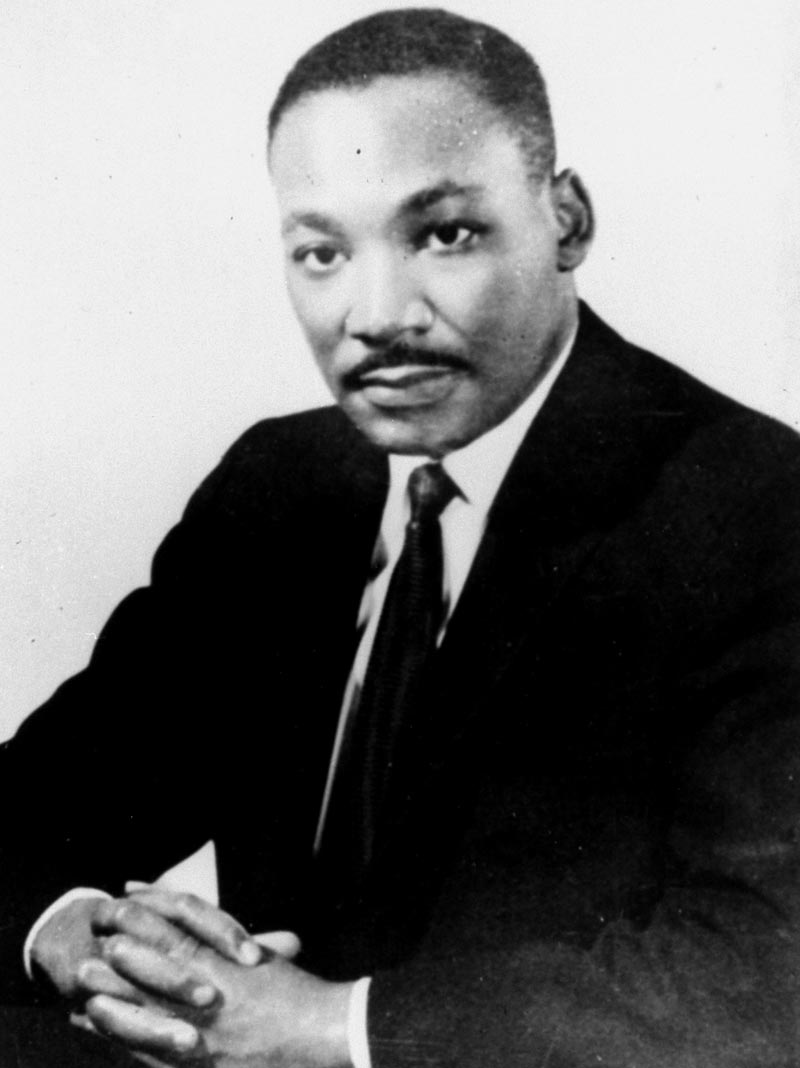
Fifty years ago, one of the greatest Americans gave one of the greatest American speeches ever, on the mall in Washington, D.C.  Dr. Martin Luther King's I Have A Dream speech is a truly remarkable combination of righteous moral fervor and rhetorical skill.  Decent people everywhere are inspired to make his speech of historical interest only, that is, by making his dream the present reality.  This, as we all unfortunately know, despite remarkable racial progress, remains a dream.

One of the striking aspects of King's speech is its moral fervor.  He was black and felt first-hand the gratuitous indignities inflicted on his people by the rampant racism of his time; combating racism was obviously close to his heart.  In his speech, however, it clearly comes across that he was interested in justice with a capital J. His thirst for divine justice would not be quenched by any draft of mere self-interest.  Dr. King was motivated by "truth force," an English translation of the Gandhian satyagraha.  The soul of truth force has no color.  It is a tribute to Dr. King's universalism that one can easily imagine this soul force giving the same speech, word for word,  translated into words from the light within us all.  One can give no greater compliment than that.

Racism was--and is--horrible; he needed to address and help remedy this great evil, and his great speech was a giant step in that direction.  I have the distinct impression, however, that if full racial equality was effected by divine fiat in 1963, Dr. King would have been overjoyed for a while but not ultimately satisfied.  Unjust wars, unjust wages and the great injustices of unemployment and the lack of universal health care would have driven him to work harder than ever to combat great lies, the opposite of truth force.  I heard a commentator reply, when asked why Dr. King opposed the Vietnam War, that it  was because many blacks were dying in combat.  I cannot believe that this is the whole truth!  He opposed the war because he passionately believed that it was causing unnecessary deaths of people of all races.

At the end of his life he was preparing a march on Chicago to demand that America's downtrodden poor be treated more fairly.  I remember thinking at the time that segregation was such a moral outrage that decent people could no longer look the other way.  We were ready for some change.  But hordes of poor people demanding justice--it was quite possible that Dr. King could have accomplished this--America wasn't for that then, and is perhaps even less so now.  Rich folks, they're going to kill him, I remember thinking.  I'm not saying that's what happened, but that's what I thought; in any case, I do not doubt that some breathed a sigh of relief when the great man was silenced.

Yes, you can kill an avatar of soul force; no, you can never kill soul force itself.  The light inside us still has the dream that it will not be a pale light forever but will one day shine on who we are and all we do.

Rest in peace, Dr. King, we miss you.

2.

Criticizing a small section of the speech makes me feel a little like a little doggie following the Kenilworth Knights, the drum and bugle band that led the march on Washington. but I think the point to be made is important.  It is in no way meant to diminish the great man's legacy; I am quite sure that he, once he heard my argument, would agree.  The distinction I make runs so contrary to popular thinking, that it is quite understandable that Dr. King didn't consider it.  His theme, after all, was racial justice, not an important aspect of wisdom that would strike most of his listeners as counter-intuitive. 

Sometimes I no longer feel like that little doggie, but like the drum major who led the procession.  For my criticism is based on the teachings of a man much greater than the great Dr. King, namely Jesus of Nazareth.  Here is the sentence of the speech I believe contains a moral error:

I have a dream that my four children will one day live in a nation where they will not be judged by the color of their skin but by the content of their character.

One of my favorite sayings of Jesus is "Judge not less ye be judged."  We are of course not only permitted to judge a person's behavior, but morality, primarily for the protection of others, demands that we do so.  Jesus certainly judged the behavior of some of his contemporaries!  Judging a person, however, is always morally wrong.  If someone behaves badly, the proper response is always, "There but for the grace of God go I."

We can prove this by a thought experiment.  Dr. King grew to be a moral leader of immense stature. But what if he never had experienced love from his mother and from other family members?  What if he had never been mentored by teachers who took interest in him?  What if he never had been nurtured by the church, etc.  What if he had been severely neglected and abused?  What if he had been locked in the cellar by an insane parent for years?  Dr. King would most likely have turned out to be what person-judgers would consider to be an abject failure.  Would this be his fault?  Are we to judge him because of wounds inflicted on him by others?

Consciousness, motivation, free will, character and mood--the roots of these are so mysterious that we are not even able to judge ourselves, much less to judge others.  Nature's mysterious manipulations and the varieties of environment can turn one identical twin to a life of crime while his identical twin turns toward a life full of love and compassion.

This is not a minor point.  I've heard TV commentators fume about Dzhokhar Tsarnaev, the nineteen year old who committed a terrible crime with his brother in Boston.  He is a monster, they shouted, and never should be thought of as a human being.  I am fully convinced, however, that with the right environment of love and support he would have most likely turned out to be a model citizen.

No, this is not a minor point, for if we stop judging others, the humiliation and anger that arise from our judgments would cease, preventing a lot of bad behavior.  I am convinced that self-hate is at the root of most of the hatred of others.  And the result of this hatred/self-hatred is often evil deeds.

Christians are taught to see Christ in everybody, no exceptions.  Zen teaches that there is a pearl of complete enlightenment shining in us all.  It is very true that many betray the Christ within and bury the pearl of perfection in the mud of greed, hate and delusion.  However, if we believe that what Christians call Christ is in all us; if we believe with the Quakers that the light shines in everybody; if we believe with the Zen Buddhists that the pearl inside cannot be sullied--and I admit to being convinced of all these things--each must respond when asked to reject a person who has committed bad deeds, with the words recently used by the current pope, "Who am I to judge?"

Even Kings nod.  Nobody's perfect.  More than just about all of us, however, Dr. King spent his waking hours morally fit and extraordinarily alert.

I repeat: Rest in Peace, Dr. King, we miss you.


8.21.2013

OBAMACARE OR SWITZERLAND ON THE POTOMAC

As I am writing this, Senator Ted Cruz is threatening to organize the defunding of America's new system of universal health care, even if it means shutting down the entire government--an extremely drastic step.  It must be done now before "Americans become addicted to the sugar of subsidies."  The cost of the new system will be extremely prohibitive, he tells us, necessitating the loss of many jobs and reducing many full-time positions to part-time work.  His father, Rafael Cruz,  insists that it will send the elderly to the poorhouse!  Ted Cruz's view might be extreme--and it is--but it is a fact that just about every Republican opposes the new health care law.  Oh, and you know the adage that the devil can prove anything with statistics.  (I remember a table the Bush administration created at the time of his massive tax cuts:  the table showed that, in a few years,  hundreds of thousands of jobs would be created each month because of the tax cuts.  Well, we all know how that turned out.)

We are paying these guys to keep us informed!  I would like to hear a sensible conservative and a sensible liberal view on every issue, not just the crazy conservative and sane liberal views we're getting now.  The Republicans in Congress are getting a fat salary and perks and perks and perks--did we really hire them to vote down Obamacare forty times, when they know that each time their legislation had no chance of passing?  It would be better if they concentrated even on dinky legislation, such as, say, requiring that seed in bird feeders meet Burpee standards--at least in this way some old birds will be preventing some young birds from getting sick.

Americans are woefully ignorant about health care; if they had more knowledge that would be laughing out loud every time Cruz opens his mouth.  (I'm a doctor and I'm glad the public is better informed about health habits .  If a so-called expert on TV informed them of the dangers of vegetables and the benefits of consuming at least a pound of butter a day, they would, thank goodness, change the channel!)  The public is so misguided and ignorant--For instance, 62% of the population of Louisiana --a poor state which would benefit greatly from the new legislation, since there are many Louisianians without health care--opposes Obamacare.

Those who  are ignorant and believe in witches will demand that witch hunters receive massive Congressional support..(Even less so than Christine O'Donnell, President Obama is not a witch.)

I am not a health care policy analyst, and do not intend to confuse both you and myself with self-serving statistics.  I want to make just four points.  If you oppose universal health care, or are unsure about it, I ask you to ignore Fox News for a while and consider these facts.

1. THE UNITED STATES IS THE ONLY DEVELOPED COUNTRY IN THE WORD THAT LACKS UNIVERSAL HEALTH CARE

In  every country that can afford it, universal health care coverage is viewed as a right.  Like the right to private property.  Like the right to vote.  Like the right to elect blithering idiots to Congress.  That the richest country in the world has 40,000,000 people that lack health insurance is absolutely shocking to citizens of other countries. Poorer countries, like India and China, are doing their best to provide universal coverage, but can't afford it at present.  Some poorer countries--Barzil, Chile, Argentina--provide it now.. Sure we could be right and the rest of the world could be wrong, but this is highly unlikely.  If this were true, one would expect that one or two countries would try to opt out.  Not a peep from any of them!  The relatively poor health outcomes in the United States is a good indication that health care for all is, well, a healthy thing.
Our opposition to Obamacare is a little like saying "Child Labor, si!" while the rest of the world says "Child Labor, no!" Conservatives and liberals everywhere--except in the United States--agree that universal coverage is a must in all countries that can afford it--and we certainly can afford it.


2. UNIVERSAL COVERAGE HAS TO BE CHEAPER THAN WHAT WE'RE PAYING NOW

First point: Every advanced country has a system that provides universal health care coverage.  Second point: Every one of them is significantly cheaper than the present American system.  The United States spends approximately $8,000 per individual per year on health care expenses, by far the most costly system in the world.  (And, as pointed out already, the health outcomes are, on the average, worse.) Other industrialized countries are paying about half that, $4,000 per individual.  Remember, in the insurance-driven system we have now, health insurers are more interested in the price of their stock, more beholden to their stockholders than they are to the insured.  Many insurance companies went as far as to  hire staff to find ways to disenroll people once their sickness threatened profits; the companies would often refuse to pay for necessary treatment.  Until the Affordable Care Act abolished this practice, insurers could refuse to insure those with "previous medical conditions."  For instance, if you were known to have diabetes, an insurer would cover you--except for expenses related to diabetes!  The insurance companies prospered, but not  many who were sick.  No, you can't have a decent health care system the based on profit! Blood is not Coca Cola!
Premiums have already come down in states that have introduced health care exchanges--that is, competition. Competition is a good thing, no? Why then are the Republicans--the representatives of competitive industry--so upset?  After all, insurers will gain about 40 million new customers, which should offset the cost of having to insure those with preexisting conditions?  That brings us to Point 3.

3. SWITZERLAND ON THE POTOMAC

Switzerland is the most consumer-driven health care model of all industrial nations.  It is also the most expensive, although cheaper than the present U.S. system.  Everyone must be covered; the Swiss are free to choose their own insurance.  The poor receive subsidies to cover the premiums.  This has been the model for Obamacare.  But there is a crucial difference: the Swiss health care industry is highly regulated.  For instance, if one company is not paying out enough for services, it is suspected that it is because their members are healthier.   If this is indeed the case, they are required to transfer some of their profits to insurers who are covering more sick people.  None of the clever tricks of the U.S. system,  such as one that permits HMOs to enroll healthier seniors and get even more reimbursement from the government, is allowed.  Since Obamacare basically follows the Swiss model without a lot of the Swiss regulation, it might be more expensive than need be at first--though probably not as expensive as our system is now.  It will therefore need to be reformed, which means regulation cutting into the health industry's profits.  They will always be very profitable, but will not be able to make the killing--pun intended--that they do now.  I think that's the source of the Republican opposition.  After all, the idea for Obamacare came from a Republican think tank, the Heritage Foundation--yes, including the part requiring an individual mandate.  It is not the present form of the Affordable Care Act that they're worried about, it is the fear of future--necessary--regulation.

4. WHAT IF IT IS EXPENSIVE AT FIRST?

Let me give an analogy.  Slavery was a moral evil; we all agree on that.  But the South defended slavery--why?  Follow the money!  They were economically invested in that evil system.  Landowners were not about to give up free labor, on which their profits depended, without a fight--and that fight is now known as the Civil War.  No one today would argue for the reintroduction of slavery as a way to boost profits, no matter how poor the economy is.  Although having 40,000,000 people without health insurance is not as evil as enslaving and demeaning an entire race, it is certainly an evil.  So how can we talk about expense when the alternative is morally offensive?  Therefore, the scare tactic that would have us believe that universal health care is too expensive is not only false--see Point 3: in the long run it has to be cheaper--it is also wrong, since such coverage is a moral necessity.

The Affordable Care Act is not ideal, but it is a great improvement over the current system, and, being anything but a government takeover of the health care industry, was probably the best deal our President could have obtained.  It will be improved with time, along with our health.  In a few years, we will take it for granted and consider the old days without universal health care comparable to the days when there was no electricity, running water, Google, or smart phones.  In the meantime, I hope the four points of this essay will help guide you past the Scylla of Ted Cruzes and the Charybdis of Paul Ryans--beyond them the sailing might not always be smooth, but with a sensible captain and a healthier crew, we will move on.