7.23.2013

A CLASS IN REMEDIAL HUMANITY


1.
All of us who have taught courses and have had to correct and grade student papers are well aware of the sorry state of writing these days.  It is no better if one has been an editor of a literary magazine, where bad poetry, bad prose and bad grammar often combine.  "Before expiring, a body had climbed over the seat and up toward the window..." For students who write sentences such as this one, there is help: a course in remedial English.
I think, however, that there is a problem prevalent today that is even worse, much worse, than writing badly. Stated simply, it is our self-righteous penchant of talking at each other rather than talking to each other.  Talking to each other implies not only listening to each other, but respecting each other's point of view and possibly modifying one's own view accordingly. Is it too much too hope for that persons on opposite sides of a spectrum could sit down, have a dialogue and learn from each other? I have assumed for many years  that honest dialogue would be more difficult  among government representatives where it's all--or nearly all--about power.   Our current Congress has proved this assertion to be correct to an unprecedented degree,  as anyone who follows American politics knows.  In this country, however, so fanatically divided between conservatives and liberals, honest dialogue is becoming increasingly rare even among ordinary citizens, from whom one would expect  more nuanced views.  (Ever wonder why it is a truism not to bring up politics or religion at parties?)
Things have gotten markedly worse.  I will use the Trayvon Martin case as an example of the current sorry state of not listening to each other.  Extreme conservatives, preaching to their couch-potato choir, have said some outrageous things regarding Trayvon Martin; similarly, extreme liberals have said outrageous things about George Zimmerman.  I think both groups need to take a course in remedial humanity. They need it!
Here's how, in this thought experiment, the class would work.  There is a test called the "The Implicit Association Test," the IAT, available online, which assesses the presence of a variety of prejudices, e.g. racial prejudice, prejudice regarding age, gender and against the obese.  These tests have produced surprising results: many African Americans harbor some degree of bias--against African Americans.  I took the age-bias test and discovered that I, a senior citizen, have some degree of prejudice against, well, senior citizens.  The degree of prejudice is what is important, of course.
The teacher of the remedial humanity class would devise a test to assess one's views of the Trayvon Martin case.  Out of, say, sixty results,  one would compose a class of fifteen of those with the most extreme conservative views along with fifteen of those with the most extreme liberal views.  The teacher would thus have a class of students who need intervention the most.
The teacher would begin the class as follows: "You are here today because your test results indicate that you are in need of a class in remedial humanity.  Your extreme views are evidence that you are unable to respect opinions other than your own.  I'm here to help you to listen to your opponents with respect"  The instructor would then write on the blackboard--yes, a course in remedial humanity is quite out-of-date--the following saying: Do not judge another unless you have walked a mile in that person's moccasins The goal of this class, the teacher would go on to explain, is to transfer this saying from your lips to your hearts and minds.
To the fifteen extreme conservatives, the instructor would then assign the following essay, using the following sentences as guidelines: How would you feel if you were the parent of Trayvon Martin? How would you feel if your son was coming back from a store, minding his own business, and wound up dead, killed by someone who assumed he was up to no good?  Are you really convinced that racial profiling had nothing to do with this case?  Are you sufficiently cognizant of the horrible legacy of racial prejudice in this county?  In a country where racism, albeit on the decline, is still very much alive; in a country where nearly every black person can give personal examples of being  the victim of racial animus--are you justified in telling fellow black citizens, outraged by this case, to simply "Get over it!?"  If you were black how would you like to have somebody say that to you?
The extreme liberals would have to write an essay from the opposite point of view: How would you feel if you were the parent of George Zimmerman?  Do you think that characterizing him as a racist thug does him justice?  Are you sure that Zimmerman hunted Trayvon down and killed him simply because he was a young black male wearing  a hoodie? Are there any ambiguities in this case that would militate against  a conviction of second degree murder?  Do you think it would have made sense to send Zimmerman to jail for perhaps thirty years? Is racism in this country getting better or worse?
The students would be assigned to wear the metaphorical moccasins of those with opposing  views
for a month, after which they would write their essays.  Grading would be easy.  They would take the IAT once more; those that evince a shift toward the center would pass.  The teacher wouldn't even have to read the essays--thank God--except to determine whether the student in question defended the Florida Stand Your Ground Law, which would result in a big, fat, walloping F. The instructor, ready for the next 30 students, would have the great satisfaction of knowing that he or she has provided much needed help in resolving the terrible problem of self-righteous posturing.


2.

If you listen to extreme conservatives, race is no longer of concern in this country.  If you listen to extreme liberals, you get the impression that  things have gotten worse.  I am going to give you a very personal anecdote about why I, a white parent of a black son, disagree with both camps.
I have never discussed this incident with anyone other than with my wife and son, but I believe it's time to mention it now.
An Indian friend of my son, who is dark-skinned and could easily be mistaken for black, at least from a distance, was visiting my son at our house.  He left to go home around  2 a.m.  He discovered that his car, parked across the street from our house, wouldn't start and got my son to help him. (My son and his friend were very quiet, respecting the time of night.  The neighborhood in which we have lived for many years consists of families who are white except for the notable exception of ours--my wife is from India, my son is adopted.)  Looking out a window and seeing two dark-skinned individuals, a neighbor called the police. reporting a robbery in progress--I have no doubt that racial profiling was at work here. The police came. They, of course, had guns.  They asked him rather gruffly what he was doing?  He politely explained the situation and indicated that he lived in the house directly across the street..  The two white officers apologized profusely.  Sorry,Sir, sorry, sorry, we received a report and we had to investigate.
How do you think I felt?  I was extremely happy!  You are alive! I told my son, thank God!  Yes, there is still a lot of racial profiling going on in this country--Although my family can give examples not only of the hazards of Driving While Black but also of the hazards of Flying While Brown, we all agree that things have gotten a lot better. Thirty years ago, there would have been no Sorry; thirty years ago there certainly would have been no Sir. Thirty years ago,  they might have drawn their guns.  Thirty years ago they might have shouted FREEZE! and misinterpreting your closing the hood of your friend's car,  my son,  for reaching for a weapon, they might have shot you.  And, undoubtedly, they would have been cleared of charges of murder. Things like that have happened.  That no injuries occurred, however, provides no solace to the Martin family.  But it's important to state that tragedies like Martin's unnecessary death are becoming increasingly rare, as we will illustrate shortly.
There has been much nonsense written about the Trayvon Martin case.  I am done reading about it.  I am done listening to pundits pontificate about it.  If all this talk doesn't result in something positive, such as the repeal of the notorious Florida Stand Your Ground Law, it's just a lot of yada yada yada, largely directed at opponents rather than to them.  The Economist, a British magazine, got it right, though:

Happily, incidents such as Mr Martin's death are becoming rarer...Although blacks are more likely to be attacked by strangers (of any race) they are less than half as likely to be attacked as they were 20 years ago.  The odds of being attacked correlate more with age and income than with race...
That is little consolation to Mr Martin's family or the many frightened black parents in America.  Mr Watson, the pastor from Sanford, says he would not have thought twice about whether it was safe for his children to walk to the store alone before the shooting.  Now, he says with a sigh, he would never let them.

--The Economist, July 20-July 26, 2013, page 28.

3.

I still have great faith in the American people.  There are many problems, true, but with the right strategies things could get a lot better. I have no doubt that not only those with extremist views, but ordinary citizens, too, would benefit from a course in remedial humanity. (Life offers many courses in remedial humanity to those humble enough to learn.)  I doubt, though, that many extreme conservative and extreme liberal pundits, such as those seen on TV,  would be willing to learn much-needed lessons on how to treat and to listen to others..  "How dare you think that I need such a course? I have a PhD in..."  "I refuse to walk in someone else's filthy moccasins."  "Do you really expect me to take off my Gucci shoes?"   "Do you really expect me to remove my Pradas?"

Yes, I suppose I do.


.

7.20.2013

A REVIEW OF 'THE NEW LIFE' BY ORHAN PAMUK


Pamuk's The New Life is a wonderful novel.  The book has a lot to say about the cultural issues affecting the Muslim world, specifically Turkey. The subject of the novel, however, the attempt to discover the meaning of life in a world that provides no easy answers, is universal.  It provides an excellent read whether the reader is Muslim, Christian, Jew, etc.--he or she just needs to be human.
The plot begins with an engineering student, "a dreamy kid with nothing special to recommend him," who comes across a book which fascinates him so much he resolves to change his life.  He reads it over and over, determined to begin a new life with the book as his guide.
Many others, we soon learn, have read the same words and have become similarly inspired--that is, obsessed.  Just about all of them are young men.  By this time the reader realizes that the book, the exact contents of which are never disclosed, is a latter-day Koran, transforming those who are susceptible to its message into devoted believers.
One of Pamuk's main themes, most prominent in his novel, Snow, is that modernism isn't working in the Muslim world, and its failure is causing a rise of fundamentalist religious views.  The author's view--and I agree with him--is that secular Turkey has failed to make the necessary reforms to make life less burdensome for the masses.  They try to compensate broken promises of this world with imaginary promises of the next, with predictable results.
The protagonist is, however, somewhat different.  The angel in his case who "reveals," that is, provides him with the book, is not Gabriel but a beautiful young woman named Janan, a name which translates as "the Beloved."  His journey is more erotic rather than religious. There is a love triangle here: Janan is in love with Mehmet, a fellow student who has disappeared.  The jealous protagonist eventually decides to track him down and kill him, and eventually succeeds. (Sexual desire plays a central role in Pamuk's work; this is perhaps why the protagonist has the same initials as the author, and refers to himself at one point as "Orphan Panic.")
Pamuk is as ironic as he is subtle.  The author of the New Life book is O.P's Uncle Rifki, the creator of popular children's books.  The modern Koran, his final work--and presumably the original one, too--is actually a children's book for adults. (Pamuk, for obvious reasons, cannot say this directly.) It is a beautiful book, true; but believing in it literally and thus rejecting rationality can, in the modern world, only lead to disaster.  And the young men do indeed believe in it literally.  Yes, big Mehmet, flying carpets are real.
The protagonist along with his lovely angel, Janan, set out to find the new world.  The metaphor for this impossible task is taking long bus rides.  During a bus journey, the world whizzes by.  The passengers, as it were, are no longer part of that world but mere observers, as if all sights were of unsubstantial images rapidly passing by on a movie screen.  They hope that the next stop will be heaven, but this never occurs.  They do encounter, however, a series of serious accidents, resulting in many fatalities.  Leaving this world behind and following chimera is dangerous, no doubt about it.  (By the way, those who have traveled by bus in the developing world are more likely to accept as probable the many accidents depicted in the novel!)
Another irony: the father of Mehmet, one of the first to be taken in by the book, is a violent nationalist.  He believes in what he calls "the Great Conspiracy," the deliberate corruption of Turkish culture by the West.  He doesn't want a return to religion, but a return to (largely imagined) glories of the past.  He has Uncle Rifki killed; he sets out to track down all the followers of the book and have them murdered.
In the world of the novel, secularists and fundamentalists have become as bitter rivals as Sunni and Shia. No matter what one's goal is, violence is viewed as the proper way of achieving it.
One of the most beautiful sections of the book concerns Mehmet, who has a long discussion with the protagonist, just before the latter kills him.
He has become an ascetic.  He no longer literally believes in the book's contents. He copies the book with great mindfulness, creating works of art, as in Medieval Europe.  He has become aware of "the internal music of the text" which for him is now more significant than its prose meaning.  By all accounts, the Koran is a literary masterpiece.  Like the original, this modern Koran has became for him "a good book," a delight in itself that needs no external references.
Here is what Mehmet says about the book, and presumably about all great religious classics: "Perhaps it is something that has been distilled from the stillness or the noise of the world, but it's not the stillness or the noise itself...It is futile to look outside the book for a realm that is located beyond the words." The realm does indeed exist, but only in the text and in us.
God, Pamuk implies, exists inside and not outside us.  (And physics implies that inside and outside are one, the former (consciousness) causing the former, "reality," thus making the above statement moot.  A belief such as this, however, makes fundamentalism and its resulting violence impossible.
He has become very wise indeed, this Mehmet.  But he is murdered, indicating that wisdom is not going to resolve the current political mess--but, of course, there is still hope for Turkey and for all of us.  There always exists the possibility that a future Mehmet will arise in the form of a competent statesman.
Pamuk's book brings up very important issues; as a consummate story teller, however, he never allows these issues to detract from delight in the story itself.
Too bad that it is unlikely that this book will result in readers who resolve to begin a new life, not based upon the latter-day Koran depicted in the novel, but upon Mehmet's wisdom.


Thomas Dorsett

August 1, 2013

Our online book club met this evening to discuss The New Life.  This book was not popular among the other members.  It received a range from one to three stars out of a possible five.  One member thought the translation was bad; all of us agreed on that.  The translator, Gumeli Gun, is obviously not a native speaker of English.  Example: "Before expiring, a body had climbed over the seat.." Most thought that the characters were not well delineated.  One thought that the novel was just too philosophical and political; it would have been better, this member of our club thought, to write an essay.  A novel needs to tell a good story, and it was felt that this one was quite deficient in this regard.  The reviewer, however,thought that the novel gave deeper insights into contemporary life--especially in Turkey--than most essays could provide--and in a much more entertaining fashion.   This might not be his best novel, the reviewer conceded, but it is still quite a good one.

PLEASE GIVE US YOUR OPINION IN THE COMMENT SECTION

Our next meeting is on September 26, 2013 when will will discuss Tolstoy's Anna Karenena.
Hope you will join us!

Until then, Happy Reading!

Thomas Dorsett

7.17.2013

IF DEVILS DON'T EXIST, WHY ARE THEY STILL QUOTING SCRIPTURE?

I am not naive; I realize that anyone who in truth says "I don't have a selfish bone in my body" must be an angel, and angels, as far as I can tell, do not exist. I have come to believe that the good life must balance innate selfishness with altruism, with increasing emphasis on the latter. (If we began by really practicing "turn the other cheek" we would end--perhaps forever--in less than a week.)
Adam Smith, the father of free market capitalism, stated in his 1776 classic, the Wealth of Nations, that the market's invisible hand transforms private self-interest into public prosperity.  There is some truth to this, but only when capitalism is balanced by laws that guarantee at least a minimum of  fairness.  ( I define fairness as heath care, safe neighborhoods, adequate nutrition, adequate housing, employment opportunities and good education for all--goals able to be approximated by wealthy countries that set these priorities.) Yes, there is truth to the benefits of capitalism--The leading industrial countries of the world have amassed much wealth, which has helped, in varying degrees, all their citizens.  True, in the United States the gap between the have-nots and haves is so great that it is morally obscene--but still, would you rather live in a place like Bolivia where everyone is poor, since the principles of wealth creation are thwarted by the state?
Capitalism will always tend to push in a direction that favors the wealthy, while regulation tends to attempt -at least partially--to restore balance.  The result will never be ideal--far from it-- but at least one that is less unjust.
I am sorry to say that many of our legislators have lost all sense of fairness.  The House has an abundance of representatives who are so extreme, so unbalanced, so morally reprehensible as to make any decent American hang his or her head in shame.  I will give but one example here, that of Stephen Fincher, a Republican congressman from Tennessee.  He was a prime backer of a recently passed farm bill in the House, which splits off the provisions for food assistance to the poor while increasing the subsidies for agribusiness corporations.
The original farm bill legislation was passed during the Great Depression of the 1930s.  At that time there were many small farmers who needed assistance to survive.  Small farms today, however, are  becoming as rare as carrier pigeons.  They've all been taken over by large corporations; the current law provides huge benefits to the rich.  For instance, the House Bill restores eligibility for those earning more than $750,000 dollars.  The top 20% of recipients receive lavish payments.  (Over the years, Fincher himself has received over 3.5 million dollars in "assistance.")
The current farm law is laden with fraud, but the big fat dark cloud does have a thin silver lining: it also provides food assistance for the poor.  True, the number of those receiving food assistance has increased--due to a recession caused by unregulated capitalism, I might add.  But no one receives millions in benefits; the average benefit is $134 per month.  One must recall that over 80% of the wealth gain since the recession began has gone to the rich, while the status of the working class and poor has declined.  Even a little help to offset low wages is denied by those like Fincher.
Fincher is acting out of spite--the program pays for itself.  The non-partisan Congressional Budget Office estimates that for every dollar spent on the food-stamp program, the economy grows by $1.60. (The benefits are immediately spent and stimulate the economy.)
Capitalism and greed go together, but if capitalism is to succeed in the long run there must be some sense of balance.  Fincher, and so many Republicans like him, is an incarnation of untrammeled greed and spite, a truly toxic combination.  The Republicans split the assistance to the poor from the assistance to the rich, hoping, of course, to decimate the food assistance program in separate legislation.
Here's how Fincher assesses the situation: "The role of citizens, of Christians, of humanity, is to take care of each other.  But not for Washington to steal money from those in the country and give to others in the country."  If those, like himself, however, are rich and don't need assistance, then it's apparently a very good thing for government to make them even richer.  This Anti-Robin Hood in Gucci shoes wants to insure that all his King John buddies are able to sail off to a tax haven on board a publicly financed yacht. How  more Christian can you get?
A Democrat reminded him, a Bible-thumping Christian, about Jesus, who taught that what you do for the poor you do for God.  Fincher didn't miss a beat and replied with a quote from Thessalonians: "The one who is unwilling to work shall not eat."  (Forty-one percent of food-stamp beneficiaries occur in families with earned income.  Facts apparently don't bother Fincher.)
Can you think of a better example of the Devil quoting Scripture?  I can think of a few.  Those devilish extreme-right Republicans!  Every day they are taking us closer to hell.

7.14.2013

TRAYVON'S LAW

Last night, after sixteen hours of deliberation, a jury composed of six women acquitted George Zimmerman of second-degree murder.  The jury also declined to convict him of manslaughter. I had thought he might be acquitted, not because I thought him innocent, but because of the high standard "beyond reasonable doubt" required to convict anyone of anything.  But I have become sure of this: no matter what the verdict, justice would lose.
I first heard details about the case on the Lawrence O'Donnell show, a program which, like me, I'm not ashamed to say, espouses progressive viewpoints.  O'Donnell portrayed Zimmerman--in no uncertain terms--as a white, racist thug who gunned down Martin simply because Martin was black.  Martin, 17 years old at the time of his tragic death, was shown, many times during the program and elsewhere, in a photo taken several years earlier when he was a boy.  He was smiling in the photo and looked completely harmless.  According to this view,  Zimmerman was a vicious, adult racist thug who murdered   a boy in cold blood largely because he was black and wearing a hoodie.
At this point, I feel I must reveal that I am a white man married to an Indian with an adopted black son.  Needless to say, I was enraged.  Especially at those in Florida, where this awful event occurred, who decided that it was indeed self-defense.  No charges would be brought.  Here we go again, I thought; this has got to stop.
I soon learned, however, that the case was more ambiguous than I had thought.  (I recalled a murder that took place in Texas where a racist white man shot a black man, who, attached to the bumper of the racist's car, was dragged down a road while still alive.  Now that is an unambiguous case.)  I learned that Zimmerman was not white but Hispanic; I learned that it was possible that Martin was beating Zimmerman at the time the former was shot; I learned that Zimmerman had no history--at least no overt history--of being a racist.  I found it very unlikely that Zimmerman would have shot Martin simply because he was black,  (I think it quite possible, however, that racial profiling had a role in the way Zimmerman behaved.)  I do think Zimmerman had many opportunities to prevent what happened; for instance, he could have decided to report his suspicions to the police and let officers handle it.  Zimmerman, in the court of conscience, is far from being innocent.
Yes, there is much, much more racism in this country than most whites imagine, and no, the Zimmerman affair is not a test-case illustration of this fact.
The trial has become another sad Rorshach text exposing the political and racial divides in this country.  Die-hard conservatives see it one way; die-hard liberals see it another.  Like horses wearing blinders, neither gets enough perspective to analyze the case objectively.
This article is not an analysis of this tragic event, other than presenting it as an occurrence that eludes a knee-jerk reaction.  I wish to briefly discuss why, no matter the verdict, we all lose.
Our judicial system emphasizes individual responsibility while neglecting factors that may have enabled the individual to act the way he did.  This is my point: what should have been on trial was the Florida Stand Your Ground law, without which Trayvon Martin would most likely be alive today.  The law states that a person can use deadly force, that is, shoot someone, when he fears he is in danger,--even if safely retreating from the confrontation is a possibility!  That law is much more responsible for the death of Trayvon Martin than Zimmerman was.  If you aren't convinced, ask yourself this: if Zimmerman and Martin had both been Canadians living in Canada, how likely would it be that a death would have occurred?
The death of poor Trayvon--my sympathies are with his family--reminds me of the recent recession from which we are recovering painfully slowly.  Unregulated banks came up with ways to snooker the market and caused a horrible recession.  They profited from it, while the rest of us continue to pay dearly.  They remain unregulated; it will happen again.  Similarly, our politicians are unable to pass much needed laws regarding firearms,  resulting in many, many deaths every day.  It is a "crime" that our entertainment-based culture focuses on the things such as the Zimmerman trial, while ignoring the epidemic of violence in this country. 30,000 deaths from guns every year!  30,00 deaths from guns every year!
Zimmerman should not have had a gun.  Even if he panicked, I do not believe he was in mortal danger.  (That his injuries were minor is not significant.  One could panic when one discovers that, while bathing in the ocean, one can no longer touch bottom.  This could induce a panic even though, after paddling a few inches toward shore, one realizes that there was really no danger.)  I repeat: Zimmerman should not have had a gun.
The only way I see progress here is if a law is passed, Trayvon's Law.  The law would forbid neighborhood watchmen from having a concealed weapon.  This would be ideal, but I doubt that such a law would be passed under current conditions.  Second best would be a law requiring extensive training for citizens patrolling neighborhoods.  They should be instructed to inform the police and not to confront "suspects."  The training should be all the more intense in those States that allow, even promote, carrying a concealed weapon.
I think our justice system should be turned upside down; it should emphasize prevention and rehabilitation , not punishment.  Rather than Zimmerman, I would much rather see some of those irresponsible bankers be put in jail--this would help prevent recurrences--rather than Zimmerman.  What good would that do?  Most of all, I'd like to see the establishment of some form of Trayvon's Law.  What good would that do?  Plenty.
It is not productive to assert that  if Trayvon had behaved differently, he too could have prevented what happened.  Let's posit that he lost his temper and attacked Zimmerman.  One must not forget that Trayvon was a kid.  If Trayvon lost his temper because he assumed he was being pursued by a white man for no other reason than he was black, I can certainly sympathize with him.  Trayvon was a kid and kids are impulsive.  If he struck Zimmermn first--and I am not at all sure this is what happened--this does not mean that he was heading toward a life of crime.  It would be far more likely, even in this worst case scenario, that Trayvon would have matured into a responsible adult, following the examples of his mother and father.  The horror of it all is that Trayvon will never get this opportunity.
There are many Zimmermans out there.  There are many Trayvon Martins out there.  The murderous lack of reasonable gun-control is bringing them together in a dance of death.  This is the real crime.

7.06.2013

WALT WHITMAN'S VISION

Recently I came across a psychological assessment test on the Web--I don't remember what it was for, but before you could take the  test, you had to provide some background information.  One of the questions had to do with how religious one is.  Possible answers, as one might imagine, ranged from Not At All to Very.  If one clicked on Not At All, one then proceeded to the next background question.  If one clicked on Very, however, more information on religion was requested.  Were you 1) Christian; 2) Jewish; 3) Muslim; 4) Buddhist or 5) Hindu?  I was amazed to find that not only was there no Other Religion category, but there was no Unaffiliated category either.  Those who devised the questionnaire obviously did not imagine the possibility of being religious without belonging to an organized religion.

I immediately thought of Walt Whitman. He would, no doubt, have clicked on Very and would have left the next question unanswered.

There is no doubt that he was a deeply religious man; his poetry is suffused with a sense of transcendence. A close friend of his, in fact,  wrote that she was convinced that a religious sensibility was behind everything he wrote.  Whitman would certainly not have denied this.

This little essay will present Whitman's vision, the religious views of a deeply spiritual man.  I think they provide a good role model for those who are estranged from creeds, yet have religious yearnings nevertheless.

1.

To those who read poetry collections it is well known that a poet will tend to put one of his best poems at the beginning and  another one at the end.  Although a brilliant innovator, Whitman was very much concerned with the content of this poems.  He had something to write about and refused to obscure that content with verbal fireworks.  If Whitman's friend was correct, we would expect to find a specific reference to religion at the beginning of his greatest poem and at the end of it.  (The poem, Song of Myself, is actually a collection of 57 poems.)  This is indeed the case, as we shall now see.

At the beginning of Song of Myself, Whitman establishes that this work will be about him--and, at the same time, about everyone else.  The poem is a celebration of human consciousness, a source of eternal wonder and the highest good of which Whitman is aware--as is made evident from the following lines from section 48 of the poem:

I hear and behold God in every object, yet understand God not in the least,
Nor do I understand who there can be more wonderful than myself.

The emphasis is obviously on an inner religion without any need of external revelation.

Whitman makes perfectly clear that he is unaffiliated with any particular religion with the ending of the first poem::

Creeds and schools in abeyance,
Retiring back a while sufficed at what they are, but never forgotten,
I harbor for good or bad, I permit to speak at every hazard,
Nature without check with original energy.

It is important to note here that Whitman's mother, to whom he was very close, was much influenced by Quakerism.  This "religion" emphasizes the search for, celebration of, and acting upon, the "inner light." Conscience suffused in this light, rather than an external deity, is the Quakers' highest good.   One day, when Whitman was ten, living in Brooklyn, his father took the family to listen to a famous Quaker, Elijah Hicks.  Hicks had been a friend of Whitman's grandfather and, at the time, was over eighty.  The young Whitman was quite impressed.  His speech has not been preserved, but one can get the gist of it from a famous sentence of his: "The blood of Christ is no different from the blood of a goat."  He said this not as a flippant secularist, but as a deeply innately religious man who eschewed all dogma.

To the poet Whitman religions are more like poetry than prose; taking them literally is just as ridiculous as believing the line "My luv is like a red red rose" means that the woman being referred to is full of thorns and infested with aphids.  They are "never forgotten" because  as poetry they have great spiritual significance.

Now let's proceed to the religious reference, specifically the notion of immortality, at the end of the poem:

I bequeath myself to the dirt to grow from the grass I love,
If you want me again look for me under your boot-soles.

You will hardly know who I am or what I mean,
But I shall be good health to you nevertheless,
And filter and fiber your blood.

Failing to fetch me at first keep encouraged,
Missing me one place search another,
I stop somewhere waiting for you.

One of the chief beauties of poetry is its subtlety. its inability to be pinned down, its accessibility to multiple interpretations.  I will give two interpretations of this passage.  The first deals with consolation from the cycle of nature; the second deals with the consolation from some sort of individual immortality.  (That the passage deals with consolation, of this there can be no doubt.)

Whitman found much solace in the cycle of nature.  In section 6 of Song of Myself he famously writes:

Tenderly will I use you curling grass,
It may be you transpire from the breasts of young men,
It may be if I had known them I would have loved them,
It may be you are from old people, or from offspring taken soon out of their mothers' laps,
And here you are the mothers' laps.

Beautiful lines that basically state that life goes on, and as modern physics teaches us regarding the event horizon around a black hole, information is somehow conserved.  Whitman was a great admirer of the Swedish scientist Justus Liebig, who had a very optimistic view of nature and emphasized the natural process of the incorporation of dead matter into a new generation of living matter.  He asserted that decomposition was also a way of purification; he believed that diseases and impurities were broken down after burial into a purer substance from which new life arises.  (Semmelweiss and the discovery of microbes was not far away in time, but still eons away in concept.)  Whitman obviously took much consolation in this view.  It cheered him when he felt there was no form of individual immortality at all.  He once wrote, for instance, that "life is a suck and a sell, and nothing remains at the end but threadbare crepe and tears."

There is. however,  a second interpretation of the last lines of Song of Myself.  Whitman also wrote these lines: "I am not prepared to admit fraud in the scheme of the universe--yet without immortality all would be sham and sport of the most tragic nature."  In the last poem of Song of Myself Whitman seems to be writing about more then the wheel of natural processes.  Let us examine more closely the final eight lines of the poem.  It uses the first person pronoun, either as "I" or as "me" referring to no one else but the narrator, an astonishing nine times. To me this is a good indication that the "I" not only becomes the grass at death but somehow also transcends it. The addressed member of a future generation might find him by "looking under his boot-soles" but what he might find seems to be a lot more personal than grass.  In "fact" the narrator has been waiting for him both as grass and as something completely transcendent..  This gives credence to the assertion that Whitman believed that consciousness somehow survives death.

If these two interpretations seem to contradict each other, I refer the reader to Whitman's famous lines: "Do I contradict myself?/ Very well then I contradict myself? (I am large; I contain multitudes.)

Remember that these two views which I believe Whitman held simultaneously do not indicate fuzzy thinking; in contrast they indicate a profound and poetic view that reflects the subtleties and apparent contradictions of life.


2.
A rabbi recently told me that she and many Jews do not waste their time talking about God.  The more religious ones do not doubt that something wonderfully unfathomable lies behind everything; it's just better to act upon it rather than talk about it. Trying to put God into a catechism is extremely unproductive according to this view.  God is thus a poetic hint rather than a prosy fact.  I do believe Whtiman shared a similar view, as evinced by the following lines from Song of Myself:

And I say to mankind, Be not curious about God,
For I who am curious about each am not curious about God,
(No array of terms can say how much I am at peace about God about death.)

A line that follows, quoted before, I re-quote here:

Nor do I understand who there can be more wonderful than myself.

For Whitman human consciousness is the supreme wonder and mystery, not God.  I think that he would have agreed that the "image of God" refers more to consciousness itself, rather than to a deity beyond it.  Some modern physicists--as well as many Hindus-- believe consciousness underlies, that is, creates everything, thus adopting the mantle of an external creator-God.  Like the traditional deity, consciousness is both very close, since it is ourselves, and very distant, since it remains the ultimate mystery.  Thus Whitman may have been referring to this mystery in the line that immediately anteceded the last quote: "I hear and behold God in every object, yet understand God not in the least/"  Whitman in this respect, as in many other respects, was way ahead of his time.


3.

Walt Whitman was an optimist, no doubt about that.  He certainly had empathy for the unfortunate, yet even his exposure to immense suffering while tending to victims of the Civil War could not, in the long run, affect his upbeat view of life.  The following lines from section 44 of Song of Myself demonstrate both his optimism and empathy for others:

Were mankind murderous or jealous upon you, my brother, my sister?
I am sorry for you, they are not murderous or jealous upon me,
All has been gentle with me, I keep no account with lamentation?
(What have I to do with lamentation?)

This does not mean at all that Whitman did not have his share of sorrow.  He left school at age 11 and was on his own for the rest of his life.  He had to commit his elder brother to an insane asylum; his youngest brother was severely cognitively impaired; there was alcoholism in his family; his sister married an unstable artist and wrote many desperate letters to her brother, etc.

How did Whitman manage so well to overcome the stress of living?  This is an important question if we are to hold Whitman's vision as an example to follow, since it is often the case that optimism, if challenged enough, often wanes and even turns into its opposite.  We will illustrate Whitman's ability to remain largely unfazed by adversity with two examples.    The first poem, "All Poverties, Wincings, And Sulky Retreats," written long after Song of Myself, appeared in the 1881 collection, From Noon to Starry Night.

All poverties, wincings, and sulky retreats,
Ah you foes that in conflict have overcome me,
(For what is my life or any man's life but a conflict with foes, the old, the incessant war?)
You degradations, you tussle with passions and appetites,
You smarts from dissatisfied friendships, (ah, wounds the deepest of all!
You toil of painful and chocked articulations, you meannesses,
You shallow tongue-talks at tables, (my tongue the shallowest of any;)
You broken resolutions, you racking angers, you smother'd ennuis!
Ah think not you finally triumph, my real self has yet to come forth,
It shall yet march forth o'erwhelming, till all lies beneath me,
It shall yet stand up the soldier of ultimate victory.

These strikingly beautiful lines illustrate that Whitman's abilities did not decline with age.  Their intensity is virtual proof of their sincerity.  Here he is not trying to reform America by administering the medicine she needs.  (He once wrote that  his poetry was designed "to lead America, to quell America with a great tongue.")  Here his great tongue is dealing with inner demons. We should not doubt that these demons sometimes presented a formidable challenge.
Mozart loved dissonances but always resolved them.  Whitman was no different; he was as incapable of ending a poem in despair as Mozart was able to end a composition with a twelve tone row.  His nature did not allow it.  The determination to triumph over negativity is expressed in the last three lines of the poem.  Note that it is "his real self" that will provide the victory.  Thus it is not only his nature but his vision that will prove victorious. Whitman's poems provide ample attestation to Whitman's vision that there is a "real self" that transcends the individual self, remaining unaffected by personal vicissitudes.  Thus at the beginning of Song of Myself he can write, "I celebrate myself and sing myself" without being at all egotistic, since he is writing about the "real self."  (A further illustration of this lack of egotism is that Song of Myself contains few personal references, and when it does, they are always part of a much larger context.  Whitman is anything but a confessional poet.)
Notice in the last two lines the impersonal pronoun, it.  He does not write "I shall yet march forth," or "I shall yet stand up," but "It shall yet march forth" and "It shall yet stand up..."  This is further proof that Whitman saw his real self as something objective, something eternal.  Here he sounds much like a Hindu guru.  Gurus are acquainted with sorrow, but their vision prevents despair.

The second poem illustrates Whitman's best defense against negative thinking, a basic attitude and behavior without which wisdom might well run dry.  It is part of his collection entitled "Calamus."


OF the terrible doubt of appearances,
Of the uncertainty after all—that we may be deluded,
That may-be reliance and hope are but speculations after all,
That may-be identity beyond the grave is a beautiful fable only,
May-be the things I perceive—the animals, plants, men, hills, shining and flowing waters,         5
The skies of day and night—colors, densities, forms—May-be these are, (as doubtless they are,) only apparitions, and the real something has yet to be known;
(How often they dart out of themselves, as if to confound me and mock me!
How often I think neither I know, nor any man knows, aught of them;)
May-be seeming to me what they are, (as doubtless they indeed but seem,) as from my present point of view—And might prove, (as of course they would,) naught of what they appear, or naught any how, from entirely changed points of view;
—To me, these, and the like of these, are curiously answer’d by my lovers, my dear friends;  10
When he whom I love travels with me, or sits a long while holding me by the hand,
When the subtle air, the impalpable, the sense that words and reason hold not, surround us and pervade us,
Then I am charged with untold and untellable wisdom—I am silent—I require nothing further,
I cannot answer the question of appearances, or that of identity beyond the grave;
But I walk or sit indifferent—I am satisfied,  15
He ahold of my hand has completely satisfied me.

True, Whitman might be emphasizing his doubt in order to better resolve it at the end of the poem, but I am quite sure the feelings of uncertainty in this poem are genuine.  The poem is a striking example of the importance of connectedness with fellow human beings as one of the best ways to quell life's anxieties.  Research bears this out; those who are isolated tend to die sooner, not to mention the difficulties they face during life.  As Whitman biographies and his poems indicate, the poet had a keen ability to make and maintain friendships with people from all walks of life.  The first poem in this section deals with wisdom, this one deals with love.  Each feeds the other, but Whitman--like St. Paul--would agree that love is the most important of all.  These two poems taken together provide the essence of Whitman's worldview.

4.

Poems with a didactic message are usually bad.  As Frost said, if a young person wants to become a poet because he has something to say, it would be better to write essays.  Whitman is the greatest exception to this rule that I know of.  He was strikingly able to subsume what he had to say into great poetry.  His take on love and wisdom, while immediately understandable, is quite unique.  How many other poets can one use as a guide to life?  No "mania of owning things," but an aesthetic illustration of the importance of friendship and wisdom.  In the best of his writing, expression and content are one, and are of the highest order.  Love and wisdom, Whitman's main themes, have always been in too short supply.  Isn't his poetry just what we need?


The Walt Whitman Series
(Thomasdorsett.blogspot.com)

1. Walt Whitman and Equality
2. Walt Whitman and Music
3. My Walt Whitman Moment
4. Five Poems About Death
5. Walt Whitman's Vision

5.11.2013

FIVE POEMS ABOUT DEATH (Plath, Dickinson, St. Vincent Millay, Dorsett, Whitman)

It has been said that the two chief themes of poetry are love and death.  Poetry, a much more intense and direct medium than prose, is almost always more intense and compact.  (The German word for poem, Gedicht, literally means "that which has been compressed.")  Poetry, at its best, deals with what is essential in new, surprising, and understated ways, so that the reader is taken beyond himself into a world that is both familiar and unfamiliar, where he stands, like Keats's Cortez, "silent, upon a peak in Darien."  Love and death, of course, are the essentials.  Love is what is most important in life; death teaches us that we don't have endless opportunities to help make love more manifest in the world.  (A modification of Psalm 39, sung in Brahms's German Requiem, is as follows (my translation):  "Lord, teach me that there must be an end to my life and that my life has a purpose."  Note that it is death that helps lead one to this knowledge.)

There are, of course, many definitions and ways to express and manifest essentials.  The Austrian fascist Baldur von Schirach claimed in an (awful) poem that he loved Hitler; in contrast, the German Dietrich Bonhoeffer loved his Savior so much that he fought against fascism and willingly sacrificed his own life in order to bring about a better world.  

There are certainly as many and varied views about death as there are about love.  The most important  of these are the topic of this essay.  Since poets express what's essential more directly and more intensely, we have selected for discussion five poems about death by five different poets.

We will use the metaphor of a journey by rail.  Each of the five poets represents a large group of people, which has a similar view of death as the poet in question.  The train is well-lit and provides many activities.  However, nothing can be seen outside the window--the view is of total darkness.  Each passenger has a different destination.  It is common knowledge of all on board that a death figure will at some time come for each passenger, and, for the time being, will be visible only to that passenger.  The passenger will then be escorted from the train by this invisible conductor and will never be seen again. The numerous activities on board and the continual disappearance of passengers make for a very interesting journey.

It is important to note that although we identify the protagonist in each poem as the author, this is merely for convenience' sake.  The identity of author and protagonist applies to a confessional poet like Plath, but certainly not to Dickinson, who often maintains an ironic and/or aesthetic distance from the protagonist of the poem in question.

We are ready to begin.


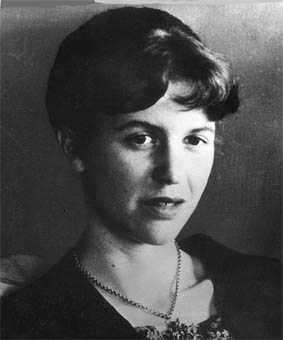
l.  The First Passenger: Sylvia Plath


                                               I AM VERTICAL

But I would rather be horizontal.
I am not a tree with my root in the soil
Sucking up minerals and motherly love
So that each March I may gleam into leaf,
Nor am I the beauty of a garden bed
Attracting my share of Ahs and spectacularly painted,
Unknowing I must soon unpetal.
Compared with me, a tree is immortal
And a flower-head not tall, but more startling,
And I want the one's longevity and the other's daring.

Tonight, in the infinitesimal light of the stars,
The trees and the flowers have been strewing their cool odors.
I walk among them, but none of them are noticing,
Sometimes I think that when I am sleeping
I must most perfectly resemble them--
Thoughts gone dim.
It is more natural to me, lying down,
Then the sky and I are in open conversation,
And I shall be useful when I lie down finally:
Then the trees may touch me for once, and
the flowers have time for me.

This poem is as extraordinarily beautiful as it is extraordinarily pathological.

The technical feat of the contrast between the title and the first line of the poem is striking.  The  opening three strongly accented syllables of the title indicate the horror (for Sylvia Plath) of being alive.  It is like the scream of a self-hating naked person standing in  mid-day sun with nowhere to hide.  The wounded protagonist  (in Sylvia Plath's mind) will find no peace other than death's.  This is in strong contrast to the first line of the poem, consisting of three dactyls, (the last one with a feminine ending, "tal.")  The title is a shout, the first line is a whisper.  In the second line, the monster is no longer a monster; she is lying in the shade, at peace, unconsciously blending in with her surroundings.  It is a tribute to Plath's ability as poet that the theme of the entire poem is indicated by the sounds of the title and the first line.

The rest of the poem is cool and controlled.  Things-desperate things--are stated matter-of-factly.  Through Plath's sophisticated use of constraint and understatement, the poem becomes more poignant.

The poor protagonist!  She complains that she will not live as long as a tree and that she is not as strikingly beautiful as a flower.  Because of this, she implies that she is utterly worthless. Not exactly  the conclusion that most healthy people would come to regarding themselves and others.

The next stanza begins with two lovely lines that describe the harmony of unconscious nature.  The stars provide "infinite light" in response to which the trees and flowers strew "their cool odors."  The protagonist feels that she is not part of this harmony; she is isolated, she is stinking things up by her very existence.

The poor protagonist!  The trees and flowers do not notice her.  She undoubtedly believes she is not getting the attention she deserves, and this is driving her, quite literally, crazy. (One has no doubt that while she's talking about nature here, she really means that the people around her are not satisfying  her inordinate desires.)

Only death can silence this pathological craving.  Her thoughts, her desires--as the Buddha taught--are at the root of her problem.  The ability to think, one of the glories of human existence, is poison to her--"Thought gone dim" the only escape.

The irony of the ending of the poem is that the protagonist will only find peace when she ceases to exist.    (The author was certainly convinced that the two 'me's" of the last two lines represent nothing more than total oblivion.)  Her apparently uncontrollable disease, self-hate,  has made her life unbearable; she is willing to take the "medicine" of annihilation to deaden the pain.

The control, elegiac tone, and imagery of the poem are close to perfection.  It is one of the greatest sickest poems ever written.

                                                                     *

For the passenger Silvia Plath, life is obviously not a happy train ride.  She is not going to wait for the invisible conductor to arrive; she will jump off the train herself.

Our first passenger views death as the best and only way to end her intolerable mental suffering. Our second passenger, as we shall now see, views the end of life quite differently.  

ll. The Second Passenger: Emily Dickinson

Because I could not stop for Death – 
He kindly stopped for me –  
The Carriage held but just Ourselves –  
And Immortality.

We slowly drove – He knew no haste
And I had put away
My labor and my leisure too,
For His Civility – 

We passed the School, where Children strove
At Recess – in the Ring –  
We passed the Fields of Gazing Grain –  
We passed the Setting Sun – 

Or rather – He passed us – 
The Dews drew quivering and chill – 
For only Gossamer, my Gown – 
My Tippet – only Tulle – 

We paused before a House that seemed
A Swelling of the Ground – 
The Roof was scarcely visible – 
The Cornice – in the Ground – 

Since then – 'tis Centuries – and yet
Feels shorter than the Day
I first surmised the Horses' Heads 
Were toward Eternity – 


The protagonist of this poem has been spending her life denying death.  Notice that "could" not "would" is used in the first line; she feels unable to consider even the possibility of "stopping" for Death.  She is on foot and very likely tired from a long journey.  So Death, like a rich man in a carriage, kindly offers to give the weary traveler a ride  She accepts.  The knowledge that  the kind stranger is Death is not apparent to the protagonist at this point--the last two lines of the first stanza contain a realization that came to her later.  Unaware that Death is taking her to the grave, the protagonist thinks she is going on a joy ride.  How nice of the stranger to let her accompany him in such a stately carriage!  He knew no haste--after all, although she doesn't know it, this is a funeral procession.  He is so civil--she no longer has to walk.  She no longer thinks about leisure or work; she's enjoying a pleasant outing.  If she is one of the children at recess, making this vision part of a life-review, she is completely unaware of it.  The setting sun has passed them--time has departed; still she doesn't get it.  She is not warmly dressed; she is  wearing a shroud.  Still she doesn't get it.  Her body is becoming cold.  Still she doesn't get it!

It's only at the very end of the poem, when Death takes her to her final resting place, does she realize that she is dead. What irony!

Although expressed with admirable understatement, the realization that she has died caused such a shock that, despite the passage of centuries, it has remained eternally present in her mind.  Her denial lasted to the very, very end.

The whole poem seems to be narrated by a disembodied consciousness, completely detached, merely observing something that happened in the past.  Having undergone a "sea change," the observer,  still in some sense the protagonist, has been irrevocably transformed.  If consciousness does exist after death, and I do think it might,  it may well be as a dispassionate observer of events, such as the being who narrates this poem.

This is a classic poem about death-denial.  It is ironic, understated, detached--and marvelous.

                                                           *

This passenger on our train was so absorbed by the routine of living that she never had thought that the invisible conductor could summon her away.  He came, as come he must, and she is gone.

lll.  The Third Passenger: Edna St. Vincent Millay


Conscientious Objector
I shall die, but
that is all that I shall do for Death.
I hear him leading his horse out of the stall;
I hear the clatter on the barn-floor.
He is in haste; he has business in Cuba,
business in the Balkans, many calls to make this morning.
But I will not hold the bridle
while he clinches the girth.
And he may mount by himself:
I will not give him a leg up.

Though he flick my shoulders with his whip,
I will not tell him which way the fox ran.
With his hoof on my breast, I will not tell him where
the black boy hides in the swamp.
I shall die, but that is all that I shall do for Death;
I am not on his pay-roll.

I will not tell him the whereabout of my friends
nor of my enemies either.
Though he promise me much,
I will not map him the route to any man's door.
Am I a spy in the land of the living,
that I should deliver men to Death?
Brother, the password and the plans of our city
are safe with me; never through me shall you be overcome.

In this poem, Death is portrayed as a great evil, public--and private--Enemy Number One.  The striking image is that of Death as one of the four horsemen of the Apocalypse, mounting his horse for another day spent mowing us  mortals down with his scythe.  The protagonist is passionately on the side of Life and will have nothing to do with the Horror that brings every life to its close.  She realizes that one day, she, too, will die, but that's the sole satisfaction Death will get from her.  As she beautifully puts it: "I am not on his pay-roll."

There is a good deal of nobility in her attitude.  The protagonist would never cease to fight for life as long as she lives. One can never imagine her supporting fascism or other forms of violence anywhere.  She would be against the death penalty.  If she had been a member of Congress, she would have voted against invading Iraq, etc. etc.  A good, life-affirming person, no doubt about it. (I also see her being combative with medical staff members who try to make her understand that keeping  a brain-dead loved one on life-support is futile--and wrong.)

Her extreme opposition to Death, however, borders on being silly.  I can imagine Death's reply: "I don't need your help to mount my steed, thank you!  I don't need you to lead me to any man's door.  I require neither password nor plans to enter a city.  I've been making my rounds for millions of years, and don't need your help at all.  See you later!"
Can you imagine if the impossible happened and she managed to lock the barn door?  You think there's a problem with Medicare and Social Security now?  The dead certainly deserve love and respect.  But what if they were all still present as living zombies oozing behind every door?

We think of persons and things as having only the three coordinates of space.  But even thoughts, though we might not realize it, have, like everything else, a fourth coordinate, time.  Everything changes, whether we acknowledge this fact or not.  Death is, of course, part of life, merely the last change that comes to an individual as an individual.  The havoc caused by greed, hate and delusion is Public and Private Enemy Number One, not Death.

Death of course is tragic when he comes early; at the right time, however, he can be a kind, welcome guest.  As the Spanish say, when an infant is born, the infant cries and everyone smiles.  When a wise man dies, everyone cries while he smiles. Exiting a broken-down taxi, possibly exchanging it for the latest model--what's so bad about that?

This poem portrays a rather adolescent view of death.  Having gained new powers of abstraction, the adolescent for the first time in her life realizes that she, too, will die.  She sees all the suffering in the world for the first time, and hates death, the presumed cause of it all, with a passion.  Perhaps she will bury herself in work and other activities and repress the thought of death for as long as possible--like the protagonist of Dickinson's poem.  Perhaps she will turn her anger at having to die against herself and become suicidal, like the protagonist of Plath's poem.  Perhaps she will continue to rage against death, as in St.Vincent Millay's poem, and see herself as St.George pursuing a dragon, while actually being just another idealist charging a windmill.

The poem makes for a good read.  So noble!  So silly.

                                                         *

When the invisible conductor comes for this one, she will throw hot coffee into his bony face.  No matter; it will pass right through him.  She, too, will vacate her seat on the train.

lV. The Fourth Passenger Thomas Dorsett


IN EXTREMIS

I'm dying. What about you?
--In God's image, aren't we
headed for eternity?--
Don't ask me, I'm dying.

As the lion sinks its teeth
somewhere into living meat,
sit down at your table, eat--
Am I the lion or deer?

While the buzzard with its beak
tears apart the lion's face,
lie down on your pillow, sleep--
A monarch or a scavenger?

I see a tube from mouth to ass
where you see Ozymandias--
Please excuse me if I laugh!
Don't mind me, I'm dying.


The protagonist of this poem is dying, and he knows it.  This separates and isolates him from those, who, like busy bees, are unaware that summer doesn't last forever. The protagonist admits his terminal condition with the first two words.  He then asks his fellow human beings, "What about you?"  It is meant ironically, since we are all moving toward death.  A path's many turnings may conceal its end; the finish line, however, is the same for all.

The question is also an attempt to help one's fellow human beings achieve a more balanced view of life.  An awareness of mortality can help one  focus on what is essential and act accordingly, since time is limited.  If not now, when?  Hillel asks.  Not now, maybe later, I'm busy, the escapist replies.  If Hillel asked his question with a scythe in his hand, the answer might be very different.  

Dogmas, such as humans being in God's image, are dismissed, since the protagonist knows well  that the escapists have the dogmas on their lips and not in their hearts.  The protagonist tries to contravene the vanity of death deniers by reminding them of the primacy of their bodies.  They imagine that they're immortal spirits.  How many disembodied immortal spirits have you met lately? the protagonist might ask.

The protagonist reminds everyone that human beings are animals, and ultimately share the same fate.  No matter if one is a gentle animal (a deer) or an aggressive one (a lion), all flesh is recycled by nature--and the ground is quite indifferent as to where recently received elements came from.  The buzzard, a symbol of dissolution after death, doesn't spare anyone.

The protagonist hopes that this knowledge will not only disturb the nightly sleep of the overly complacent,  but will also help them wake up from the long nap of their daily lives.

The first two lines of the last stanza are the most striking of the poem.  The "tube from mouth to ass" is the digestive tract; here humans are reduced to their bodies like any other animal.  The crude word "ass" is used in an attempt to wake up sleepers from their comfortable slumber. (There is a pun here, since the people around him are delusional, acting like asses.) The purpose of this emphasis on death, however,  is to counteract vanity, not to assert that there is no such thing as transcendence.

"Ozymandias" is an eponymous reference to a famous poem by Shelley:

I met a traveller from an antique land
Who said: `Two vast and trunkless legs of stone
Stand in the desert. Near them, on the sand,
Half sunk, a shattered visage lies, whose frown,
And wrinkled lip, and sneer of cold command,
Tell that its sculptor well those passions read
Which yet survive, stamped on these lifeless things,
The hand that mocked them and the heart that fed.
And on the pedestal these words appear --
"My name is Ozymandias, king of kings:
Look on my works, ye Mighty, and despair!"
Nothing beside remains. Round the decay
Of that colossal wreck, boundless and bare
The lone and level sands stretch far away.' 

The vanity of human beings would be infinite if it weren't terminated by death, and--this is important and is implied by Dorsett's  poem--vanity can be drastically reduced by the realization of one's true place in the cosmos.  Death must be given its proper place if we are to find ours.

Is the protagonist's laugh bitter? Perhaps it's also compassionate.  And a little sad, since the people around him will not listen.  He's somewhat like Cassandra, aware of the truth, but ignored.  Perhaps the laugh is also aimed at himself, as he recalls when he, too, was in the midst of life and did not spend his time wisely.


                                                                     *

The invisible conductor has become visible to this passenger and is only a few steps away.  Before he leaves the train, this passenger would like to warn fellow passengers that their time is more limited than they might think.  If not now, when?  If not now, when?  Not only is the conductor invisible to them, the passenger is old and invisible, too. Lost in various activities--some are even sound asleep--they don't notice anything. 

V. The Fifth Passenger: Walt Whitman


DEATH CAROL.

Come, lovely and soothing Death,
Undulate round the world, serenely arriving, arriving,
In the day, in the night, to all, to each,
Sooner or later, delicate Death.
  
Prais’d be the fathomless universe,
For life and joy, and for objects and knowledge curious;
And for love, sweet love—But praise! praise! praise!
For the sure-enwinding arms of cool-enfolding Death.
  
Dark Mother, always gliding near, with soft feet,
Have none chanted for thee a chant of fullest welcome?
  
Then I chant it for thee—I glorify thee above all;
I bring thee a song that when thou must indeed come, come unfalteringly.
  
Approach, strong Deliveress!
When it is so—when thou hast taken them, I joyously sing the dead,
Lost in the loving, floating ocean of thee,
Laved in the flood of thy bliss, O Death.
  
From me to thee glad serenades,
Dances for thee I propose, saluting thee—adornments and feastings for thee;
And the sights of the open landscape, and the high-spread sky, are fitting,
And life and the fields, and the huge and thoughtful night.
  
The night, in silence, under many a star;
The ocean shore, and the husky whispering wave, whose voice I know;
And the soul turning to thee, O vast and well-veil’d Death,
And the body gratefully nestling close to thee.
  
Over the tree-tops I float thee a song!
Over the rising and sinking waves—over the myriad fields, and the prairies wide;
Over the dense-pack’d cities all, and the teeming wharves and ways,
I float this carol with joy, with joy to thee, O Death


This "Death Carol" is part of Whitman's "When Lilacs Last in the Dooryard Bloom'd," the elegy he wrote
in commemoration of the death of Lincoln.  It is one of the finest and most subtle elegies in the English language.  The poet quickly establishes three main elements of the poem: spring lilacs, representing nature's perennial ability to renew herself; the fallen star, (Lincoln); and the singing thrush.

A cloud which appears three times in the course of the poem has great significance.  It is first mentioned as follows, "O harsh surrounding cloud that will not free my soul."  The cloud represents the thought of death.  Later in the poem, the cloud appears again: "Coffin that passes through lanes and streets,/ Through day and night with the great cloud darkening the land,/"  Here the macrocosm--the darkening weather--mirrors the microcosm--the citizens' inner weather darkened by Lincoln's death.  It is a metaphorical cloud; a natural cloud can certainly darken the land during the day, but not so much at night.  Death has become much more ominous; it is not now merely a cloud that oppresses the protagonist; it now covers the land.

The cloud's final appearance in the poem increases the oppression even further.  "Falling upon them all and among them all, enveloping me with the rest,/Appeared the cloud, appealed the long black trail,/ "   Now the cloud, the thought of death, envelops not only the poet, but everyone.  Notice the very odd use of the verb "appeal."  I assume it provides a parallel structure to "appeared the cloud," namely that it is the "long black train,"  Lincoln's death procession, that is doing the appealing.  "To appeal" means 'to request mercy.'  The cloud of death has become too unbearable.  Many do not get beyond this stage, and merely manage to eventually (and temporarily)  escape it, as when after "an awful leisure" the time comes "belief to regulate" (Dickinson).  Most of them, after a period of mourning,  will return to the various diversions of their lives.  The protagonist will have none of this.  Something has to give.  He will not give up until he transcends this cloud. He wants nothing less than enlightenment.

And something does indeed give!  He finally understands.  This ultimate understanding cannot be put into prose, so the poet indicates it with poetry, using imagery that is as beautifully apt is it is wondrously odd: "And I knew death, its thought, and the sacred knowledge of death./ Then with the knowledge of death as walking one side of me, /And the thought of death close-walking the other side of me,/ And I in the middle as with companions, and as holding the hands of companions, I fled forth to the hiding receiving night that talks not/ Down to the shores of the water, the path by the swamp in the dimness,/ To the solemn shadowy cedars and ghostly pines so still"--the latter being the habitat of the thrush.  She is the  prophetic bird who sings the "Death Carol."

The thought of death is the theme of Dorsett's poem; it is a cloud hovering over everything. He believes that a good life includes facing bitter truths, but his message is lost; he is ignored.  In contrast, the sacred knowledge of death leads Whitman's receptive protagonist into the joy of cosmic consciousness.

It is significant that the thought of death is one of the two companions, thus giving him equal importance.  Without this companion, the protagonist would not have been introduced to the sacred companion on the other side.

The thrush sings above the swamp and is thus unsullied by it; she sings at dusk, the ambiguous transition from day to night; the thrush sings prophecy.   The protagonist at an earlier point in the poem has this to say about the thrush's song:

Sing on there in the swamp,
O singer bashful and tender, I hear you notes, I hear your call,
I hear, I come presently, I understand you,
But a moment I linger, for the lustrous star had detain'e me,
The star my departing comrade hold and detains me.

He has some understanding of the significance of the thrush's song, but, held back by the thought of death, he is pulled away.

Now, acquainted with the sacred knowledge of death, wisdom, he completely understands the bird's song.  He has gone beyond human language, which gives him the ability to understand the thrush's tongue.  Now the bird sings to him, as it were, 'in plain English.'  And what a joyous song it is!

Compare this to Hardy's poem, The Darkling Thrush, an excerpt of which follows:


At once a voice arose among
    The bleak twigs overhead
In a full-hearted evensong
    Of joy illimited;
An aged thrush, frail, gaunt, and small,
    In blast-beruffled plume,
Had chosen thus to fling his soul
    Upon the growing gloom.

So little cause for carolings
    Of such ecstatic sound
Was written on terrestrial things
    Afar or nigh around,
That I could think there trembled through
    His happy good-night air
Some blessed Hope, whereof he knew
    And I was unaware.

  The protagonist here is world-weary; he knows that the thrush has a joyous message, but he cannot understand it.  He has traveled halfway to wisdom; he knows the first companion, but hasn't met the sacred companion yet.  By the end of the poem, Whitman's protagonist knows that sacred being well, and understands every word/note of the thrush's ecstatic song.


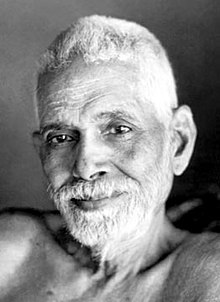
Ramana Maharshi, the great Indian sage, taught that once enlightenment is obtained, the result is bliss, the bliss of being.  The Death Carol is a hymn celebrating this boundless joy.  "Lost in the loving floating ocean of thee, /Laved in the flood of thy bliss O death/" etc, etc. Death has made this ecstasy possible, removing the blinders of self so that Self is seen everywhere.

As mentioned earlier, "When Lilacs Last in the Dooryard Bloom'd" is one of the best elegies ever written.  Now you know it is also one of the wisest.


                                                             *
Five views of death: a pathological desire for death, the denial of death, the rejection of death, the acknowledgment of death, and, finally, the sacred knowledge of death.

The first four passengers have left the train.  Just like them, the fifth passenger must also depart.  But, before he leaves, his mind's eye sees, from above, the entire train, the entire country it traverses, the entire world in which the country is contained.   He loved the train ride.  He leaves without regrets, in a state of bliss.  How can he be other than utterly joyful?  The thrush has had the last word, and it is him.

4.29.2013

MY WALT WHITMAN MOMENT


                                                              1.

Walt Whitman is a favorite poet of mine--when he is at his best, he is very good indeed.  I'm fond of him for several reasons.    First, he was a great innovator, profoundly changing  the course of American poetry. I like that.  Second, he did not become a great poet by being a recluse in a library; his poems are a result of confrontation with himself and with the world.   I like that even more.  Third, he was also a poet of great wisdom.  He knew what was important in life, namely the sacredness of human relationships, of nature, and of that which transcends nature.  Every relationship was a miracle for him, just as it should be. I like that most of all.

I was walking near a mall recently while in a very Whitmanesque mood,  praising everything I saw and finding music in the city sounds around me.  Smiling, I watched a young couple approaching from the opposite direction.  What a handsome couple, I thought.

The man, perhaps in his late 20s, walked a few steps in front of his wife; he was holding their child by the hand.  Yes, I'm a pediatrician and find most kids cute, but this one, about two years old, was a knockout.  She got her good looks from her mother, also probably in her late 20s. After looking at her, I recalled Whitman's lines, " I am the poet of the woman the same as the man,/ And I say it is as great to be a woman as to be a man,/ And I say there is nothing greater than the mother of men."   He would undoubtedly have praised this attractive family lavishly....

...up to a point.  There was trouble in paradise.  The man was wearing earphones; his head was bobbing to music no one else heard.  His wife had fallen back behind him because she was completely self-absorbed with texting.  One got the impression that if her husband had stopped short, she would have walked right into him.

The little kid was staring blankly ahead while sucking on her thumb.

Perhaps I should call this my anti-Whitman moment.  I felt like saying to them, "Please stop listening to a recording; please stop texting; please start listening to the world around you.  Please start talking to each other and, most of all, please instill a sense of wonder in your lovely child!"

I passed them by without uttering a word.  I thought of Whitman's lines:

Stranger, if you passing meet me and desire to speak to me, why should you not speak to me?
And why should I not speak to you?

I also thought, since I lack Whitman's way with strangers, that the father might have punched me in the nose for giving him unwanted advice.

                                                           2.

Whitman, unbelievably idealistic, considered his poetry to be the medicine his sick country needed. Imagine that--he actually hoped that his fellow Americans would take his brilliant medicine and get better!  That is not how things turned out. The disease--poor communication--has arguably gotten worse.  Walt Whitman, "a kosmos, of Manhattan the son" --what would he have thought while passing someone talking out loud--very loud--into a Bluetooth headset?   Talking to somebody who is not present as if Walt Whitman and worse, the entire world, didn't exist?  Such "conversations" take place in public places alas! quite often these days.

Are we that afraid of listening to the world?  Are we that afraid of listening to ourselves?  Apparently we are.

Whitman did listen to the world and to himself; the result, after a long struggle, was great poetry.  Although very, very few would become great poets, confrontation with the world and with one's self would certainly make nearly everyone wiser.  This path to wisdom will always have rough patches--some of them taking years to cross--but shutting out that confrontation is nothing less than shutting out life.

Are we so afraid of loneliness that we must drown it out--along with what really  matters--with constant chatter?

Would Whitman still praise living pearls, albeit more thickly covered with mud?  What would he have said?
"Vivas for those who have failed?"


The Walt Whitman Essays
(all on Thomasdorsett.blogspot.com)

1. Walt Whitman and Equality
2. Walt Whitman and Music
3. My Walt Whitman Moment
4. Five Poems About Death
5. Walt Whitman's Vision