It has been said that the two chief themes of poetry are love and death. Poetry, a much more intense and direct medium than prose, is almost always more intense and compact. (The German word for poem, Gedicht, literally means "that which has been compressed.") Poetry, at its best, deals with what is essential in new, surprising, and understated ways, so that the reader is taken beyond himself into a world that is both familiar and unfamiliar, where he stands, like Keats's Cortez, "silent, upon a peak in Darien." Love and death, of course, are the essentials. Love is what is most important in life; death teaches us that we don't have endless opportunities to help make love more manifest in the world. (A modification of Psalm 39, sung in Brahms's German Requiem, is as follows (my translation): "Lord, teach me that there must be an end to my life and that my life has a purpose." Note that it is death that helps lead one to this knowledge.)
There are, of course, many definitions and ways to express and manifest essentials. The Austrian fascist Baldur von Schirach claimed in an (awful) poem that he loved Hitler; in contrast, the German Dietrich Bonhoeffer loved his Savior so much that he fought against fascism and willingly sacrificed his own life in order to bring about a better world.
There are certainly as many and varied views about death as there are about love. The most important of these are the topic of this essay. Since poets express what's essential more directly and more intensely, we have selected for discussion five poems about death by five different poets.
We will use the metaphor of a journey by rail. Each of the five poets represents a large group of people, which has a similar view of death as the poet in question. The train is well-lit and provides many activities. However, nothing can be seen outside the window--the view is of total darkness. Each passenger has a different destination. It is common knowledge of all on board that a death figure will at some time come for each passenger, and, for the time being, will be visible only to that passenger. The passenger will then be escorted from the train by this invisible conductor and will never be seen again. The numerous activities on board and the continual disappearance of passengers make for a very interesting journey.
It is important to note that although we identify the protagonist in each poem as the author, this is merely for convenience' sake. The identity of author and protagonist applies to a confessional poet like Plath, but certainly not to Dickinson, who often maintains an ironic and/or aesthetic distance from the protagonist of the poem in question.
It is important to note that although we identify the protagonist in each poem as the author, this is merely for convenience' sake. The identity of author and protagonist applies to a confessional poet like Plath, but certainly not to Dickinson, who often maintains an ironic and/or aesthetic distance from the protagonist of the poem in question.
We are ready to begin.
l. The First Passenger: Sylvia Plath

I AM VERTICAL
But I would rather be horizontal.
I am not a tree with my root in the soil
Sucking up minerals and motherly love
So that each March I may gleam into leaf,
Nor am I the beauty of a garden bed
Attracting my share of Ahs and spectacularly painted,
Unknowing I must soon unpetal.
Compared with me, a tree is immortal
And a flower-head not tall, but more startling,
And I want the one's longevity and the other's daring.
Tonight, in the infinitesimal light of the stars,
The trees and the flowers have been strewing their cool odors.
I walk among them, but none of them are noticing,
Sometimes I think that when I am sleeping
I must most perfectly resemble them--
Thoughts gone dim.
It is more natural to me, lying down,
Then the sky and I are in open conversation,
And I shall be useful when I lie down finally:
Then the trees may touch me for once, and
the flowers have time for me.
This poem is as extraordinarily beautiful as it is extraordinarily pathological.
The technical feat of the contrast between the title and the first line of the poem is striking. The opening three strongly accented syllables of the title indicate the horror (for Sylvia Plath) of being alive. It is like the scream of a self-hating naked person standing in mid-day sun with nowhere to hide. The wounded protagonist (in Sylvia Plath's mind) will find no peace other than death's. This is in strong contrast to the first line of the poem, consisting of three dactyls, (the last one with a feminine ending, "tal.") The title is a shout, the first line is a whisper. In the second line, the monster is no longer a monster; she is lying in the shade, at peace, unconsciously blending in with her surroundings. It is a tribute to Plath's ability as poet that the theme of the entire poem is indicated by the sounds of the title and the first line.
The rest of the poem is cool and controlled. Things-desperate things--are stated matter-of-factly. Through Plath's sophisticated use of constraint and understatement, the poem becomes more poignant.
The poor protagonist! She complains that she will not live as long as a tree and that she is not as strikingly beautiful as a flower. Because of this, she implies that she is utterly worthless. Not exactly the conclusion that most healthy people would come to regarding themselves and others.
The next stanza begins with two lovely lines that describe the harmony of unconscious nature. The stars provide "infinite light" in response to which the trees and flowers strew "their cool odors." The protagonist feels that she is not part of this harmony; she is isolated, she is stinking things up by her very existence.
The poor protagonist! The trees and flowers do not notice her. She undoubtedly believes she is not getting the attention she deserves, and this is driving her, quite literally, crazy. (One has no doubt that while she's talking about nature here, she really means that the people around her are not satisfying her inordinate desires.)
Only death can silence this pathological craving. Her thoughts, her desires--as the Buddha taught--are at the root of her problem. The ability to think, one of the glories of human existence, is poison to her--"Thought gone dim" the only escape.
The irony of the ending of the poem is that the protagonist will only find peace when she ceases to exist. (The author was certainly convinced that the two 'me's" of the last two lines represent nothing more than total oblivion.) Her apparently uncontrollable disease, self-hate, has made her life unbearable; she is willing to take the "medicine" of annihilation to deaden the pain.
The control, elegiac tone, and imagery of the poem are close to perfection. It is one of the greatest sickest poems ever written.
*
For the passenger Silvia Plath, life is obviously not a happy train ride. She is not going to wait for the invisible conductor to arrive; she will jump off the train herself.
Our first passenger views death as the best and only way to end her intolerable mental suffering. Our second passenger, as we shall now see, views the end of life quite differently.
ll. The Second Passenger: Emily Dickinson

The protagonist of this poem has been spending her life denying death. Notice that "could" not "would" is used in the first line; she feels unable to consider even the possibility of "stopping" for Death. She is on foot and very likely tired from a long journey. So Death, like a rich man in a carriage, kindly offers to give the weary traveler a ride She accepts. The knowledge that the kind stranger is Death is not apparent to the protagonist at this point--the last two lines of the first stanza contain a realization that came to her later. Unaware that Death is taking her to the grave, the protagonist thinks she is going on a joy ride. How nice of the stranger to let her accompany him in such a stately carriage! He knew no haste--after all, although she doesn't know it, this is a funeral procession. He is so civil--she no longer has to walk. She no longer thinks about leisure or work; she's enjoying a pleasant outing. If she is one of the children at recess, making this vision part of a life-review, she is completely unaware of it. The setting sun has passed them--time has departed; still she doesn't get it. She is not warmly dressed; she is wearing a shroud. Still she doesn't get it. Her body is becoming cold. Still she doesn't get it!
It's only at the very end of the poem, when Death takes her to her final resting place, does she realize that she is dead. What irony!
Although expressed with admirable understatement, the realization that she has died caused such a shock that, despite the passage of centuries, it has remained eternally present in her mind. Her denial lasted to the very, very end.
The whole poem seems to be narrated by a disembodied consciousness, completely detached, merely observing something that happened in the past. Having undergone a "sea change," the observer, still in some sense the protagonist, has been irrevocably transformed. If consciousness does exist after death, and I do think it might, it may well be as a dispassionate observer of events, such as the being who narrates this poem.
This is a classic poem about death-denial. It is ironic, understated, detached--and marvelous.
*
This passenger on our train was so absorbed by the routine of living that she never had thought that the invisible conductor could summon her away. He came, as come he must, and she is gone.

Conscientious Objector
In this poem, Death is portrayed as a great evil, public--and private--Enemy Number One. The striking image is that of Death as one of the four horsemen of the Apocalypse, mounting his horse for another day spent mowing us mortals down with his scythe. The protagonist is passionately on the side of Life and will have nothing to do with the Horror that brings every life to its close. She realizes that one day, she, too, will die, but that's the sole satisfaction Death will get from her. As she beautifully puts it: "I am not on his pay-roll."
There is a good deal of nobility in her attitude. The protagonist would never cease to fight for life as long as she lives. One can never imagine her supporting fascism or other forms of violence anywhere. She would be against the death penalty. If she had been a member of Congress, she would have voted against invading Iraq, etc. etc. A good, life-affirming person, no doubt about it. (I also see her being combative with medical staff members who try to make her understand that keeping a brain-dead loved one on life-support is futile--and wrong.)
Her extreme opposition to Death, however, borders on being silly. I can imagine Death's reply: "I don't need your help to mount my steed, thank you! I don't need you to lead me to any man's door. I require neither password nor plans to enter a city. I've been making my rounds for millions of years, and don't need your help at all. See you later!"
Dogmas, such as humans being in God's image, are dismissed, since the protagonist knows well that the escapists have the dogmas on their lips and not in their hearts. The protagonist tries to contravene the vanity of death deniers by reminding them of the primacy of their bodies. They imagine that they're immortal spirits. How many disembodied immortal spirits have you met lately? the protagonist might ask.
The protagonist reminds everyone that human beings are animals, and ultimately share the same fate. No matter if one is a gentle animal (a deer) or an aggressive one (a lion), all flesh is recycled by nature--and the ground is quite indifferent as to where recently received elements came from. The buzzard, a symbol of dissolution after death, doesn't spare anyone.
The protagonist hopes that this knowledge will not only disturb the nightly sleep of the overly complacent, but will also help them wake up from the long nap of their daily lives.
The first two lines of the last stanza are the most striking of the poem. The "tube from mouth to ass" is the digestive tract; here humans are reduced to their bodies like any other animal. The crude word "ass" is used in an attempt to wake up sleepers from their comfortable slumber. (There is a pun here, since the people around him are delusional, acting like asses.) The purpose of this emphasis on death, however, is to counteract vanity, not to assert that there is no such thing as transcendence.
"Ozymandias" is an eponymous reference to a famous poem by Shelley:
I met a traveller from an antique land
Who said: `Two vast and trunkless legs of stone
Stand in the desert. Near them, on the sand,
Half sunk, a shattered visage lies, whose frown,
And wrinkled lip, and sneer of cold command,
Tell that its sculptor well those passions read
Which yet survive, stamped on these lifeless things,
The hand that mocked them and the heart that fed.
And on the pedestal these words appear --
"My name is Ozymandias, king of kings:
Look on my works, ye Mighty, and despair!"
Nothing beside remains. Round the decay
Of that colossal wreck, boundless and bare
The lone and level sands stretch far away.'
The vanity of human beings would be infinite if it weren't terminated by death, and--this is important and is implied by Dorsett's poem--vanity can be drastically reduced by the realization of one's true place in the cosmos. Death must be given its proper place if we are to find ours.
Is the protagonist's laugh bitter? Perhaps it's also compassionate. And a little sad, since the people around him will not listen. He's somewhat like Cassandra, aware of the truth, but ignored. Perhaps the laugh is also aimed at himself, as he recalls when he, too, was in the midst of life and did not spend his time wisely.
*
The invisible conductor has become visible to this passenger and is only a few steps away. Before he leaves the train, this passenger would like to warn fellow passengers that their time is more limited than they might think. If not now, when? If not now, when? Not only is the conductor invisible to them, the passenger is old and invisible, too. Lost in various activities--some are even sound asleep--they don't notice anything.
V. The Fifth Passenger: Walt Whitman

As mentioned earlier, "When Lilacs Last in the Dooryard Bloom'd" is one of the best elegies ever written. Now you know it is also one of the wisest.
*
Five views of death: a pathological desire for death, the denial of death, the rejection of death, the acknowledgment of death, and, finally, the sacred knowledge of death.
The first four passengers have left the train. Just like them, the fifth passenger must also depart. But, before he leaves, his mind's eye sees, from above, the entire train, the entire country it traverses, the entire world in which the country is contained. He loved the train ride. He leaves without regrets, in a state of bliss. How can he be other than utterly joyful? The thrush has had the last word, and it is him.
l. The First Passenger: Sylvia Plath
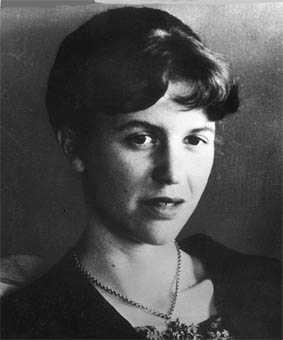
I AM VERTICAL
But I would rather be horizontal.
I am not a tree with my root in the soil
Sucking up minerals and motherly love
So that each March I may gleam into leaf,
Nor am I the beauty of a garden bed
Attracting my share of Ahs and spectacularly painted,
Unknowing I must soon unpetal.
Compared with me, a tree is immortal
And a flower-head not tall, but more startling,
And I want the one's longevity and the other's daring.
Tonight, in the infinitesimal light of the stars,
The trees and the flowers have been strewing their cool odors.
I walk among them, but none of them are noticing,
Sometimes I think that when I am sleeping
I must most perfectly resemble them--
Thoughts gone dim.
It is more natural to me, lying down,
Then the sky and I are in open conversation,
And I shall be useful when I lie down finally:
Then the trees may touch me for once, and
the flowers have time for me.
This poem is as extraordinarily beautiful as it is extraordinarily pathological.
The technical feat of the contrast between the title and the first line of the poem is striking. The opening three strongly accented syllables of the title indicate the horror (for Sylvia Plath) of being alive. It is like the scream of a self-hating naked person standing in mid-day sun with nowhere to hide. The wounded protagonist (in Sylvia Plath's mind) will find no peace other than death's. This is in strong contrast to the first line of the poem, consisting of three dactyls, (the last one with a feminine ending, "tal.") The title is a shout, the first line is a whisper. In the second line, the monster is no longer a monster; she is lying in the shade, at peace, unconsciously blending in with her surroundings. It is a tribute to Plath's ability as poet that the theme of the entire poem is indicated by the sounds of the title and the first line.
The rest of the poem is cool and controlled. Things-desperate things--are stated matter-of-factly. Through Plath's sophisticated use of constraint and understatement, the poem becomes more poignant.
The poor protagonist! She complains that she will not live as long as a tree and that she is not as strikingly beautiful as a flower. Because of this, she implies that she is utterly worthless. Not exactly the conclusion that most healthy people would come to regarding themselves and others.
The next stanza begins with two lovely lines that describe the harmony of unconscious nature. The stars provide "infinite light" in response to which the trees and flowers strew "their cool odors." The protagonist feels that she is not part of this harmony; she is isolated, she is stinking things up by her very existence.
The poor protagonist! The trees and flowers do not notice her. She undoubtedly believes she is not getting the attention she deserves, and this is driving her, quite literally, crazy. (One has no doubt that while she's talking about nature here, she really means that the people around her are not satisfying her inordinate desires.)
Only death can silence this pathological craving. Her thoughts, her desires--as the Buddha taught--are at the root of her problem. The ability to think, one of the glories of human existence, is poison to her--"Thought gone dim" the only escape.
The irony of the ending of the poem is that the protagonist will only find peace when she ceases to exist. (The author was certainly convinced that the two 'me's" of the last two lines represent nothing more than total oblivion.) Her apparently uncontrollable disease, self-hate, has made her life unbearable; she is willing to take the "medicine" of annihilation to deaden the pain.
The control, elegiac tone, and imagery of the poem are close to perfection. It is one of the greatest sickest poems ever written.
*
For the passenger Silvia Plath, life is obviously not a happy train ride. She is not going to wait for the invisible conductor to arrive; she will jump off the train herself.
Our first passenger views death as the best and only way to end her intolerable mental suffering. Our second passenger, as we shall now see, views the end of life quite differently.
ll. The Second Passenger: Emily Dickinson

Because I could not stop for Death –
He kindly stopped for me –
The Carriage held but just Ourselves –
And Immortality.

We slowly drove – He knew no haste
And I had put away
My labor and my leisure too,
For His Civility –

We passed the School, where Children strove
At Recess – in the Ring –
We passed the Fields of Gazing Grain –
We passed the Setting Sun –

Or rather – He passed us –
The Dews drew quivering and chill –
For only Gossamer, my Gown –
My Tippet – only Tulle –

We paused before a House that seemed
A Swelling of the Ground –
The Roof was scarcely visible –
The Cornice – in the Ground –

Since then – 'tis Centuries – and yet
Feels shorter than the Day
I first surmised the Horses' Heads
Were toward Eternity –
| ||
The protagonist of this poem has been spending her life denying death. Notice that "could" not "would" is used in the first line; she feels unable to consider even the possibility of "stopping" for Death. She is on foot and very likely tired from a long journey. So Death, like a rich man in a carriage, kindly offers to give the weary traveler a ride She accepts. The knowledge that the kind stranger is Death is not apparent to the protagonist at this point--the last two lines of the first stanza contain a realization that came to her later. Unaware that Death is taking her to the grave, the protagonist thinks she is going on a joy ride. How nice of the stranger to let her accompany him in such a stately carriage! He knew no haste--after all, although she doesn't know it, this is a funeral procession. He is so civil--she no longer has to walk. She no longer thinks about leisure or work; she's enjoying a pleasant outing. If she is one of the children at recess, making this vision part of a life-review, she is completely unaware of it. The setting sun has passed them--time has departed; still she doesn't get it. She is not warmly dressed; she is wearing a shroud. Still she doesn't get it. Her body is becoming cold. Still she doesn't get it!
It's only at the very end of the poem, when Death takes her to her final resting place, does she realize that she is dead. What irony!
Although expressed with admirable understatement, the realization that she has died caused such a shock that, despite the passage of centuries, it has remained eternally present in her mind. Her denial lasted to the very, very end.
The whole poem seems to be narrated by a disembodied consciousness, completely detached, merely observing something that happened in the past. Having undergone a "sea change," the observer, still in some sense the protagonist, has been irrevocably transformed. If consciousness does exist after death, and I do think it might, it may well be as a dispassionate observer of events, such as the being who narrates this poem.
This is a classic poem about death-denial. It is ironic, understated, detached--and marvelous.
*
This passenger on our train was so absorbed by the routine of living that she never had thought that the invisible conductor could summon her away. He came, as come he must, and she is gone.
lll. The Third Passenger: Edna St. Vincent Millay
Conscientious Objector
I shall die, but
that is all that I shall do for Death.
I hear him leading his horse out of the stall;
I hear the clatter on the barn-floor.
He is in haste; he has business in Cuba,
business in the Balkans, many calls to make this morning.
But I will not hold the bridle
while he clinches the girth.
And he may mount by himself:
I will not give him a leg up.
Though he flick my shoulders with his whip,
I will not tell him which way the fox ran.
With his hoof on my breast, I will not tell him where
the black boy hides in the swamp.
I shall die, but that is all that I shall do for Death;
I am not on his pay-roll.
I will not tell him the whereabout of my friends
nor of my enemies either.
Though he promise me much,
I will not map him the route to any man's door.
Am I a spy in the land of the living,
that I should deliver men to Death?
Brother, the password and the plans of our city
are safe with me; never through me shall you be overcome.
There is a good deal of nobility in her attitude. The protagonist would never cease to fight for life as long as she lives. One can never imagine her supporting fascism or other forms of violence anywhere. She would be against the death penalty. If she had been a member of Congress, she would have voted against invading Iraq, etc. etc. A good, life-affirming person, no doubt about it. (I also see her being combative with medical staff members who try to make her understand that keeping a brain-dead loved one on life-support is futile--and wrong.)
Her extreme opposition to Death, however, borders on being silly. I can imagine Death's reply: "I don't need your help to mount my steed, thank you! I don't need you to lead me to any man's door. I require neither password nor plans to enter a city. I've been making my rounds for millions of years, and don't need your help at all. See you later!"
Can you imagine if the impossible happened and she managed to lock the barn door? You think there's a problem with Medicare and Social Security now? The dead certainly deserve love and respect. But what if they were all still present as living zombies oozing behind every door?
We think of persons and things as having only the three coordinates of space. But even thoughts, though we might not realize it, have, like everything else, a fourth coordinate, time. Everything changes, whether we acknowledge this fact or not. Death is, of course, part of life, merely the last change that comes to an individual as an individual. The havoc caused by greed, hate and delusion is Public and Private Enemy Number One, not Death.
Death of course is tragic when he comes early; at the right time, however, he can be a kind, welcome guest. As the Spanish say, when an infant is born, the infant cries and everyone smiles. When a wise man dies, everyone cries while he smiles. Exiting a broken-down taxi, possibly exchanging it for the latest model--what's so bad about that?
This poem portrays a rather adolescent view of death. Having gained new powers of abstraction, the adolescent for the first time in her life realizes that she, too, will die. She sees all the suffering in the world for the first time, and hates death, the presumed cause of it all, with a passion. Perhaps she will bury herself in work and other activities and repress the thought of death for as long as possible--like the protagonist of Dickinson's poem. Perhaps she will turn her anger at having to die against herself and become suicidal, like the protagonist of Plath's poem. Perhaps she will continue to rage against death, as in St.Vincent Millay's poem, and see herself as St.George pursuing a dragon, while actually being just another idealist charging a windmill.
The poem makes for a good read. So noble! So silly.
*
When the invisible conductor comes for this one, she will throw hot coffee into his bony face. No matter; it will pass right through him. She, too, will vacate her seat on the train.
lV. The Fourth Passenger Thomas Dorsett

IN EXTREMIS
I'm dying. What about you?
--In God's image, aren't we
headed for eternity?--
Don't ask me, I'm dying.
As the lion sinks its teeth
somewhere into living meat,
sit down at your table, eat--
Am I the lion or deer?
While the buzzard with its beak
tears apart the lion's face,
lie down on your pillow, sleep--
A monarch or a scavenger?
I see a tube from mouth to ass
where you see Ozymandias--
Please excuse me if I laugh!
Don't mind me, I'm dying.
The protagonist of this poem is dying, and he knows it. This separates and isolates him from those, who, like busy bees, are unaware that summer doesn't last forever. The protagonist admits his terminal condition with the first two words. He then asks his fellow human beings, "What about you?" It is meant ironically, since we are all moving toward death. A path's many turnings may conceal its end; the finish line, however, is the same for all.
The question is also an attempt to help one's fellow human beings achieve a more balanced view of life. An awareness of mortality can help one focus on what is essential and act accordingly, since time is limited. If not now, when? Hillel asks. Not now, maybe later, I'm busy, the escapist replies. If Hillel asked his question with a scythe in his hand, the answer might be very different.
We think of persons and things as having only the three coordinates of space. But even thoughts, though we might not realize it, have, like everything else, a fourth coordinate, time. Everything changes, whether we acknowledge this fact or not. Death is, of course, part of life, merely the last change that comes to an individual as an individual. The havoc caused by greed, hate and delusion is Public and Private Enemy Number One, not Death.
Death of course is tragic when he comes early; at the right time, however, he can be a kind, welcome guest. As the Spanish say, when an infant is born, the infant cries and everyone smiles. When a wise man dies, everyone cries while he smiles. Exiting a broken-down taxi, possibly exchanging it for the latest model--what's so bad about that?
This poem portrays a rather adolescent view of death. Having gained new powers of abstraction, the adolescent for the first time in her life realizes that she, too, will die. She sees all the suffering in the world for the first time, and hates death, the presumed cause of it all, with a passion. Perhaps she will bury herself in work and other activities and repress the thought of death for as long as possible--like the protagonist of Dickinson's poem. Perhaps she will turn her anger at having to die against herself and become suicidal, like the protagonist of Plath's poem. Perhaps she will continue to rage against death, as in St.Vincent Millay's poem, and see herself as St.George pursuing a dragon, while actually being just another idealist charging a windmill.
The poem makes for a good read. So noble! So silly.
*
When the invisible conductor comes for this one, she will throw hot coffee into his bony face. No matter; it will pass right through him. She, too, will vacate her seat on the train.
lV. The Fourth Passenger Thomas Dorsett
IN EXTREMIS
I'm dying. What about you?
--In God's image, aren't we
headed for eternity?--
Don't ask me, I'm dying.
As the lion sinks its teeth
somewhere into living meat,
sit down at your table, eat--
Am I the lion or deer?
While the buzzard with its beak
tears apart the lion's face,
lie down on your pillow, sleep--
A monarch or a scavenger?
I see a tube from mouth to ass
where you see Ozymandias--
Please excuse me if I laugh!
Don't mind me, I'm dying.
The protagonist of this poem is dying, and he knows it. This separates and isolates him from those, who, like busy bees, are unaware that summer doesn't last forever. The protagonist admits his terminal condition with the first two words. He then asks his fellow human beings, "What about you?" It is meant ironically, since we are all moving toward death. A path's many turnings may conceal its end; the finish line, however, is the same for all.
The question is also an attempt to help one's fellow human beings achieve a more balanced view of life. An awareness of mortality can help one focus on what is essential and act accordingly, since time is limited. If not now, when? Hillel asks. Not now, maybe later, I'm busy, the escapist replies. If Hillel asked his question with a scythe in his hand, the answer might be very different.
Dogmas, such as humans being in God's image, are dismissed, since the protagonist knows well that the escapists have the dogmas on their lips and not in their hearts. The protagonist tries to contravene the vanity of death deniers by reminding them of the primacy of their bodies. They imagine that they're immortal spirits. How many disembodied immortal spirits have you met lately? the protagonist might ask.
The protagonist reminds everyone that human beings are animals, and ultimately share the same fate. No matter if one is a gentle animal (a deer) or an aggressive one (a lion), all flesh is recycled by nature--and the ground is quite indifferent as to where recently received elements came from. The buzzard, a symbol of dissolution after death, doesn't spare anyone.
The protagonist hopes that this knowledge will not only disturb the nightly sleep of the overly complacent, but will also help them wake up from the long nap of their daily lives.
The first two lines of the last stanza are the most striking of the poem. The "tube from mouth to ass" is the digestive tract; here humans are reduced to their bodies like any other animal. The crude word "ass" is used in an attempt to wake up sleepers from their comfortable slumber. (There is a pun here, since the people around him are delusional, acting like asses.) The purpose of this emphasis on death, however, is to counteract vanity, not to assert that there is no such thing as transcendence.
"Ozymandias" is an eponymous reference to a famous poem by Shelley:
I met a traveller from an antique land
Who said: `Two vast and trunkless legs of stone
Stand in the desert. Near them, on the sand,
Half sunk, a shattered visage lies, whose frown,
And wrinkled lip, and sneer of cold command,
Tell that its sculptor well those passions read
Which yet survive, stamped on these lifeless things,
The hand that mocked them and the heart that fed.
And on the pedestal these words appear --
"My name is Ozymandias, king of kings:
Look on my works, ye Mighty, and despair!"
Nothing beside remains. Round the decay
Of that colossal wreck, boundless and bare
The lone and level sands stretch far away.'
The vanity of human beings would be infinite if it weren't terminated by death, and--this is important and is implied by Dorsett's poem--vanity can be drastically reduced by the realization of one's true place in the cosmos. Death must be given its proper place if we are to find ours.
Is the protagonist's laugh bitter? Perhaps it's also compassionate. And a little sad, since the people around him will not listen. He's somewhat like Cassandra, aware of the truth, but ignored. Perhaps the laugh is also aimed at himself, as he recalls when he, too, was in the midst of life and did not spend his time wisely.
*
The invisible conductor has become visible to this passenger and is only a few steps away. Before he leaves the train, this passenger would like to warn fellow passengers that their time is more limited than they might think. If not now, when? If not now, when? Not only is the conductor invisible to them, the passenger is old and invisible, too. Lost in various activities--some are even sound asleep--they don't notice anything.
V. The Fifth Passenger: Walt Whitman
Come, lovely and soothing Death, | |
| Undulate round the world, serenely arriving, arriving, | |
| In the day, in the night, to all, to each, | |
| Sooner or later, delicate Death. | |
| Prais’d be the fathomless universe, | |
| For life and joy, and for objects and knowledge curious; | |
| And for love, sweet love—But praise! praise! praise! | |
| For the sure-enwinding arms of cool-enfolding Death. | |
| Dark Mother, always gliding near, with soft feet, | |
| Have none chanted for thee a chant of fullest welcome? | |
| Then I chant it for thee—I glorify thee above all; | |
| I bring thee a song that when thou must indeed come, come unfalteringly. | |
| Approach, strong Deliveress! | |
| When it is so—when thou hast taken them, I joyously sing the dead, | |
| Lost in the loving, floating ocean of thee, | |
| Laved in the flood of thy bliss, O Death. | |
| From me to thee glad serenades, | |
| Dances for thee I propose, saluting thee—adornments and feastings for thee; | |
| And the sights of the open landscape, and the high-spread sky, are fitting, | |
| And life and the fields, and the huge and thoughtful night. | |
| The night, in silence, under many a star; | |
| The ocean shore, and the husky whispering wave, whose voice I know; | |
| And the soul turning to thee, O vast and well-veil’d Death, | |
| And the body gratefully nestling close to thee. | |
| Over the tree-tops I float thee a song! | |
| Over the rising and sinking waves—over the myriad fields, and the prairies wide; | |
| Over the dense-pack’d cities all, and the teeming wharves and ways, | |
| I float this carol with joy, with joy to thee, O Death | |
This "Death Carol" is part of Whitman's "When Lilacs Last in the Dooryard Bloom'd," the elegy he wrote in commemoration of the death of Lincoln. It is one of the finest and most subtle elegies in the English language. The poet quickly establishes three main elements of the poem: spring lilacs, representing nature's perennial ability to renew herself; the fallen star, (Lincoln); and the singing thrush. A cloud which appears three times in the course of the poem has great significance. It is first mentioned as follows, "O harsh surrounding cloud that will not free my soul." The cloud represents the thought of death. Later in the poem, the cloud appears again: "Coffin that passes through lanes and streets,/ Through day and night with the great cloud darkening the land,/" Here the macrocosm--the darkening weather--mirrors the microcosm--the citizens' inner weather darkened by Lincoln's death. It is a metaphorical cloud; a natural cloud can certainly darken the land during the day, but not so much at night. Death has become much more ominous; it is not now merely a cloud that oppresses the protagonist; it now covers the land. The cloud's final appearance in the poem increases the oppression even further. "Falling upon them all and among them all, enveloping me with the rest,/Appeared the cloud, appealed the long black trail,/ " Now the cloud, the thought of death, envelops not only the poet, but everyone. Notice the very odd use of the verb "appeal." I assume it provides a parallel structure to "appeared the cloud," namely that it is the "long black train," Lincoln's death procession, that is doing the appealing. "To appeal" means 'to request mercy.' The cloud of death has become too unbearable. Many do not get beyond this stage, and merely manage to eventually (and temporarily) escape it, as when after "an awful leisure" the time comes "belief to regulate" (Dickinson). Most of them, after a period of mourning, will return to the various diversions of their lives. The protagonist will have none of this. Something has to give. He will not give up until he transcends this cloud. He wants nothing less than enlightenment. And something does indeed give! He finally understands. This ultimate understanding cannot be put into prose, so the poet indicates it with poetry, using imagery that is as beautifully apt is it is wondrously odd: "And I knew death, its thought, and the sacred knowledge of death./ Then with the knowledge of death as walking one side of me, /And the thought of death close-walking the other side of me,/ And I in the middle as with companions, and as holding the hands of companions, I fled forth to the hiding receiving night that talks not/ Down to the shores of the water, the path by the swamp in the dimness,/ To the solemn shadowy cedars and ghostly pines so still"--the latter being the habitat of the thrush. She is the prophetic bird who sings the "Death Carol." The thought of death is the theme of Dorsett's poem; it is a cloud hovering over everything. He believes that a good life includes facing bitter truths, but his message is lost; he is ignored. In contrast, the sacred knowledge of death leads Whitman's receptive protagonist into the joy of cosmic consciousness. It is significant that the thought of death is one of the two companions, thus giving him equal importance. Without this companion, the protagonist would not have been introduced to the sacred companion on the other side. The thrush sings above the swamp and is thus unsullied by it; she sings at dusk, the ambiguous transition from day to night; the thrush sings prophecy. The protagonist at an earlier point in the poem has this to say about the thrush's song: Sing on there in the swamp, O singer bashful and tender, I hear you notes, I hear your call, I hear, I come presently, I understand you, But a moment I linger, for the lustrous star had detain'e me, The star my departing comrade hold and detains me. He has some understanding of the significance of the thrush's song, but, held back by the thought of death, he is pulled away. Now, acquainted with the sacred knowledge of death, wisdom, he completely understands the bird's song. He has gone beyond human language, which gives him the ability to understand the thrush's tongue. Now the bird sings to him, as it were, 'in plain English.' And what a joyous song it is! Compare this to Hardy's poem, The Darkling Thrush, an excerpt of which follows: At once a voice arose among
The bleak twigs overhead
In a full-hearted evensong
Of joy illimited;
An aged thrush, frail, gaunt, and small,
In blast-beruffled plume,
Had chosen thus to fling his soul
Upon the growing gloom.
So little cause for carolings
Of such ecstatic sound
Was written on terrestrial things
Afar or nigh around,
That I could think there trembled through
His happy good-night air
Some blessed Hope, whereof he knew
And I was unaware.
The protagonist here is world-weary; he knows that the thrush has a joyous message, but he cannot understand it. He has traveled halfway to wisdom; he knows the first companion, but hasn't met the sacred companion yet. By the end of the poem, Whitman's protagonist knows that sacred being well, and understands every word/note of the thrush's ecstatic song. 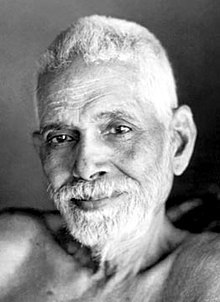 Ramana Maharshi, the great Indian sage, taught that once enlightenment is obtained, the result is bliss, the bliss of being. The Death Carol is a hymn celebrating this boundless joy. "Lost in the loving floating ocean of thee, /Laved in the flood of thy bliss O death/" etc, etc. Death has made this ecstasy possible, removing the blinders of self so that Self is seen everywhere. |
As mentioned earlier, "When Lilacs Last in the Dooryard Bloom'd" is one of the best elegies ever written. Now you know it is also one of the wisest.
*
Five views of death: a pathological desire for death, the denial of death, the rejection of death, the acknowledgment of death, and, finally, the sacred knowledge of death.
The first four passengers have left the train. Just like them, the fifth passenger must also depart. But, before he leaves, his mind's eye sees, from above, the entire train, the entire country it traverses, the entire world in which the country is contained. He loved the train ride. He leaves without regrets, in a state of bliss. How can he be other than utterly joyful? The thrush has had the last word, and it is him.