4.28.2013

WALT WHITMAN AND MUSIC


Of all art forms other than poetry, music had the deepest effect on Whitman.  He once said that without having come in contact with opera, Leaves of Grass would not have been written.  For those unwilling to take him at his word--he was not immune to exaggeration-- there is an abundance of convincing evidence in his work and life that confirms the primacy of music for him.  This essay will first explore some of the music that influenced Whitman, after which we will discuss poem number 26 from Song of Myself, which deals with music exclusively.

Part I Musical Influences

A.  Minstrels

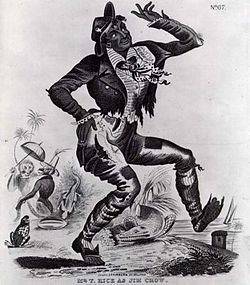
Thomas D. Rice established his "Jim Crow" routine before 1830.  He grew up in New York City; at that time there were few African Americans living in the North.  He performed a wild dance, wearing rags and blackface.  It was, of course, a crude caricature, but it caught on.  In the 1840s, and for many decades later, minstrels, which included comedy skits and song and dance routines performed by whites in blackface, were well established and enormously popular, especially in the North.  Very few objected to the racial stereotyping; not even Whitman had reservations, and, in fact, he enjoyed them.


The best known composer of minstrel songs was Stephen Foster.  He had an extraordinary gift for melody; his lovely, simple albeit somewhat sentimental tunes are popular to this day.  It is said that his songs humanized African Americans, and this is indeed true.  They avoided derogatory depictions and showed much sympathy for the enslaved.  But they were written as sentimental show-stoppers that enabled the white performers to touch the hearts of the audience; a minstrel show that consisted merely of comedy skits would have been much less entertaining.   The songs were not written to help bring about emancipation.


Foster was probably the first American to try to make a living solely by writing popular songs.  His distant heirs, such as Bob Dylan, were much more fortunate.   They were no copyright laws in antebellum America; this perhaps encouraged his attachment to the promoters of minstrels, who paid him directly.  He eventually became penniless, and died tragically alone, a few days after a minor accidental injury, at age 37.

Whitman would much later tell his friend Traubel that he thought Foster's Old Folks at Home was the best thing created by an American composer so far.  He also said that he enjoyed African-American songs. (Like so many white Americans at the time, he used a more pejorative adjective than "African-American.")

B. The Hutchinson Family Singers

The first rock stars!  (That’s what a wag called them.  They came from  a farming family in rural New Hampshire.  They loved to sing, but their father forbade them to sing at home, since he deemed this activity to be diabolical.  Thus, after working on the farm all day, they met at a large rock on their property, and sang in the evening into the night, stars under stars.)  The Hutchinsons were a group of thirteen siblings; four of them founded the group around 1840.  They began locally, but soon were a national success, even an international success.  The Hutchinson Family Singers were the first successful singing group in the United States.  At the height of their popularity, they would receive up to a thousand dollars per performance.  This was no mean sum; Whitman paid $1,750 for his house in Camden, decades after the Hutchinsons first made their tours.  They were the original Peter, Paul and Mary; many of the songs they sang were what would later be called 'protest songs.'   Their music advocated temperance, women’s rights, and, especially, the emancipation of slaves.


As mentioned previously, the group was composed of four singing members.  In true American style--this style lasted throughout the nineteenth century and was quintessentially American--one singer would sing a verse, followed by the whole group singing in closed harmony, much like a barber shop quartet. This pattern would then be repeated with a different singer leading the next verse.

The style of singing was rooted in Irish and English folksongs.  The tempos were brisk; verse and chorus were repeated with little or no variation; the singing was simple, direct, and not very nuanced; the harmonies and melodies were nothing out of the ordinary.  Many of the compositions were by Jesse, one of the brothers; he was not nearly as talented as Foster.  But the music was lively, and no doubt resulted in a lot of clapping and toe-tapping.  Unlike Foster’s, their music was of the times without in any way transcending it.  If anyone performs their music today, it is more or less out of historical curiosity.

Whitman had the following to say about them: “Simple, fresh, and beautiful. we hope no spirit of imitation will ever induce them to engraft any “foreign airs” onto their “native graces.” We want this sort of starting point to mould something new and true in American music.”  He contrasted their “heart music” with foreign “art music.”  He would soon come in contact with the world of opera, which made him profoundly “change his tune” as we shall see.

C. Opera

The opera house, located in Astor Place in the East Village of New York City, opened in 1850 and remained there until 1890.  He began attending performances--many performances--shortly after the opera house opened.  I would like to have seen the expression on his face when he first heard the sophistication, beauty and emotional depth of opera.  It transformed his inner life forever.


We will discuss this encounter with opera in the following analysis of poem 26 from Song of Myself. The poem follows.

Part ll  An Analysis of Poem Number 26 from Song of Myself

Now I will do nothing but listen, 
To accrue what I hear into this song, to let sounds contribute toward it. 

I hear bravuras of birds, bustle of growing wheat, gossip of flames, 
clack of sticks cooking my meals, 
I hear the sound I love, the sound of the human voice, 
I hear all sounds running together, combined, fused or following, 
Sounds of the city and sounds out of the city, sounds of the day and night, 
Talkative young ones to those that like them, the loud laugh of 
work-people at their meals, 
The angry base of disjointed friendship, the faint tones of the sick, 
The judge with hands tight to the desk, his pallid lips pronouncing 
a death-sentence, 
The heave'e'yo of stevedores unlading ships by the wharves, the 
refrain of the anchor-lifters, 
The ring of alarm-bells, the cry of fire, the whirr of swift-streaking 
engines and hose-carts with premonitory tinkles and color'd lights, 
The steam-whistle, the solid roll of the train of approaching cars, 
The slow march play'd at the head of the association marching two and two, 
(They go to guard some corpse, the flag-tops are draped with black muslin.) 

I hear the violoncello, ('tis the young man's heart's complaint,) 
I hear the key'd cornet, it glides quickly in through my ears, 
It shakes mad-sweet pangs through my belly and breast. 

I hear the chorus, it is a grand opera, 
Ah this indeed is music--this suits me. 

A tenor large and fresh as the creation fills me, 
The orbic flex of his mouth is pouring and filling me full. 

I hear the train'd soprano (what work with hers is this?) 
The orchestra whirls me wider than Uranus flies, 
It wrenches such ardors from me I did not know I possess'd them, 
It sails me, I dab with bare feet, they are lick'd by the indolent waves, 
I am cut by bitter and angry hail, I lose my breath, 
Steep'd amid honey'd morphine, my windpipe throttled in fakes of death, 
At length let up again to feel the puzzle of puzzles, 
And that we call Being. 

The title Song of Myself would seem to indicate an autobiographcal poem.  It is true that the first person singular appears many times throughout the poem; the name of the author is also mentioned.  But this is deceptive.  The "I" often refers to an objective camera-type observing eye, or to a transcendent "I" of wisdom itself.  When the author mentions his own name, such as in the lines, there is little biographcal information:

Walt Whitman, a kosmos, of Manhattan the son,

Turbulent, fleshy, sensual, eating, drinking and breeding/

True, Whitman lived in New York City, but everyone is "a kosmos," and the adjectives seem to describe Whitman's ideal Everyman rather than himself.  (Whitman hardly spent his time "eating, drinking and breeding.") This poem about music is a great exception.  All the first person singulars of this poem refer to direct personal experience.  Music affects nearly everyone; it was, for Whitman, something egalitarian which had a great potential for ennobling everyday people.  It was important for him to write about music not only for political reasons, but also for very personal ones.  Music, after all, had ennobled him. His own "I" had become a witness to the beauty and depth of this art form; it didn't need any help from an "I" that was not completely 
Whitman's.

The first stanza is vintage Whitman.  Great music is found in the wonderful, everyday sounds of the world, from birds to 'steam-whistles.' One is reminded of the compositions of John Cage, a composer active a century after Whitman's death--Whitman was ahead of his times in many areas.  For John Cage,the timbre, the sounds themselves, were more important than melody, harmony and composition.  The line, "I hear the sound I love, the sound of the human voice," reflects Whitman's view exactly.  An emotional person like Whitman, as one might expect, was most moved by the most subtly emotional instrument of all.

I find it remarkable that after a stanza of cataloguing Whitman turns directly to opera.  No mention of Foster, no mention of the Hutchinsons!  He was a tireless promoter of things American; one would think that his political self would have demanded some mentioning of American music.  But here his inner life, hooked on opera--a very European art form--took completely over.

I am convinced that the "violincello" he mentions refers to the beautiful cello solo that begins the overture to William Tell, an opera he knew well.  The opening ascending phrase, not to mention that very moving melody that soon follows, undoubtedly had a great affect on him.  It is a melody tinged with melancholy; a young man at the time, he undoubtedly related to it as his own "heart's lament."

As in the poem, the overture is followed by a chorus.  The line "Ah this indeed is music--this suits me." is to be taken literally.  This--and not the music of Foster nor of the Hutchinsons was for Whitman 'the real thing."

In Rossini's opera, as in the poem, the tenor comes next.  The tessitura is high; high notes are sustained.  "The orbic flex of his mouth" would be apparent to anyone observing a tenor singing this section of the opera .  The tenor here is probably Alessandro Bettini, a great Italian tenor of the time.  (Many of the singers Whitman heard were first-rate and internationally known.)


Next comes a reference to the singer whom he loved most of all, the great Marietta Alboni.  Having been discovered by Rossini himself, Alboni had become a world-famous bel canto singer by the time she visited the United Sates.  When she wasn't engaged in New York, Whitman would travel to neighboring cities to hear her.  She apparently was down-to-earth, had a beautiful tone, an extensive range, technical prowess and, most important of all, was a singer of great emotional depth.  The simple, homespun singing of American culture at the time provided no competition!


The original form of the line "I hear the traine'd soprano (what work of hers is this?)" was "I hear the train'd soprano...she convulses me like the climax of my love-grip."  This is of course "over the top" and we are grateful for the revision.  But it is significant  to note that for Whitman, whose study of physiology and whose inner reflections led him to the conviction that sex was primary--a view not so obvious to his contemporaries--music had almost the same level of importance.  (Whitman would undoubtedly have appreciated the joke, "What is the difference between Mozart's Piano Concerto Number 27 and sex?  The concerto lasts longer.")


He may well have been referring to the "train'd soprano" singing a lovely, expressive aria from William Tell, Sombre Foret, or to other arias by composers whose operas he was familiar with, e.g. Donizetti, Bellini, Mozart, Verdi.

Whitman had also been deeply moved by other art forms, especially the theater.  He was a passionate fan of the famous nineteenth century actor, Junius Brutus Booth.  What he later wrote, however, is very telling: "For me, out of the whole list of stage deities of that period, not one meant as much to me as Alboni, as Booth: narrowing it further, I should say Alboni alone."


The last five lines of the poem are especially revealing; Whitman's stance here is a good way to separate those who merely like music from those who really love it.  For the former music is simply a form of entertainment; for the latter, music, while still entertaining, brings the listener to the very depth of reality, to "the puzzle of puzzles,/ And that we call Being."  Notice the capital B!


Summary

Even though Whitman never learned to play an instrument, his musical tastes were that of a first-rate musician.  (For instance, Whitman was critical of Jenny Lind, the "Swedish Nightingale" who was much more popular in America than Alboni.  She had great technical abilities, but apparently lacked emotional depth.  Whitman criticized her superficial artistry; I have no doubt that this criticism was spot-on.) 


It is no accident that his greatest poem series is called Song of Myself.  Perhaps it was a good thing that Whitman never studied music formally; if he did, he might have become obsessed with practice and have neglected his obsession with words.  If he had learned at any early age to love music too much, Leaves of Grass might never have been written. We can be grateful that things turned out as they did.  Much of Leaves of Grass is masterly indeed.

For those who like music, there are many great passages in Whitman's poetry; for those who love music, and thus also are able to appreciate the sounds of his words, the appreciation goes even deeper.  


Additional Reading

1. Whitman and Equality by Thomas Dorsett (Google title and author.)


4.07.2013

WALT WHITMAN AND EQUALITY


Here is a view of Whitman's house in Camden, New Jersey:


Here are two views John Schnatter's house, the CEO of Papa John's Pizza::


Doesn't that say it all?

For those of you who believe that crass materialism is basically an American phenomenon, I include a picture of a 27 story-building in Mombai, India, built as a private residence by an Indian businessman for his family of five:


                                                            2.

Whitman has much to teach us.  He is arguably the most important writer America has ever produced.  Even those not particularly fond of him, such as the aristocratic modernist poet, Ezra Pound, conceded that Whitman is to America what Dante is to Italy.  Most critics would agree.  (I doubt whether the average American would agree, since so few read poetry.  This is a shame, since Whitman's poetry is both accessible and essential.)

First and foremost, Whitman, as a great poet, delights us with his use of language. Although beauty of expression is always the poet's basic concern, words, unlike musical notes, have meaning and lovers of poetry heed the what as well as the how of expression.  This is especially true of Whitman, who had much to say and said it well.  He advised his readers to:

read these leaves (that is, his poems)  in the open air every season of every year of your life, reexamine all you have been told at school or church or in any book, dismiss whatever insults your own soul, and your very flesh shall be a great poem and have the richest fluency not only in its words but in the silent lines of its lips and face and between the lashes of your eyes and in every motion and joint of your body.

Whitman wrote his greatest work immediately prior to the Civil War, that is, at a time of a great national crisis.  He was convinced that America, perhaps more than any other nation, needs poets.  He was acutely aware of the political corruption and social problems of his time: he, therefore, set out to "quell America with a great tongue." (No matter how much the political and social corruptions of his day bothered him, he never lost a profound sense of optimism, rooted not only in his nature but in his (very) non-dogmatic religious faith.) He viewed his task as a Messianic one--and, unlike false prophets, his words are replete with truth and dignity. Much of what he wrote still very much applies to America today.  I don't think I'm exaggerating by stating that Whitman's stance on many issues has become urgent; if we ignore them, we, both as individuals and as citizens, will pay dearly.

This article will focus on three (there are many more) of his core beliefs: the spiritual poverty that results from the 'mania of owning things'; the central importance of personal relationships; and, finally, a call to fully embrace an equality that includes not only gender and racial justice, but extends to people of all classes.

                                                         3.
                                       Whitman and Materialism

Whitman's family on both sides settled in America before independence.  His father's ancestors were wealthy landowners, but the family fortune steadily declined.  At the time of Whitman's birth, the original five-hundred acre homestead in Long Island had dwindled to sixty.  His father was quite unsuccessful; the family had a difficult time raising Whitman and his numerous siblings.  They all moved to Brooklyn when Whitman was two years old.  In his autobiography Whitman notes, regarding the houses where he lived in in Brooklyn during his youth, "We occupied them one after the other, but they were mortgaged, and we lost them."  Whitman, who absorbed the scientific and cultural life of his times to an astounding degree, left school permanently at the age of eleven, to help his family.  His housing was always what we would consider today to be simple, whether he worked as a printer, journalist, teacher, editor, carpenter or writer.  Working as a carpenter in the early 1850s, Whitman actually built the house he lived in. When he suffered his first stroke at the age of 54, he moved in with his brother, George, who was an engineer and pipe inspector.  His brother and his family lived in a row house in Camden, New Jersey.  I am not sure what his brother charged him--probably not much--but Whitman always paid room and board. It was only when Whitman finally became famous that he was able to afford the house pictured in this article.  He was at that time 64 and crippled.  He died in that house eight years later, bedridden and in constant pain.
The life of the poet, who was not a churchgoer, was a stellar example of living according to Jesus's injunction that we should "store (our) treasure in heaven, where moths and rust cannot destroy..."  Heaven I would interpret here--and Whitman would undoubtedly have agreed--to mean that one should live life to the fullest spiritually.  This doesn't mean that we should be indifferent to our material comfort; it does mean, however, that we should not lose perspective and balance.  (Extolling perspective and balance are dominant themes in Whitman's life and work.) The businessmen's houses pictured in this article are clear examples of unbalanced lives.  How much better the world would be if they lived even slightly ostentatiously, yet spent more time developing their own minds and actively helping others!

Whitman beautifully expresses the delight in fellowship and the dangers of crass materialism in the following lines from Song of Myself:

I am satisfied--I see, dance, laugh, sing;
As the hugging and loving bed-fellow sleeps at my side through the night, and withdraws at the peep of the day with stealthy tread,
Leaving me baskets cover'd with white towels swelling the house with their plenty,
Shall I postpone my acceptation and realization and scream at my eyes,
That they turn from gazing after and down the road,
And forthwith cipher and show me to a cent,
Exactly the value of one and exactly the value of two, and which is ahead?

                                                         4.

                                          Whitman and Friendship

Whitman was a quintessential people-person.  If you could have asked him what makes people truly rich, he would answer "comradeship" without hesitation.  (The latest research illustrates the wisdom of being more concerned about people than about anything else: isolation tends to take years off lonely lives.  Human beings evolved in groups.)  Whitman's love of people was not of the How-To-Win-Friends-And-Influence-People sort; nearly all fascinated him in their own right.  For Whitman the way to build treasures in heaven was to build treasured relationships on earth.  His love of people had a very religious--and sensual--quality. All of Whitman's poetry is informed by the belief in the sacredness of human relationships; here is  but one example:

I merely stir, press, feel with my fingers, and am happy,
To touch my person to some one else's is about as much as I can stand.

Note that Whitman writes "person" and not "body"--for him, touching another is also coming into contact with that person's soul.  No narcissism or mere self-gratification here!

There are not many references to envy in Whitman's poetry.  Here is one that turns the concept of envy on its head.  Usually one is envious of another who is richer, handsomer, smarter, etc.  Such envy was totally foreign to Whitman.  He is not speaking of himself in the following poem--he had so many friends; he wishes to convey to the reader that  human relationships are the measure of true wealth.  (Notice that Whitman doesn't mention any qualities or achievements of those in the "brotherhood of lovers"--their ability to be a good friend is what is essential.  In Whitman's time, by the way, "lovers"  meant, simply, "friends."  Note also the line, stating that he does not envy "the rich in his great house.")

When I peruse the conquer'd fame of heroes and the victories of mighty generals, I do not envy the generals,
Nor the President in his Presidency, nor the rich in his great house,
But when I hear of the brotherhood of lovers, how it was with them,
How together through life, through dangers, through odium, unchanging, long and long,
Through youth and through middle and through old age, how unfaltering, how affectionate and faithful they were,
Then I am pensive--I hastily walk away fill'd with the bitterest envy.

                                          5.
                           
                             Whitman and Equality

Whitman was a staunch feminist--he was friends with many of the feminists of his day, and made sure he attended the first great meeting for women's rights in American history, which took place in Seneca Falls in 1848. He was downright contemporary in this regard, "The woman as well as the man I sing."  He believed that qualified women should attain positions in all fields, including becoming members of the Congress and Senate. Regarding race, he was way ahead of his time, albeit not completely unaffected by the rampant racism of antebellum America.  The former slaves Frederick Douglas and Sojourner Truth waxed rapturous when discussing Whitman, who treated African Americans in his poetry with love, decency and respect.  Needless to say, he vociferously opposed slavery--but not as radically as some, since he was willing to make (temporary) concessions to keep the Union intact.

Regarding gender and racial equality, we have achieved much that would have delighted Whitman.  Women are assuming more and more important positions; women, in fact, are doing better in higher education than men, which assures that more progress is in store in the future.  Regarding racial progress, we now have an African-American president.  Even though many still oppose our president because of his race, the possibility of a black president filling America's highest ofiice was beyond the wildest imaginings of the nineteenth century--and for that matter, for most of the twentieth century.  This does not mean that these issues have been resolved; but we are doing much in the Whitman spirit, and will undoubtedly continue to do more.
But something is seriously missing.  We get the first line right, but are horribly failing with the second line of the following, from "One's Self I Sing":

One's self I sing, a simple separate person,
Yet utter the word Democratic, the word En-Masse.

Actually we're not even getting the first line right.  The majority of us seem
to be singing his or her own self, that's true.  But in the arias we sing to the mirror, "simple" has been replaced by "unique," "superior" and "downright special."  We are failing miserably in the realization of  the second line, which balances individualism with equality.  (In Whitman's philosophy, both lines should be realized; realizing one at the expense of the other results in misery.  History certainly confirms this view.) This is so obvious, I will illustrate it with only one point:  professional women are getting good jobs, professional African-Americans are getting good jobs, while the undereducated  masses of both genders and all races are doing worse and worse.  This is not a situation that would please Martin Luther King, Susan B. Anthony and certainly not Walt Whitman.

Whitman lived in an age that was in many respects much like ours.  During the colonial period and for decades after independence, inequality was not at all rampant.  Whitman lived in an age of rapid industrialization, during which the country transitioned from an agricultural economy to a capitalist one.  Brooklyn was quite rural when Whitman moved there as a toddler; by the time he was forty, it had become a bustling metropolis.  Inequality among social classes increased dramatically, to a point, in fact, which was almost as bad as it is in America today.  (Today one percent owns 40% of the wealth; by the end of Whitman's lifetime, the top one percent owned 30% of the wealth.)

Whitman was by no means a political radical; one of his mottoes was "Be radical, be radical, be radical--but not too radical."  There is little anger in his poetry, although as a journalist he was sometimes quite enraged.  (He wrote some --deservedly no doubt---nasty things about the corrupt presidents who preceded Lincoln.)  He would not have supported revolution; he did avidly support, however,  a revolution in thinking which would make violence unnecessary.

He wrote that one of the purposes of his work was to "cheer up the slaves, and horrify despots."  (A variation of the beautiful Jewish adage that religion is to "comfort the afflicted while afflicting the comfortable.)  His poetry is quite consistent with this view.

Whitman's life and work are stunning examples of the very antithesis of elitism.  He knew many of the top intellectuals of his day; he also befriended many members of the working class--not only because of politics, but because he found worth in them as individuals.  What follows is a photo of Whitman and his friend Peter Doyle, who had been a Confederate soldier and a "mere" bus conductor after the war.   Doyle was also present in Ford's Theater the night Lincoln was shot, April 14, 1865.  (Whether or not  the relationship between Whitman and Doyle was partially fueled by eros does not matter; the marriage of two mutually self-respecting personalities, no doubt, was what the kept the fire going.)


Whitman knew America was ill and needed medicine.  He wrote his poems in an effort to provide a recipe for health.  He loved and respected people of all classes, but emphasized those from the working class in his poetry not only from genuine devotion to them, but to spread a sense of much needed egalitarianism with his infectious verse.  He "catalogued" many different types of workers in his poems, stressing that no class is superior to another.  The examples are legion; I will give two.  First, the opening lines of "I Hear America Singing"

I hear America singing, the varied carols I hear,
Those of the mechanics, each one singing his as it should be blithe and strong,
The carpenter singing his as he measures his plank or beam...

(He goes on to praise masons, boatmen, shoemakers, wood-cutters, etc.  Another illustration of his identification with workers comes from Song of Myself:  "A young mechanic is closest to me, he knows me well, etc.")

The second example comes from a poem written shortly before his death::

I see Freedom, completley arm'd and victorious and very haughty, with Law on one side and Peace on the other,
A stupendous trio all issuing forth against the idea of caste...

What could be more contemporary than a poet who convincingly and beautifully argues for less greed and more fellowship?

Whitman who vigorously absorbed all aspects of American life; whose spirit transcended his country while never ceasing to love it; Whitman, who wrote poetry of the first order, offered as an elixir to uplift and transform, has much to teach us.  We should indeed follow his injunction to read his poems out loud during all seasons. And heed them! Whitman, as stated previously, wrote that America, perhaps more than any other nation, needs poets; the current mess in Congress is but one of countless indications that this hasn't changed.   Have we completely given up on the idea of the transformative power of great poetry?  As Geoffrey Hill wrote in a poem, "We learn too late or not too late."

I will end on a personal note.  Whitman's poetry has been delighting me for half a century. Among other things, it has helped me maintain a transcendent optimism, no matter what happens locally.  I must admit, though, that my local self is getting nervous.


The Walt Whitman Essays
(All on thomasdorsett.blogspot.com)

1. Walt Whitman and Music
2. Whitman's Vision
3. Five Poems About Death
4. My Walt Whitman Moment
5. Walt Whitman and Equality

3.19.2013

PREJUDICE, THY NAME IS HUMAN

In a recent book, Blindspot: Hidden Biases of Good People, by Banaji and Greenwald, a good case is made for the assertion that prejudice is intrinsic to the human condition.  (Not all prejudices are equally pernicious; some people have more pernicious ones than others; these are important qualifications regarding the universality of biases.)    The authors, both social psychologists, uncovered latent and not-so-latent prejudices in all subjects. They administered to large groups of people  "The Implicit Association Test" or the IAT, developed by Greenwald, which requires subjects to sort a mix of faces and adjectives. . Most people sorted the mix much faster when they were required to join white faces with positive adjectives; it took them longer when they were required to join black faces with positive adjectives.  This  indicates racial prejudice.  It was interesting that the negative stereotyping of Blacks was found even among Blacks.  Similarly, it was found that not only men were prejudiced against female bosses, women also shared that prejudice, albeit  to a lesser degree. Similar biases were elicited regarding age, sexual orientation  and body weight.
The authors reasonably attribute the persistence of prejudice to its wellspring: the unconscious.  As the authors state, "Whether we want them to or not, the attitudes of the culture at large infiltrate us."  This process, of course, begins in infancy and suffuses our subconscicous minds from the outset.
An especially moving example of this prejudice is that of a biracial man who found out after taking the test that he harbored prejudice against Blacks.  As reported in Leonard Mlodinow's excellent review of "Blindspot" in a recent New York Review of Books, the man, a guest on the Oprah Winfrey show, confessed, "The person in my life (his mother) who(m) I love more than almost anyone else is Black, and here I was taking a test, which said, frankly, I wan't too crazy about black people."  That says it all. (I, a white father of a Black son, would, alas! probably obtain a similar score.)

It must be said that a person's mind must categorize concepts if that person is to function in the world.  For instance, if someone can't categorize various containers  that are of different material, sizes, shapes and colors as objects that are able to serve as cups, that person is unable to set a table.  (Certain types of strokes, which leave intelligence intact but destroy the ability to categorize prove this.)

2.

Obviously the self-righteous statement, "I don't have a bone of prejudice in my body," applies only to jellyfish and other non-human life forms.  What makes it easier to harbor prejudices is the inescapable fact that not only are we all biased, we are all, some more, some less, self-centered. (This is not all bad; it helps us survive.)  We tend to view prejudice as what others do to us, not what we do to others.  (Calvin was spot-on when he declared that the human mind is a factory of idols.)  Thus, by and large, women react to prejudices against women  more than men do; Blacks tend to react to anti-Black  racism more than whites do, etc.  In addition there are women, and Blacks of both genders, who are keenly aware of how prejudice affects them but are themselves very biased against gays.  Let me be clear: there is much good in fighting against prejudice of which one is the also the victim; this adds passion to a struggle for a universal good.  But hidden selfishness, as well as hidden prejudices, almost always cloud the picture.  I would like to give an example of this that made me laugh about myself, about a TV commentator, and about the world, without losing deep respect for all three. An account of this example follows.

3.

Ted Cruz is a freshman senator from Texas, a Tea-party darling, and in my opinion, an intelligent yet extremely arrogant, condescending, self-righteous politician.  In a recent Senate hearing about the need for gun control, he addressed Dianne Feinstein, a senator from California.  I watched a video of this encounter.  Senator Cruz's bearing was extremely arrogant.  The position of his eyebrows demonstrated the literal meaning of superciliousness; his behavior demonstrated the figurative meaning of this word. .  There was little humanity or respect in the way he addressed Senator Feinstein.  He looked down on her, figuratively and literally.  Would the Senior Senator from California think it right for Congress to decide which books should be read?  Then why, he implied, should she think it right to decide which guns citizens could buy?  (This is, of course, a ridiculous position: the First Amendment., as modified by law, does not permit such things as pornographic literature for children. Does freedom of speech include  deliberately shouting "Fire!" in a concert hall that is not burning?  Of course not.  (As Senator Feinstein pointed out, banning certain assault weapons and magazines would still permit citizens to purchase thousands, yes, thousands of different types of weapons.)  She felt she was being patronized, and was, I think, absolutely right.  

I watched the video of this encounter on the Rachel Maddow Show.  I admire Ms. Maddow and share most of her views.  She took Mr. Cruz's arrogance in a very feminist way--and I think  she was basically correct to do so.  During the encounter between the two politicians, Senator Feinstein objected to what she thought was being "treated like a sixth-grader". Senator Cruz countered  that he appreciated her passion--however, she continued to avoid the question.  Rachel Maddow was incensed.  She implied that his hidden--maybe not-so-hidden--message was, "Stop being hysterical, Sweetie, and act like a man!"  (She actually used the word, "Sweetie.")  She went on to state her opinion that this is the way a lot of male legislators treat a lot of female legislators.  (This is probably quite true.)

I also think there was some egotism  in the vehemence of Maddow's comments.  Let me explain.  I am an avid armchair political commentator.  Mr. Cruz's demeanor and opinions infuriated me.  I heard myself saying, "How can you be so obtuse; what the hell is the matter with you, Sir? " etc.  What if Mr. Cruz had been a woman?  What if my rant had been the same except for "Sir" being replaced by "Madam?"  Would a conservative woman be justified in severely criticizing me for gender prejudice?  I am not saying that Maddow was wrong in pointing out one of the probable sources of  Mr. Cruz's outrageous behavior; I also believe that Mr. Cruz puts down everyone who disagrees with him and would have hardly been less arrogant dealing with (now retired) Senator Bernie Sanders, who is male. (Lord knows how arrogantly he would dismiss an old man without any power, like me.)

Yes, Maddow is human.   I must confess, I am also human.  I interpreted the encounter differently, in a way which manifested  my own egotism.

Not once, not twice, but three times Senator Cruz referred to Senator Feinstein, as "the senior senator from California."  He emphasized the word "senior" each time. He, in fact, never referred to her simply as "the senator from California," not to mention referring to her as "my colleague from California."  Senator Feinstein is  79 years old. As a senior citizen, I interpreted Cruz's arrogance as saying, as it were, "You silly, ditsy  old person, isn't it time for you to retire and let those who are younger  and not yet senile, rule?"  

Rachel Maddow has most likely been the victim of prejudice against women many times.  My history of being discriminated against because I'm old undoubtedly isn't as extensive, since, obviously, I haven't always been old.  But such  incidents have occurred; I'll give one little example. (Examples continue to mount; I am not getting any younger.)  I exercised at a club and got to know many people. Some of us  attended an aerobics class every Saturday for many years. The club closed.  One of the persons from the former club, a woman much younger than I, saw me at the beginning of a class at another facility.  It was an Advance Step class, which requires some complex moves.  She thought she'd try it.  It wasn't easy for her--I, however,  had been doing Step for years.  Later that day, she sent an e-mail to everyone who had participated in the aerobics class about her experience at step class earlier that day. She reported that she had been hesitant to take the class; then she saw me.  "If Thomas,"  that is, me--"could do it, she wrote, "how hard could it be?"  So she tried the class, but was unable to get the correct movements. She was surprised  to discover that I was "more coordinated than she had thought."  Translation: the old goat, amazingly, did reasonably well.  She has repeated this story, completely unaware of the age prejudice it entails.  A quite benign example of prejudice that is also quite revealing.

After watching the Cruz/Feinstein encounter, I laughed at myself for at least two reasons.  First, I--selfishly--emphasized the age put-down over the discrimination against women in Cruz's speech.  Second, I--selfishly--felt good about being the victim of prejudice instead of, as a white male, being more often viewed as a perpetrator.   What's so sadly funny about being self-centered is not that we don't believe  we're all sinners; it's that we believe that our neighbor is so much better at it than we are.

4.

Conclusions: 1: The realization that we are all, without exception, egotistic and full of prejudices, should make us more accepting of others and more forgiving of ourselves; 2: Just because self-centered elements are invariably involved doesn't mean that we shouldn't pursue good causes with passion; 3: We are all, more or less, guilty; in other words, we are all,  more or less, innocent; 4. The native American saying that we shouldn't judge a person until we have walked a mile in his/her moccasins is one of the best adages ever.  Don't make it a cliche by quoting it without following it; 5: Life is sublime.  Act accordingly; 6: Life is also ridiculous.  So have a transcendent, no-holes-barred, good-natured, self-critical  belly laugh at yourself for being so self-centerdly, prejudiciously obtuse. But be fair----Laugh the same laugh about me.

3.10.2013

Ramana Maharshi's Near-Death Experiences

After reading a few books about near-death experiences (NDEs),  I recalled the conversion experience that changed the Tamil boy Venkataraman Iyer into the sage Ramana Maharshi, widely known as the most prominent Indian sage of the twentieth century.  I now saw it in a new light.  I also realized that his second near-death experience which occurred sixteen years after the first, when Ramana was 32, was a classic NDE; it changed the way Ramana interacted with the world, without altering the irrevocable transformation that took place when he was sixteen. Although his second NDE has a lot in common with NDEs experienced by others, Ramana was no ordinary human being.  The purpose of this article is to demonstrate that while NDEs share much in common, Ramana's were also categorically different.  In fact, I know of no human being who was transformed by his experience the way he was.  The article will, I hope, adequately explain why this is so.

My ambitious attempt is to bring the following readers together: 1. Those who are familiar with Ramana Maharshi and the non-duality worldview; 2. those who have studied the phenomenon of NDE and 3. skeptics who are thirsty for wisdom.  The intelligence of the latter group will not be contravened here; the article might indeed  sometimes suggest something beyond the current reductionist worldview, but reason is never flouted.

William James's view of mysticism, as discussed in his seminal work, The Varieties of Religious Experience, (1902),  is very applicable here.  The validity of a religious experience does not depend whether it can be scientifically corroborated or not--this is, I believe, impossible; the validity lies in the effect it has on the person who experienced it.  Having undergone a conversion  that results in little more than pathological withdrawal and fixation on such things as pus-filled bandages (St. Louis of Gonzaga) is one thing; having a mystic vision that results in a life dedicated to wisdom and love (St. Francis) is another.  Wisdom and love are always what's most important; if an experience results in their increase, it is a worthy subject of discussion. The emphasis here will be thus on the results of Ramana Mahrshi's NDEs, not their origin. (I admit, however, that I strongly suspect that there is something more to such experiences than meets the eye, but I do not impose this view on the reader.  The essay is valid without it.)

This essay is in several parts.  First comes a brief description of NDEs, with an emphasis on the psychological transformation that NDEs almost always induce in those who have experienced them. We will then briefly discuss Ramana Mahrshi's life, followed by a discussion of his two NDEs.  We will conclude with a brief discussion of the extraordinary significance of these two events.


NEAR DEATH EXPERIENCES AND THE 'HINDUIZATION' OF THOSE WHO EXPERIENCE THEM

A classic near-death event consists of vivid  experiences which occur during an apparent clinical death, which are recalled after a successful resuscitation.  During such an event, brain stem function, which controls breathing and the beating of the heart, has ceased completely; there is no evidence of higher cortical function.  Many of those who have had a NDE insist that the experience was even more lucid than the waking state.  Why this is so remains a mystery. There have been a handful of cases of NDE throughout history.  The NDE is a continuum, but those who have had a full-blown NDE have many characteristics in common.  These include an outer-body experience, passing through a tunnel of white light, meeting beings which often include deceased relatives, a panoramic life-review, becoming informed that it is not the time for the experiencer to die and the subsequent, often painful, return to the body.  (To my knowledge, there has never been a case, as one would expect in a dream, in which a living relative or friend appears, perhaps advising the person in question to return to the living.  This is quite odd and unexpected.)  The experience is always interpreted to be real and not a dream, and almost always has a profound effect on subsequent life.

After Dr. Raymond Moody's book Life After Life, which appeared in 1975, and documented many NDEs, interest in this phenomenon greatly increased.  An Association for the Scientific Study of Near-Death Phenomena has been established and remains active.  It is estimated that about 5% of the population has had a near-death experience.  One of the most prominent experts in the field is the Dutch cardiologist Pim van Lommel, who, upon questioning  patients he had treated for cardiac arrest, found, to his amazement, that a significant minority had experienced a NDE.  In his prospective study (that is, a study that enrolls those in a group over time as opposed to a chart review) published in the Lancet in 2001, 18% of the 344 patients who needed to be resuscitated had a NDE; 2% of the 344 had a full-blown experience.

Dr. van Lommel gives a possible explanation of NDEs, namely that consciousness is not limited to the brain.  The brain is more of a receiver of consciousness, much as a radio is a receiver of radio waves.  Transcendent consciousness is non-local consciousness.  If this is true, the revelation is physics, not belief. This view is supported by many scientists, albeit a decided minority of them.  There are several theories supporting this view, some involving quantum entanglement and/or resonance, which will not be discussed here.  Dr. van Lommel's book, Consciousness Beyond Life, HarperOne 2010), is an excellent resource, with many suggestions for further reading. I must remind the reader that we are concerned here with the transformation an NDE induces, not whether the experience has a reductionist or non-reductionist origin.

What I find especially interesting is the follow-up Dr. van Lommel conducted eight years after the events occurred.  As compared to those without an NDE, there was a marked decrease in the fear of death; an increase in concern for and acceptance of others and oneself; a heightened awareness of the inner meaning of life;  and a three-fold increase in the belief of life after death.  The most statistically significant result was a markedly increased spirituality--that is, a non-reductionist worldview-- among NDEs survivors and a markedly decreased spirituality among those whose who did not have a NDE..  This increase in spirituality was often accompanied by a decline in religious affiliation. Dr. van Lommel refers to this as "a decline in religious affiliation coupled with greater religious sentiment."

A typical transformation follows, as quoted in van Lommel's book:
 
It is possible to be physically dead while your mind lives on.  Only one thing matters; your attitude
toward other people,.  I think about everything now.  Why?  Everything continues and nothing continues.  I feel very peaceful now; I'm no longer afraid of death.  I now accept life as it is.

A recent book entitled Proof of Heaven by a neurosurgeon documents the transformation which occurred in him, after  experiencing  a NDE while he lay in a coma.  The message from his NDE "translated into earthly language," as he recounts, consists of three parts: l. "You are loved and cherished, dearly, forever." 2. "You have nothing to fear." and 3. ""Thee is nothing you can do wrong."  Although the result of his experience lead to a return to Christianity, the message does not appear to be traditionally Christian at all.  No guilt!  The first part seems in tune with the bliss of being, characterized by the non-dual school of Hinduism referred to in the next paragraph.  The second is inconsistent with divine judgement and the possibility of hell, as taught by Christianity.  (A prominent icon of Hinduism, Nataraja, the cosmic dance of Shiva, is clear about fear: Shiva reveals that once wisdom is achieved, fear vanishes. He indicates this with an outstretched palm, the so-called abayam mudra, that is, the no-fear hand position.)  I can't imagine anything more inconsistent with traditional Western religion than the statement "There is nothing you can do wrong."  This non-Western worldview is consistent with the new convictions of many who have experienced  a NDE.

I refer to this transformation as the Hinduization of the individual.  Life is accepted as it is.  There is no dogma.  One has experienced that consciousness pervades everything. One has greater knowledge of one's true nature.  A sense of love and compassion increases. Obsession with good and evil cease with a resultant inability to cause harm to others or to oneself.  This is the Hindu ideal.  In Sanskrit, the spiritual summit is referred to as sat chit ananda; sat, wisdom; chit, universal consciousness, and the resultant ananda, bliss.  When the ultimate truth is realized, as Ramana Maharshi pointed out on many occasions, we automatically experience the bliss of being.  This school of Hinduism is called advaita, or non-duality.  Ramana Maharshi was the embodiment of the advaita worldview. (There is nothing exotic about this; nearly all who have had a NDE claim that "the other side" induced a feeling of deep peace or bliss. The difference is that they believe to have experienced a realm "over there" while in advaita, "over there" is what always underlies "over here."  This distinction between NDEs and advaita is merely apparent; they both are witness to the same underlying truth.)

RAMANA MAHARSHI, THE SAGE OF ARUNACHALA


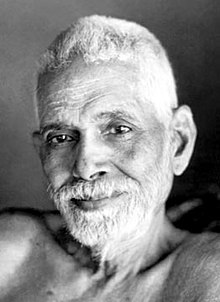
Ramana Maharshi (1879-1950) is arguably the greatest Indian sage of the past century.  As stated previously, he was the embodiment of advaita (non-dual) philosophy, which holds that all separation is illusory.  His unique contribution to this ancient branch of Hinduism is called Self-Inquiry.  By means of contemplation and self-analysis, one is able to trace individuality to its source.  (NDE researchers might refer to this as tracing bodily consciousness to its non-local source.)   Once this non-dual "I," which subsumes the individual "I," is found and completely identified with, all problems are solved. Ramana Maharshi was a charismatic teacher, very erudite, and very dedicated to  helping all those who came to him for guidance.  Seekers came from all over the world.  One of my favorite Bhagavan (Ramana was lovingly known to his followers as Bhagavan) has to do with an encounter in 1938 with Somerset Maugham. (The sage in the novel The Razor's Edge is based on Ramana Maharshi..)  Sometime after he arrived at the ashram, Maugham fainted, possibly due to the heat.  He was taken to his guest cottage.  Having been informed of this, Ramana, always concerned about the welfare of ashram visitors, came to him.  Maugham was apparently very nervous; for about a half hour they sat across from each other.  Neither said a word.  Finally Maugham asked whether he was supposed to say anything?  Bhagavan replied,--I am sure, with a radiant smile: "No--Silence is best.  Silence is also communication."  (I am convinced Maugham was greatly put at ease by this.) Ramana's silence was indeed communication, and often had a profound effect on those who came before him.

Ramana Maharshi was born Venkataraman Iyer in Tiruchuli, near Madurai, India, in 1879.  His father was an educated man.  Venkataraman was normal in just about every way--one of the exceptions being that his sleep was so extremely deep that it was very difficult to wake him.  He excelled in sports; he was popular; he was very intelligent albeit indifferent to his studies.  He was not particularly religious--although then, as even now, religion permeated all levels of Indian culture.  He read an account of Tamil Shaivite saints entitled, Periyapuranam and was quite impressed by it. Later when a relative told him of a recent visit to the sacred mountain Tiruvannamalai--where Venkataraman would soon spend the rest of his life--he was amazed that someone could actually visit such a sacred place.  Other than these two episodes, there is little to indicate that Venkataraman was anything other than a  normal Tamil youth.

Of significance, however, was the sudden death of his father at age 42 while Venkataraman was 12.  He was profoundly affected by this and wondered where the "I" of his father had gone, after  leaving behind a corpse.

Then, at age 16, he was transformed forever.  He was now in full puberty and capable of abstract and philosophical thinking.  The subject of death could no longer be as easily brushed off as it often is during childhood.  One day he was seized by the terror of annihilation.    The experience he had would now be classified as a "Fear-Death Experience, " similar to a Near-Death Experience, but without the cessation of cardiac and respiratory function. (This is a well-documented phenomenon.)  Much later, Ramana Maharshi recounted this event as follows:


"It was in 1896, about 6 weeks before I left Madurai for good (to go to Tiruvannamalai-Arunachala) that this great change in my life took place. I was sitting alone in a room on the first floor of my uncle's house. I seldom had any sickness and on that day there was nothing wrong with my health, but a sudden violent fear of death overtook me. There was nothing in my state of health to account for it nor was there any urge in me to find out whether there was any account for the fear. I just felt I was going to die and began thinking what to do about it. It did not occur to me to consult a doctor or any elders or friends. I felt I had to solve the problem myself then and there. The shock of the fear of death drove my mind inwards and I said to myself mentally, without actually framing the words: 'Now death has come; what does it mean? What is it that is dying? This body dies.' And at once I dramatised the occurrence of death. I lay with my limbs stretched out still as though rigor mortis has set in, and imitated a corpse so as to give greater reality to the enquiry. I held my breath and kept my lips tightly closed so that no sound could escape, and that neither the word 'I' nor any word could be uttered. 'Well then,' I said to myself, 'this body is dead. It will be carried stiff to the burning ground and there burnt and reduced to ashes. But with the death of the body, am I dead? Is the body I? It is silent and inert, but I feel the full force of my personality and even the voice of I within me, apart from it. So I am the Spirit transcending the body. The body dies but the spirit transcending it cannot be touched by death. That means I am the deathless Spirit.' All this was not dull thought; it flashed through me vividly as living truths which I perceived directly almost without thought process. I was something real, the only real thing about my present state, and all the conscious activity connected with the body was centered on that I. From that moment onwards, the "I" or Self focused attention on itself by a powerful fascination. Fear of death vanished once and for all. The ego was lost in the flood of Self-awareness. Absorption in the Self continued unbroken from that time. Other thought might come and go like the various notes of music, but the I continued like the fundamental sruti note ["that which is heard" i.e. the Vedas and Upanishads] a note which underlies and blends with all other notes."[web 2]
I must admit that I never fully appreciated Ramana's enlightenment experience until I learned about NDEs, specifically fear-death experiences.   I knew that Ramana had become permanently transformed--the rest of his life shows absolutely no backtracking--; I also knew that his transformation was much  more important than how it had occurred.  I was puzzled.  What if some demon sneaked in and cut off Ramana's head while he was lost in such thoughts?  Would he still be able to claim that he was the deathless Spirit?  Do his words prove that he experienced a consciousness beyond the brain?  I doubted that it did.  No matter, I thought; there can be no doubt that Ramana became a sage.  Now I think differently.  I now believe that it is possible, perhaps even likely, that Bhagavan actually experienced universal consciousness. Many researchers--as one would expect, by no means all--would concur.  As Dr. Pim van Lommel, the eminent cardiologist referred to earlier, asserts: "The content of a near-death experience suggests a continuity of consciousness that can be experienced independently of the body."  He continues: "...identical experiences are reported during examples of mortal fear..."  (Consciousness Beyond Life, page 300.) The latter phenomenon, the so-called fear-death experience,  applies to the episode, quoted above, that changed a young man forever.

To my knowledge, Ramana's transformation has never been described as a categorical fear-death experience, which it undoubtedly was. The result, however, was far from typical.  As mentioned previously, most people who experience a deep NDE--I am including fear-death experiences under this rubric--are deeply transformed by it.  They become more spiritual and less religious in the conventional sense.  They tend to lose their fear of death, become wiser, etc.  But they still remain the same person.  Ramana was completely transformed, as he relates in the quote above.  Most NDE-experiencers visit the other side, as it were; Ramana returned as the other side.

There was, of course, a marked change in his behavior.  His upper middle-class family expected  Bhagavan to become, well, you guessed it, a professional; his aloof behavior caused much friction.  One day,  Bhagavan simply could no longer do things like copy sections from an English grammar, which was his assignment at the time; his elder brother angrily mocked him with the following words, "What good is all this to such a one?"  Bhagavan realized that his brother was right; he realized that he must live on the outside what he was now on the inside.  So he left, unannounced, for the sacred mountain, Tiruvannamalai.  When he arrived, he discarded his clothes except for a loincloth.  He discarded his brahmin ponool, the sacred thread worn across the chest by all brahmin males. (This signifies that he was now beyond caste.)  He threw away the little money he had left, and never touched money again.  He remained in deep meditation--samadhi--for very long periods.  His mien and bearing attracted the attention of villagers.  One took special care of him.  This man was a bit unbalanced and was often teased by boys.  To protect Ramana from occasional stone-throwing, he was brought to an underground room of a temple.  It was dark and infested with vermin.  Ramana did not care at all and continued in deep meditation.  (He didn't move, even when insects stung him. The scars caused by those insects remained on him for life.)
Ramana then was moved to a little room of a shrine on Arunachala, the sacred mountain. He remained there for years.


Needless to say his family, especially his mother, Alagammal, was very upset. She finally learned where he was.  She traveled to Tiruvannamalai and found him.  She begged him to return home; he remained silent.  She returned several times with the same request.  He never uttered a word.  Then, upon a subsequent visit, he took pen and paper and wrote the following words:

The Ordainer ordains the fate of souls in accordance with their prarabdhakarma (destiny to be worked out in this life).  Whatever is destined not to happen will not happen, try as you may. Whatever is destined to happen will happen, try as you may to prevent it.  This is certain.  The best course, therefore, is to remain silent.

Hamlet used simialr language after experiencing what critics refer to as his enlightenment.  Horatio is warning him not to fight Laertes.  Hamlet responds in Act V, Sc.ii, with the following words:

Not a whit, we defy augury. There is special providence in
the fall of a sparrow. If it be now, 'tis not to come; if it be not to
come, it will be now; if it be not now, yet it will come—the
readiness is all. Since no man, of aught he leaves, knows what is't
to leave betimes, let be.

Even more than Hamlet, Ramana sounds like a Delphic oracle.  Ramana's response to his mother is a good example of how utterly beyond earthly life he had become.  Even his mother received an impersonal response.  He sounds almost inhuman.

Ramana gradually began to be more responsive, but remained essentially extremely aloof.  He had become, as it were, the mountain itself.  Then, sixteen years after his enlightenment another extraordinary event occurred.  Here we have an account of it in Ramana's own words:


"The landscape in front of me disappeared as a bright white curtain was drawn across my vision and shut it out. I could distinctly see the gradual process. There was a stage when I could still see a part of the landscape clearly while the rest was covered by the advancing curtain. It was just like drawing a slide across one's view in a stereoscope. On experiencing this I stopped walking lest I should fall. When it cleared I walked on. When darkness and faintness came over me a second time I leaned against a rock until it cleared. The third time it happened I felt it safer to sit, so I sat down near the rock. Then the bright white curtain completely shut off my vision, my head was swimming and my circulation and breathing stopped. The skin turned a livid blue. It was the regular death hue and it got darker and darker. Vasudeva Sastri, in fact, took me to be dead and held me in his arms and began to weep aloud and lament my death."I could distinctly feel his clasp and his shivering and hear his words of lamentation and understand their meaning. I also saw the discoloration of my skin and felt the stoppage of my circulation and breathing and the increased chilliness of the extremities of my body. My usual current of awareness still continued in that state also. I was not in the least afraid and felt no sadness at the condition of the body. I had sat down near the rock in my usual posture and closed my eyes and was not leaning against the rock. The body, left without circulation or respiration, still maintained that position. This state continued for some ten or fifteen minutes. Then a shock passed suddenly through the body and circulation revived with enormous force, and breathing also, and the body perspired from every pore. The colour of life reappeared on the skin. I then opened my eyes and got up and said, 'Let's go.' We reached Virupaksha Cave without further trouble. This was the only fit I had in which both circulation and respiration stopped."

Those familiar with NDEs will immediately realize that Ramana had experienced a full-blown NDE.  His respiration and circulation, as corroborated by witnesses, ceased for about fifteen minutes.   Though unconscious, he heard and saw what was being said and happening around him.  He saw a white curtain in an intense light.  His "usual state of awareness" that is, intense awareness, continued to function unabated.

The importance of this event is that it caused a further transformation in Ramana.  Now the human element returned.  Though he never left the wisdom-awareness that began with the fear-death experience, he now became much more lovingly involved with those around him. (The Somerset Maugham-episode, referred to in this article, evinces this change; it occurred 26 years after the second transformation.)  If anyone asked him a question, he would answer it.  He engaged in long discussions about wisdom; he gave advice especially tailored to the questioners.  He read newspapers and books.  He became involved with the day-to-day operations of the ashram which had been built at the base of Arunachala.  He evinced a keen intellect and a keen sense of humor.  He became devoted to his devotees, and made sure he was available to help them until the end of his life. (He faced death from cancer, of which he died at the age of 70, without a shred of fear.)

Another remarkable transformation!  Ramana who had been the embodiment of transcendental wisdom now was the embodiment of that wisdom combined with deep humanity and love.

SUMMARY

Ramana Maharshi is one of the greatest Indian sages.  He didn't claim, however, to be a sage.  He never claimed to have any supernatural powers. He simply remained completely identified with the Self that underlies all reality.  His kindness and wisdom are preserved in many books which are readily available.
Although the enlightenment experience at age sixteen is a central part in his biography, I have never heard it referred to as a fear-death experience, which it obviously was   His subsequent life is illustrates how this event changed him.
He had become the embodiment of Wisdom, as it were, aloof, beyond ordinary life.  Then an equally remarkable even occurred.  His classic near-death experience  at age  32 gave him, the embodiment of wisdom, a human face.  He was now a perfect and readily accessible  incarnation of the Self, radiating both love and wisdom.  I know of no other person who was transformed in this way by two near-death experiences.  I think that the information presented in this article , namely that Ramana had a fear-death and a near-death experience, and was irrevocably changed, in different ways, by both, is extremely important.  It unites the wisdom of the East with the wisdom that Westerners, and others, have obtained not only through a NDE, but also through study, life experiences, and meditation.  Deep down, there is one unifying reality; that people from different cultures come to the same basic conclusion unites all cultures and all humanity.  Science is certainly not averse to the belief that there is no separation in the absolute sense. Thus skeptics, who doubt the existence of non-local consciousness, can at least agree on this point.  Experiencing  and living this unity, which Ramana absolutely did and NDE experiencers  in varying degrees did and continue to do, runs much deeper, of course, than mere knowledge of it.
Ramana's story indicates that there is indeed consciousness beyond the brain.  This need not be viewed as something supernatural; it might indeed be very natural, perhaps partially explicable through physics.  Non-local consciousness, consciousness independent of the body--is indeed a possibility.  (I doubt that this will ever be proven, but it might; I think information indicating it will continue to mount.)  The physics genius John von Neumann stated that everything is consciousness.  Ramana Maharshi, along with many who have experienced a NDE, is a good indication that von Neumann was right.
As the lives of those that have had a NDE indicate, and, especially, as the life of the sage of Arunachala fully demonstrates, experiencing universal consciousness cannot fail to make one more connected to oneself and to the world. Another word for it is Wisdom.  Yet another word for it is Wisdom-In Action, Love.  Ramana Maharshi was right: this realization transforms not only oneself, but helps transform the entire world.


3.03.2013

MY POST-DEATH EXPERIENCE, February 28, 2013


The back of the room was intensely lit--There were no shadows at all; the light came from everywhere.  The magnificent hardwood floor was bare; the wood was bright and luminous.  The intense brown of the floor contrasted with the white bed, covered in a bright-white sheet.  Under the sheet was the body of an old man lying on its back; the head was propped up by a white pillow.  The man had white hair; his face was immobile.  The contours of his body were visible underneath the sheet; there was no sign of breathing.  He was quite old, perhaps more than 90. Whether he was already dead or in a deep coma, at the point of death, I'm not sure.  What is certain, though, is that death, if it hadn't already occurred, was both imminent and irreversible.

Except for the bed, there was no furniture of any kind.  The room was large; except for the blank wall behind the bed, no walls were visible.

The front  of the room was in shadows.  In the shadows were two standing figures.  One was the dead man's wife, who was thin and old.  She was dressed in a blue skirt with matching jacket--the color could be discerned by the observer despite the darkness.  Although she remained still, the onlooker knew that it was difficult for her to ambulate.  The other figure was the dead man's son.  He was in his 50s, with a full head of graying hair.

The two figures were mourning the old man's death, my death.  The observer, now full of compassion and love for both of them, focused his attention on the wife, since she was fragile and more visibly upset.  The lens of his vision, as it were,  zoomed in; for an instant, the observer saw only her.  He tried to console the old woman, but she and her son remained completely unaware of his  presence. Then the original scene returned. One might best describe it as consciousness observing a tableau.  It seemed to last for only a few seconds; it also seemed to last for a long time.

The observer knew, however, that after a period of mourning, both wife and son would be all right.

The division between the light and darkness in the room  was a barrier that the two figures couldn't cross--the observer knew this, even though they didn't try.

This being, behind everything in the room, was in a deeper darkness that, paradoxically, was also an all-pervading light.

Although no words were spoken,  the onlooker, beyond language, understood the thoughts of the two mourners.

Although he had also underlain the waking consciousness of the old man throughout the latter's life, the observer  was now completely detached from that which remained on the bed.  He did indeed feel compassion for the two survivors; once quite intensely, but only for a moment.  For most of the time, he remained unmoved by what he was witnessing..

This consciousness was everything; thus, in a real sense, there was only one being present. No God, no gods, no angels, no deceased relatives, no nurses, no aides.  Just immaterial awareness observing a commonplace event: the death of an old man, mourned by his son and his wife.

Then everything disappeared.